
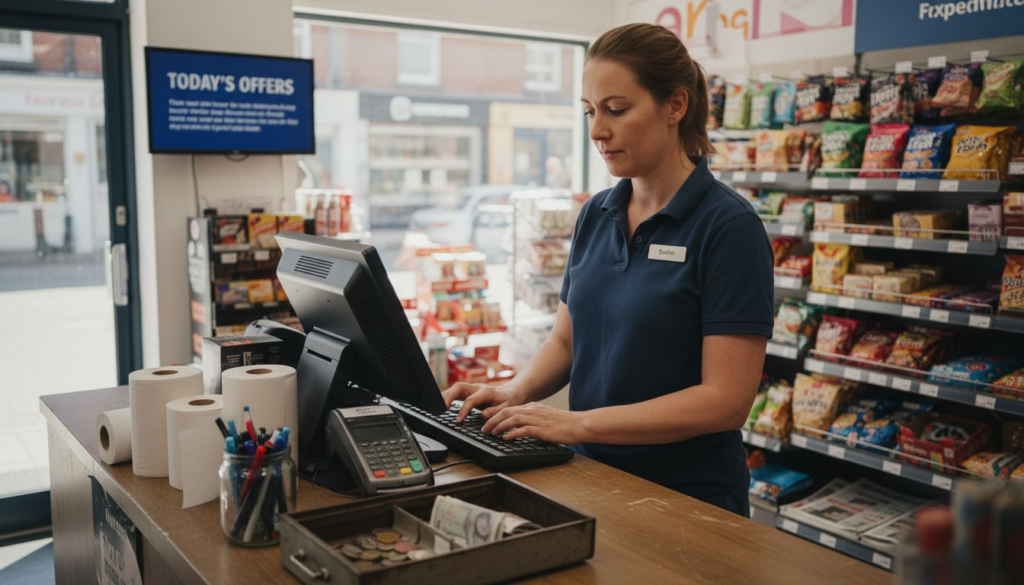
Juggling busy service hours and keeping customers happy is a daily challenge for restaurant and retail business owners in the United Kingdom. Modern point of sale systems have become essential, offering digital solutions that combine payment terminals, cloud-based software, and advanced management tools. With features like seamless payment processing and real-time inventory tracking, these platforms give you control over daily operations and help transform customer experiences. Discover how a comprehensive POS system can simplify tasks and support growth across your venue.
Table of Contents
- Defining POS Systems For Retail And Hospitality
- Main Types Of POS Solutions Available
- Essential Features And How POS Works
- Compliance And Data Security Standards
- Cost Factors And Common Mistakes To Avoid
Key Takeaways
| Point | Details |
|---|---|
| Importance of POS Systems | POS systems are essential for managing transactions and improving operational efficiency in retail and hospitality sectors. |
| Diverse POS Solutions | Different types of POS systems cater to various business needs, from fixed terminals to mobile and cloud-based options. |
| Compliance and Security | Adhering to PCI and GDPR standards is crucial for maintaining data security and protecting customer information. |
| Cost Considerations | Evaluating total costs, including maintenance and potential future expenses, is vital for making informed POS system investments. |
Defining POS Systems for Retail and Hospitality
A point of sale (POS) system represents a comprehensive digital technology solution designed to manage financial transactions, operational workflows, and customer interactions across retail and hospitality environments. These intelligent platforms integrate sophisticated hardware and cloud-based software to streamline business processes and enhance service delivery.
In the United Kingdom, hospitality POS platforms are specifically engineered to meet the unique demands of venues like restaurants, cafés, and food service establishments. These systems combine payment terminals, receipt printers, and robust software modules that enable businesses to handle complex operational requirements efficiently.
Key features of modern POS systems include:
- Seamless payment transaction processing
- Real-time inventory management
- Staff scheduling and performance tracking
- Customer relationship management
- Detailed sales reporting and analytics
- Multi-channel payment support
For retail and hospitality businesses, these systems represent more than just transaction tools. They are strategic technologies that transform operational efficiency, providing real-time insights and enabling data-driven decision-making across all business functions.
Pro tip: When selecting a POS system, prioritise platforms that offer scalable features and seamless integration with your existing business infrastructure.
Main Types of POS Solutions Available
Point of Sale (POS) technologies in the United Kingdom have evolved to offer diverse solutions catering to different business requirements. POS system variants encompass multiple configurations designed to meet the unique operational needs of various industries.
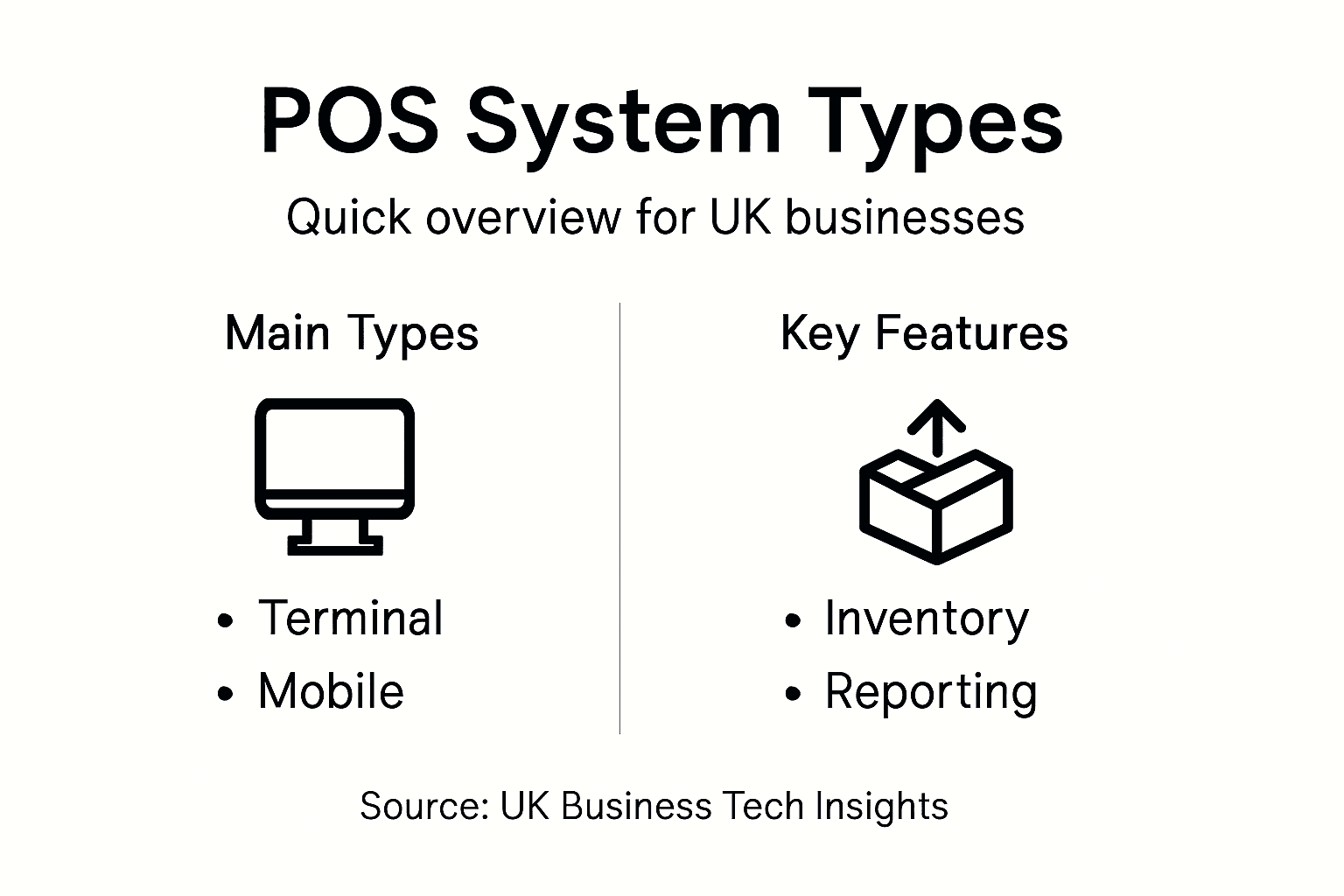
The primary types of POS solutions include:
- Terminal POS Systems: Fixed hardware setups typically used in retail and hospitality environments
- Mobile POS Systems: Flexible platforms operating on smartphones and tablets
- Cloud-Based POS Systems: Online platforms enabling remote data access and management
- Self-Service Kiosks: Customer-operated checkout systems
- Open-Source POS Systems: Customisable solutions allowing extensive personalisation
Each POS solution offers distinct advantages depending on business scale and operational complexity. Terminal systems provide robust, stationary transaction processing, while mobile POS solutions enable sales flexibility for businesses like market stalls, pop-up shops, and event vendors.
Cloud-based systems have gained significant traction, offering real-time data synchronisation across multiple business locations. These platforms enable centralised inventory management, sales tracking, and performance analytics, providing business owners with comprehensive operational insights.
Here’s a quick comparison of the main POS system types used by UK businesses:
| POS Type | Typical Use Case | Key Strength | Considerations |
|---|---|---|---|
| Terminal POS | Shops, restaurants | Reliable, fast | Limited mobility |
| Mobile POS | Events, pop-up stores | Flexible, portable | Battery, connectivity |
| Cloud-Based POS | Multi-location chains | Real-time insights | Internet reliance |
| Self-Service Kiosk | Fast food, retail | Speeds up checkout | Higher upfront cost |
| Open-Source POS | Bespoke solutions | Highly customisable | Requires IT expertise |
Pro tip: Evaluate your specific business requirements carefully before selecting a POS system, considering factors like scalability, integration capabilities, and long-term operational needs.
Essential Features and How POS Works
Point of Sale (POS) systems represent sophisticated technological solutions that go far beyond simple transaction processing. Modern POS components integrate multiple operational functions designed to streamline business management and enhance customer interactions.
The core hardware and software components typically include:
- Cash Registers: Primary transaction processing hardware
- Barcode Scanners: Quick product identification tools
- Card Readers: Multiple payment method acceptance
- Receipt Printers: Transaction documentation
- Customer Display Screens: Interactive transaction interfaces
POS systems operate through an integrated workflow that captures transaction details, updates inventory in real-time, and generates comprehensive sales reports. The software tracks each product sale, automatically adjusting stock levels, calculating pricing, and recording customer purchase histories.

Cloud-based platforms have revolutionised POS functionality by enabling remote data access, synchronisation across multiple business locations, and advanced analytics. These systems provide business owners with instantaneous insights into sales performance, inventory status, and customer behaviour, transforming raw transaction data into strategic business intelligence.
Pro tip: Select a POS system with robust integration capabilities and scalable features that can adapt to your business’s evolving technological requirements.
Compliance and Data Security Standards
Data protection and security represent critical considerations for Point of Sale (POS) systems operating in the United Kingdom. Businesses must navigate complex regulatory landscapes to ensure customer information remains safe and regulatory requirements are consistently met.
Key compliance and security standards include:
- Payment Card Industry (PCI) Compliance: Mandatory security standards for handling credit card transactions
- General Data Protection Regulation (GDPR): Strict rules governing personal data handling
- End-to-End Encryption: Protecting transaction and customer information
- Secure Customer Data Storage: Implementing robust protection mechanisms
- Regular Security Audits: Ongoing vulnerability assessments
UK businesses must implement multi-layered security approaches that protect sensitive financial and personal information. This involves using advanced encryption technologies, maintaining secure network infrastructures, and establishing comprehensive data management protocols that prevent unauthorized access and potential breaches.
Cloud-based POS systems offer enhanced security features, including automatic software updates, real-time monitoring, and centralized security management. These platforms provide businesses with sophisticated tools to maintain compliance, protect customer data, and mitigate potential cybersecurity risks effectively.
Here is a summary of critical UK POS compliance and security standards:
| Standard | Purpose | Business Impact |
|---|---|---|
| PCI Compliance | Protect card payment data | Prevents payment fraud |
| GDPR | Safeguard personal information | Avoids data breaches fines |
| End-to-End Encryption | Encrypts transaction data | Secures customer details |
| Security Audits | Identify system vulnerabilities | Maintains ongoing trust |
Pro tip: Conduct quarterly security assessments and ensure your POS system provider offers robust, up-to-date compliance features that align with current UK data protection regulations.
Cost Factors and Common Mistakes to Avoid
POS system investments represent significant strategic decisions for UK businesses, requiring careful financial planning and thorough understanding of potential hidden expenses. Entrepreneurs must evaluate comprehensive cost structures beyond initial hardware and software purchases.
Key cost considerations include:
- Initial Hardware Investments: Terminals, tablets, card readers
- Software Licensing Fees: Monthly or annual subscription costs
- Installation and Setup Expenses: Professional configuration services
- Training Programme Costs: Staff onboarding and skill development
- Maintenance and Support Contracts: Ongoing technical assistance
- Payment Processing Fees: Transaction-related charges
Common mistakes businesses frequently make involve overlooking long-term operational expenses and selecting systems without considering scalability. Organisations often commit to solutions that appear cost-effective initially but lack flexibility for future business growth, resulting in expensive system replacements.
Cloud-based POS solutions offer more predictable pricing models, with transparent subscription structures that include regular software updates, security patches, and technical support. These platforms enable businesses to manage technology expenses more strategically, avoiding unexpected financial burdens associated with legacy system maintenance.
Pro tip: Request comprehensive pricing breakdowns from multiple POS providers, including detailed explanations of all potential future expenses and upgrade pathways.
Unlock Your Business Potential with Trusted POS Solutions
Understanding what a POS system is and recognising its impact on UK businesses highlights one clear challenge managing operational efficiency, inventory, customer data security, and scalable growth. If you are navigating complex compliance requirements like PCI and GDPR, or seeking a reliable way to streamline sales and improve customer experiences, it is essential to choose a POS system tailored to your specific retail or hospitality needs.
At YCR Distribution, we specialise in delivering complete POS solutions including high-quality hardware from trusted brands such as SAM4S and iMin, alongside powerful software like SAMTOUCH and EZEEPOS designed specifically for UK businesses in restaurants, cafes, takeaways, retail stores, and more. Our offerings not only cover essential technologies but also provide ongoing support, ensuring your investment adapts as your business grows and new compliance standards emerge.
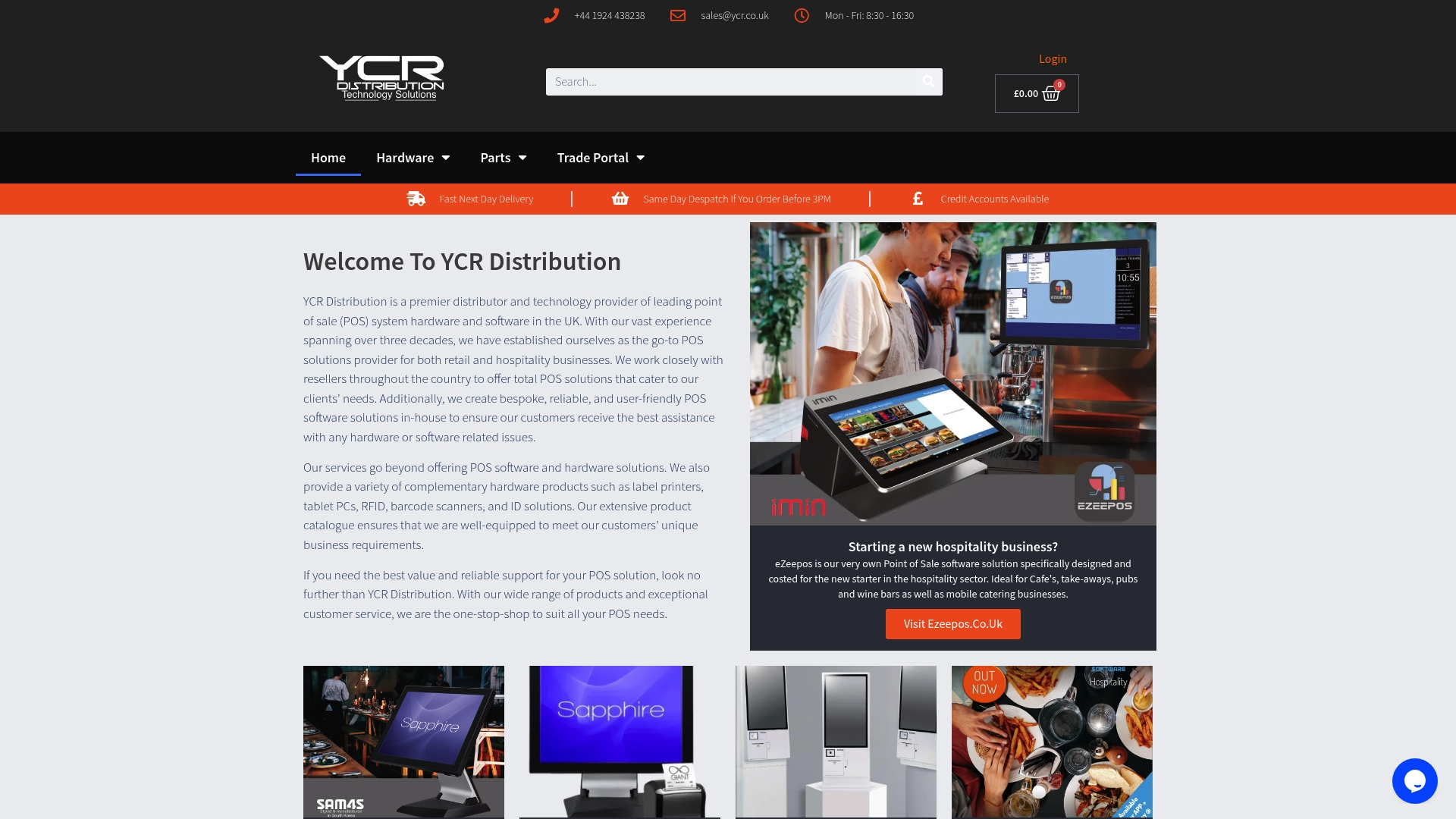
Explore our comprehensive range of POS terminals, scanners, printers, and software at YCR Distribution. Benefit from next-day delivery, expert advice, and tailored systems that help you avoid common pitfalls such as hidden costs and poor integration. Don’t let outdated or incompatible POS technology hold you back. Take control today by visiting YCR Distribution for solutions that turn complex challenges into business advantages.
Frequently Asked Questions
What is a POS system?
A POS (Point of Sale) system is a digital technology solution used to manage financial transactions and customer interactions, integrating hardware and software to streamline business operations in retail and hospitality.
What are the main types of POS systems available?
The primary types of POS systems include terminal POS systems, mobile POS systems, cloud-based POS systems, self-service kiosks, and open-source POS systems, each designed to meet different business operational needs.
What are the essential features of modern POS systems?
Essential features of modern POS systems include seamless payment transaction processing, real-time inventory management, staff scheduling, customer relationship management, and detailed sales reporting and analytics.
How do POS systems enhance data security and compliance?
POS systems enhance security and compliance by implementing measures such as PCI compliance for card transactions, GDPR adherence for personal data protection, end-to-end encryption of customer information, and regular security audits to identify vulnerabilities.