

Finding the right point of sale system for your business can feel overwhelming with so many options available. You want a solution that fits your operation, supports your staff, and meets your customers’ expectations without causing disruption. The choices range from traditional countertop setups to mobile, cloud-based and even self-service kiosks, each offering unique advantages backed by proven reliability and security. This guide breaks down what sets each innovative system apart and how they contribute to smoother transactions, better inventory tracking, and business growth. Get ready to discover actionable insights that will help you select, customise and integrate the perfect POS solution for your needs.
Table of Contents
- 1. Understanding Traditional Countertop POS
- 2. Advantages of Mobile and Tablet POS
- 3. Features of Self-Service Kiosk POS
- 4. Benefits of Cloud-Based POS Solutions
- 5. Hybrid POS Systems for Flexible Operations
- 6. Choosing Industry-Specific POS Software
- 7. Integrating POS with Other Business Tools
Quick Summary
| Key Insight | Explanation |
|---|---|
| 1. Choose Robust Hardware | Prioritise countertop POS systems with durable hardware to ensure consistent transaction processing and reduce technical issues. |
| 2. Leverage Mobile Solutions | Mobile POS empowers flexibility, allowing transactions to occur anywhere, enhancing customer engagement and staff productivity. |
| 3. Implement Self-Service Kiosks | These kiosks can reduce staff workload while improving customer independence and service speed in various settings. |
| 4. Embrace Cloud Technologies | Cloud-based POS systems offer operational flexibility and real-time data access, minimising hardware costs and enhancing scalability. |
| 5. Integrate Business Tools | Seamless POS integration with other applications eliminates manual data entry and improves overall operational efficiency. |
1. Understanding Traditional Countertop POS
Traditional countertop POS systems remain the cornerstone of transaction processing for many retail and hospitality businesses. These stationary systems represent a reliable and robust solution for managing sales, inventory, and customer interactions at a fixed checkout point.
A traditional countertop POS typically includes several key hardware components that work together seamlessly:
- Robust computer terminal for processing transactions
- Integrated barcode scanner for product identification
- Cash register or payment processing unit
- Receipt printer for customer documentation
- Card reader for electronic payment methods
These systems provide significant advantages for businesses seeking stable and secure transaction management. Traditional POS terminals remain fundamental in brick-and-mortar retail, offering dependable performance and compliance with payment security standards.
Businesses appreciate traditional countertop POS systems because they offer:
- Consistent transaction processing
- Enhanced security for financial data
- Straightforward user interface
- Reliable hardware durability
- Simplified staff training
While mobile and cloud solutions are emerging, traditional countertop systems continue to provide unmatched reliability for many small to medium enterprises. Their straightforward design ensures minimal technical complications and maximum operational efficiency.
Expert tip: When selecting a traditional countertop POS, prioritise systems with robust hardware and intuitive software interfaces that match your specific business workflow.
2. Advantages of Mobile and Tablet POS
Mobile and tablet point of sale (POS) systems have revolutionised how businesses approach transaction management in retail and hospitality environments. These versatile solutions offer unprecedented flexibility compared to traditional stationary systems.
Businesses can leverage mobile and tablet POS technologies to transform their operational capabilities:
- Mobility across business premises
- Instant transaction processing
- Real-time inventory tracking
- Simplified staff training
- Enhanced customer engagement
Mobile POS solutions provide businesses with the agility to conduct sales anywhere within their premises.
The core advantage of these systems lies in their ability to break free from fixed checkout locations. Mobile POS solutions contribute to operational agility, enabling staff to process transactions directly where customers are located.
Key benefits for businesses include:
- Reduced customer queuing times
- Increased staff productivity
- More personalised customer interactions
- Simplified sales floor management
- Seamless integration with cloud-based platforms
Restaurants cafés and retail stores can particularly benefit from mobile POS systems by empowering staff to serve customers more efficiently and dynamically.
Expert tip: Select a mobile POS system that offers robust cloud integration and intuitive user interfaces to maximise your operational flexibility.
3. Features of Self-Service Kiosk POS
Self-service kiosks represent a transformative technology enabling customers to independently manage transactions and access information across multiple business sectors. These intelligent systems combine sophisticated hardware and software to deliver seamless user experiences.
Self-service kiosk technologies enhance operational efficiency by providing automated interaction points that reduce staff workload and improve customer satisfaction.
Key hardware components of self-service kiosks include:
- Intuitive touchscreen displays
- Secure card payment terminals
- Barcode scanning functionality
- Integrated receipt printing systems
- Robust computational hardware
Self-service kiosks empower customers with direct, efficient transaction capabilities.
These systems deliver substantial benefits for businesses across various sectors:
- Reduced staff processing time
- Enhanced customer independence
- Consistent service quality
- Lower operational costs
- Improved transaction speed
- 24/7 service availability
Self-service kiosks are particularly prevalent in:
- Quick-service restaurants
- Retail checkout areas
- Transportation hubs
- Healthcare reception zones
- Entertainment venues
Expert tip: When implementing a self-service kiosk system, prioritise user-friendly interfaces and ensure comprehensive staff training for technical support.
4. Benefits of Cloud-Based POS Solutions
Cloud-based POS systems represent a technological revolution for modern retail and hospitality businesses. These sophisticated digital platforms transform how companies manage transactions, inventory, and customer interactions.
Cloud-based POS solutions offer unprecedented operational flexibility by providing businesses with powerful digital infrastructure without substantial hardware investments.
Crucial advantages of cloud POS technologies include:
- Seamless remote data access
- Automatic software updates
- Real-time inventory management
- Reduced IT infrastructure costs
- Multi-location synchronisation
Cloud POS systems empower businesses with intelligent, scalable technological solutions.
Specific benefits for businesses encompass:
- Instant sales data reporting
- Enhanced customer loyalty tracking
- Simplified staff management
- Integrated payment processing
- Advanced predictive analytics
- Scalable operational models
Industries benefiting from cloud POS include:
- Restaurants and cafés
- Retail stores
- Hospitality venues
- Convenience shops
- Entertainment centres
Expert tip: When selecting a cloud-based POS system, prioritise platforms offering comprehensive integration capabilities and robust security features.
5. Hybrid POS Systems for Flexible Operations
Hybrid POS systems represent a sophisticated technological solution bridging the gap between traditional on-premise infrastructure and cloud-based flexibility. These intelligent systems provide businesses with robust transaction processing capabilities that adapt to varying operational environments.
Hybrid POS systems blend cloud and local technologies to ensure uninterrupted business performance.
Key characteristics of hybrid POS technologies include:
- Offline transaction processing
- Automatic data synchronisation
- Comprehensive payment support
- Unified management dashboards
- Seamless network failover
Hybrid POS solutions provide businesses with operational resilience and technological adaptability.
Significant advantages for businesses encompass:
- Continuous sales processing during network interruptions
- Enhanced data security protocols
- Real-time inventory tracking
- Flexible scalability
- Reduced technological infrastructure costs
Industries benefiting from hybrid POS include:
- Restaurants and cafés
- Retail stores
- Service-based businesses
- Event management companies
- Hospitality venues
Expert tip: Prioritise hybrid POS solutions that offer seamless integration with your existing technological ecosystem and provide comprehensive offline and online capabilities.
6. Choosing Industry-Specific POS Software
Industry-specific POS software provides tailored technological solutions that address the unique operational challenges of different business sectors. Each industry demands specialised features that go beyond generic transaction processing.
Industry-specific POS systems support unique business functions by delivering targeted technological capabilities designed for precise sector requirements.
Different industries require distinctive POS software features:
- Restaurant sector
- Retail environments
- Healthcare facilities
- Hospitality businesses
- Service-based companies
Specialised POS software transforms operational efficiency through targeted technological solutions.
Key considerations when selecting industry-specific POS include:
- Customisation capabilities
- Integration potential
- Sector-specific functionality
- Scalability options
- Compliance requirements
Feature variations across sectors:
- Restaurants: Tableside ordering, kitchen display integration
- Retail: Inventory management, multi-channel sales tracking
- Healthcare: Appointment scheduling, billing integration
- Hospitality: Reservation management, guest tracking
Expert tip: Prioritise POS software that offers not just current functionality but also future adaptability for your specific industry ecosystem.
7. Integrating POS with Other Business Tools
POS integration represents a sophisticated technological strategy that transforms how businesses manage and synchronise critical operational data. By connecting point-of-sale systems with various business applications, companies can create a seamless digital ecosystem.
POS integration connects business applications automatically through intelligent data synchronisation platforms.
Critical business tools for POS integration include:
- Customer relationship management
- Accounting software
- Inventory management
- E-commerce platforms
- Payment processing systems
Effective POS integration transforms raw transaction data into strategic business intelligence.
Key benefits of comprehensive POS integration:
- Eliminate manual data entry
- Real-time inventory tracking
- Enhanced customer insights
- Simplified financial reporting
- Reduced operational errors
- Improved business decision-making
Integration strategies for different business types:
- Retail: Synchronise online and offline sales channels
- Restaurants: Connect ordering and inventory systems
- Service businesses: Link scheduling and payment platforms
- Multi-location enterprises: Centralise data management
Expert tip: Select POS integration tools that offer robust API capabilities and prioritise seamless, real-time data synchronisation across your entire business ecosystem.
Below is a comprehensive table summarising the main concepts and features of various types of Point of Sale (POS) systems as discussed in the article.
| POS Type | Key Features | Advantages |
|---|---|---|
| Traditional Countertop POS | Computer terminal, barcode scanner, cash register, receipt printer, card reader. | Reliable and robust for transaction processing, enhancing security, straightforward usage, and hardware durability. |
| Mobile and Tablet POS | Mobile devices enabling on-premises mobility, real-time inventory tracking, easy setup. | Offers flexibility, reduces waiting times, enables on-the-spot transactions, and improves customer interaction. |
| Self-Service Kiosk POS | Touchscreen, card terminals, barcode scanners, and receipt printers for customer-controlled usage. | Enhances operational efficiency, customer independence, and service speed, suitable for high-traffic areas and 24/7 operation. |
| Cloud-Based POS | Remote data access, integrated IT services, software updates, and multi-location synchronisation. | Real-time data management, scalable and cost-effective operation, and enhanced data reporting and analytics. |
| Hybrid POS | Combines local processing with cloud capability. | Offline transactions supported, data synchronisation, resilience against network issues, and adaptable to different environments. |
| Industry-Specific POS | Tailored functions such as inventory management or guest tracking. | Provides customised features for unique industry needs such as restaurants, retail, healthcare, and hospitality. |
| Integrated POS Systems | Links to CRM, accounting, inventory systems, and online platforms. | Streamlines data entry, provides real-time metrics, improves customer service, and enables strategic decision-making with enhanced insights. |
Unlock Your Business Potential with Tailored POS Solutions
Choosing the right POS system from the diverse range such as traditional countertop, mobile, self-service kiosks, cloud-based, hybrid, or industry-specific solutions can feel overwhelming. The challenge lies in finding a reliable and flexible technology that matches your unique retail or hospitality environment while improving transaction efficiency and customer satisfaction. At YCR Distribution, we understand these critical hurdles and provide expert guidance alongside a comprehensive selection of hardware and software that empower your business to thrive.
Whether your priority is enhancing mobility on the sales floor or integrating seamless cloud management with robust security, our bespoke solutions including popular platforms like SAMTOUCH and EZEEPOS deliver scalable performance for restaurants, cafés, retail shops, and more. Discover hardware from trusted brands such as SAM4S and iMin combined with tailored software designed to reduce operational downtime and simplify complex workflows.
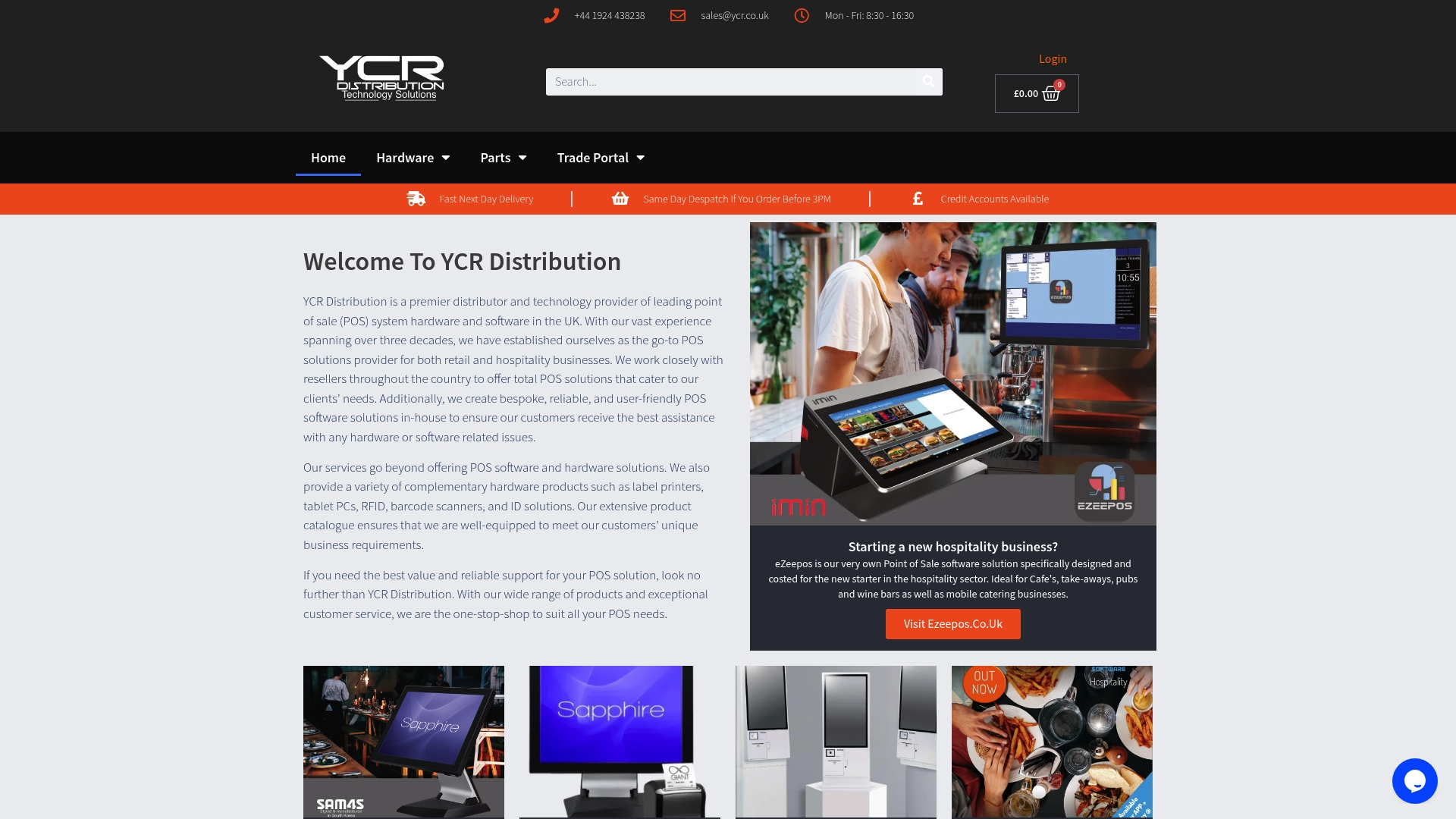
Explore how YCR can transform your POS experience with fast delivery and dedicated support. Start your journey towards operational excellence today by visiting YCR Distribution and learn about our complete range of POS terminals, tablets, and accessories. Do not settle for less when it comes to your business technology needs. Take action now to ensure your operations remain efficient, secure, and perfectly aligned with your growth ambitions.
Frequently Asked Questions
What are the main types of POS systems suitable for retail and hospitality businesses?
Traditional countertop POS systems, mobile and tablet POS, self-service kiosks, cloud-based POS solutions, hybrid POS systems, and industry-specific POS software are the main types. Evaluate your business needs to select the most suitable type within 30 days.
How can mobile POS systems improve customer engagement in retail?
Mobile POS systems enhance customer engagement by allowing staff to process transactions anywhere in the store. Encourage staff to utilise mobile devices to provide personalised service and reduce customer wait times.
What features should I look for in a self-service kiosk POS?
When selecting a self-service kiosk POS, look for intuitive touchscreen displays, secure payment terminals, and barcode scanning capabilities. Prioritise these features to streamline transaction processes and improve customer independence.
How does cloud-based POS technology benefit inventory management?
Cloud-based POS technology allows real-time inventory tracking from anywhere, making it easier to manage stock levels. Implement a cloud-based system to reduce stock discrepancies and improve order accuracy within the first month.
What are the advantages of hybrid POS systems for operational resilience?
Hybrid POS systems enable offline transaction processing and automatic data synchronisation, providing businesses with operational resilience. Assess your current infrastructure to identify how hybrid capabilities can enhance your transaction management.
Why is it essential to choose industry-specific POS software?
Industry-specific POS software offers tailored features that cater to the unique operational challenges of sectors like retail or hospitality. Opt for customised solutions to streamline your operations and ensure compliance with sector requirements.
Recommended
- What Is POS System and Its Impact on UK Businesses
- Role of POS Software – Transforming UK Retail and Hospitality
- Point of Sale Technology Explained: Impact on UK Hospitality
- 7 Practical Examples of Hospitality POS Solutions for Cafés
- What Is a Commercial Espresso Machine? Complete Guide – Coffee Sensor