

Running a small restaurant or retail shop in the United Kingdom means juggling fast-paced customer demands with tight margins and limited staff. Reliable POS software can make the difference between busy shifts running smoothly and simple errors causing frustration. With integrated features like real-time inventory tracking, multi-channel payments, and staff scheduling, modern POS systems empower you to focus on service while the technology manages complex details. Discover how the right POS solution can provide operational control and a seamless guest experience.
Table of Contents
- Defining POS Software For Retail And Hospitality
- Major POS Software Types And Distinctions
- Key Features And Real-World Applications
- Compliance, Security And Data Protection Requirements
- Costs, Risks And Optimising Your POS Investment
Key Takeaways
| Point | Details |
|---|---|
| Importance of POS Systems | Modern POS systems are essential for streamlining operations and enhancing customer experiences across retail and hospitality sectors. |
| Choosing the Right System | Evaluate specific business needs and technological capabilities to select a POS system that supports scalability and user-friendliness. |
| Security and Compliance | Implement strong data protection measures and ensure adherence to UK compliance standards, such as PCI and UK GDPR. |
| Cost Considerations | Conduct a thorough cost-benefit analysis to balance initial expenses with long-term business value and operational efficiency. |
Defining POS Software for Retail and Hospitality
A Point of Sale (POS) system represents the digital backbone for modern retail and hospitality businesses, transforming how transactions and operations are managed. These sophisticated platforms are far more than simple cash registers – they are comprehensive technological solutions designed to streamline business processes and enhance customer experiences.
In the UK hospitality sector, POS software provides critical functionality across multiple business domains. Comprehensive digital solutions integrate advanced hardware with cloud-based platforms, enabling businesses to manage complex operational requirements efficiently. These systems go beyond basic transaction processing, offering intelligent features that support:
- Real-time business intelligence tracking
- Multiple service mode management
- Payment processing capabilities
- Inventory control mechanisms
- Staff scheduling tools
- Customer relationship management
Modern POS systems represent technological ecosystems that connect different aspects of business management. They enable restaurants, cafés, and retail establishments to synchronise operations, reduce manual administrative tasks, and provide seamless customer interactions. By centralising data and automating routine processes, these platforms help businesses make informed decisions quickly and accurately.
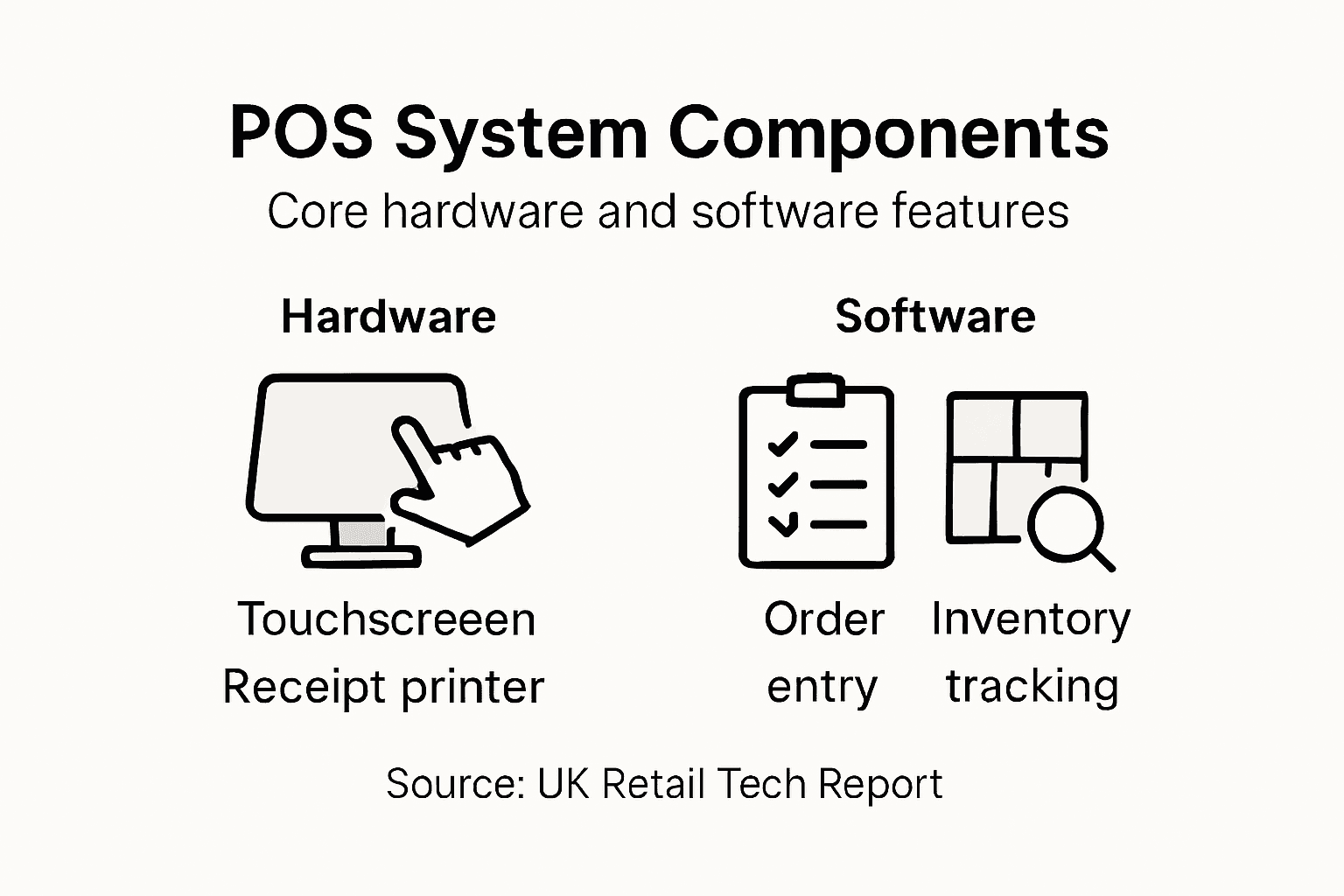
Key technological components typically include integrated hardware like touchscreen terminals, receipt printers, barcode scanners, and cloud-based software platforms that process transactions, track inventory, and generate comprehensive business reports. The sophistication of these systems allows even small businesses to implement enterprise-grade technological solutions.
Pro tip: When selecting a POS system, prioritise solutions that offer scalability, user-friendly interfaces, and comprehensive support to ensure long-term business growth and technological adaptability.
Major POS Software Types and Distinctions
Point of Sale (POS) systems have evolved significantly, offering diverse technological solutions tailored to specific business needs. Different POS system configurations provide businesses with flexible options for managing transactions, inventory, and operational insights across various industries.
The primary categories of POS software can be broadly classified into several key types:
- Standalone Electronic Cash Registers: Basic systems ideal for small businesses with simple transaction needs
- Networked POS Systems: Interconnected platforms enabling multi-terminal communication and centralised data management
- Cloud-Based POS Solutions: Advanced digital platforms offering real-time data synchronisation and remote access
- Industry-Specific POS Systems: Customised solutions designed for particular sectors like hospitality, retail, or healthcare
Each POS system type offers unique advantages regarding technological sophistication, scalability, and integration capabilities. Computerised POS systems represent the most advanced configuration, providing comprehensive digital data management that supports refined marketing strategies and operational efficiencies.
Here’s a quick comparison of major POS software types to help select the best fit for your business:
| POS Type | Typical Use Case | Key Benefit | Scalability |
|---|---|---|---|
| Standalone Electronic Cash Register | Small retail shops | Simple transactions | Limited expansion |
| Networked POS System | Large stores and chains | Centralised management | Moderate scalability |
| Cloud-Based POS Solution | Multi-location businesses | Real-time data access | Highly scalable |
| Industry-Specific POS | Hospitality or healthcare | Customised features | Sector-specific growth |
Modern POS technologies integrate sophisticated hardware and software components, including touchscreen terminals, mobile applications, inventory tracking mechanisms, and comprehensive reporting tools. These systems enable businesses to move beyond simple transaction processing, transforming into intelligent platforms that deliver strategic business insights.
Selecting the right POS system involves carefully evaluating your specific business requirements, technological infrastructure, and future growth potential.
Pro tip: Conduct a thorough assessment of your business’s operational needs and technological capabilities before selecting a POS system to ensure optimal performance and scalability.
Key Features and Real-World Applications
Point of Sale (POS) systems have dramatically transformed how businesses operate, offering sophisticated technological capabilities that extend far beyond simple transaction processing. These intelligent platforms now serve as comprehensive business management tools that integrate multiple critical operational functions.
Key features of modern POS systems include:
- Order Management: Streamlined processing of customer transactions
- Inventory Tracking: Real-time stock monitoring and automatic reordering
- Financial Reporting: Detailed insights into sales performance and revenue streams
- Customer Engagement: Personalised marketing and loyalty programme integration
- Multi-Channel Payment Processing: Support for various payment methods including card, mobile, and contactless transactions
In practical applications, these systems provide remarkable benefits across different business sectors. Restaurants can optimise table management, track ingredient usage, and personalise customer experiences. Retail establishments leverage POS technologies to manage complex inventory across multiple channels, enabling seamless buying, returning, and picking up of items.
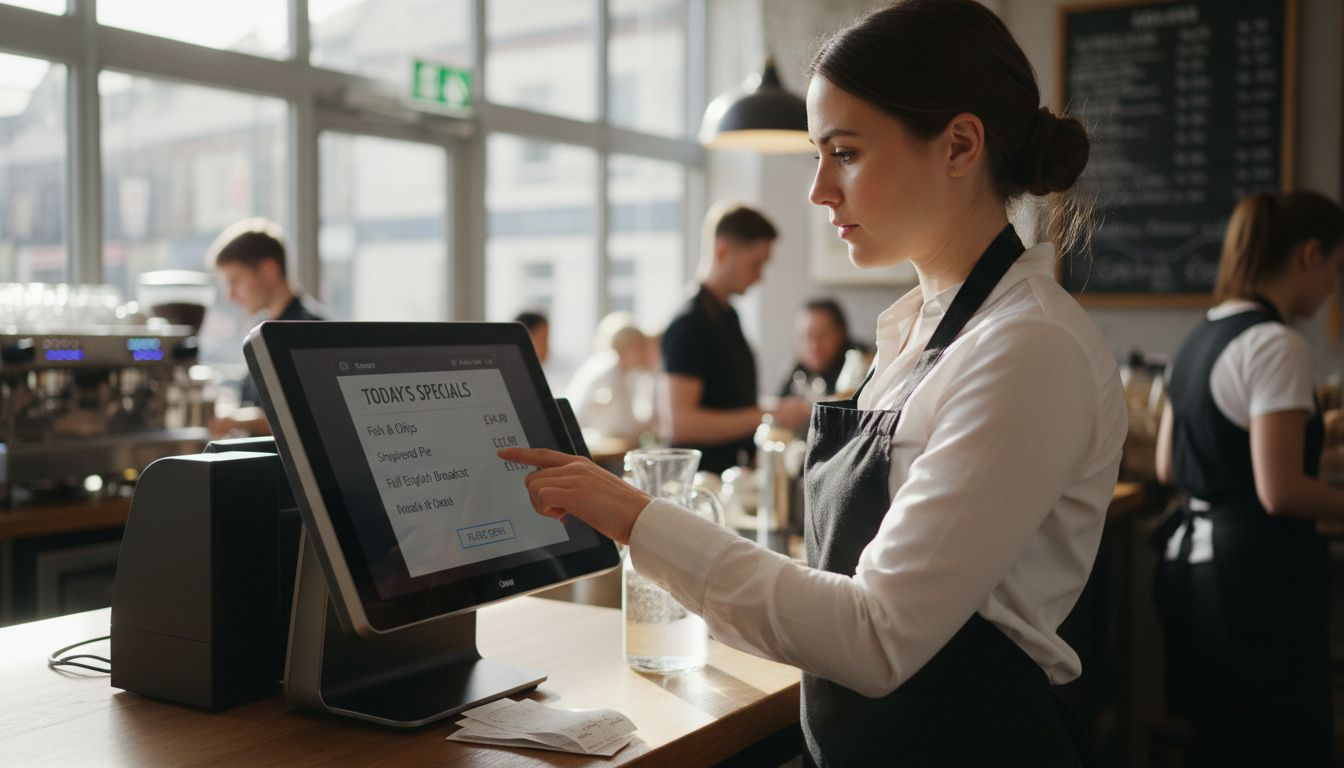
Advanced analytics embedded within contemporary POS systems transform raw transactional data into strategic business intelligence. By capturing detailed customer preferences, purchasing patterns, and operational metrics, businesses can make data-driven decisions that enhance efficiency and profitability.
To clarify how advanced POS features impact business performance, see the summary below:
| Feature | Business Impact | Typical Sector |
|---|---|---|
| Order Management | Faster service, fewer errors | Restaurants, cafés |
| Inventory Tracking | Reduced stockouts and waste | Retail, hospitality |
| Financial Reporting | Improved decision making | All industries |
| Customer Engagement | Increased loyalty and sales | Retail, food service |
| Multi-Channel Payments | Enhanced convenience | Retail, hospitality |
Modern POS systems are not just technological tools, but strategic partners that drive business growth and operational excellence.
Pro tip: Prioritise POS solutions that offer robust integration capabilities and scalable features to support your business’s evolving technological requirements.
Compliance, Security and Data Protection Requirements
Point of Sale (POS) systems handle sensitive financial and personal information, making data security a critical consideration for UK businesses. Robust security measures are essential to protect against potential cyber threats, financial fraud, and regulatory non-compliance.
Key security and compliance considerations include:
- Payment Card Industry (PCI) Compliance: Adherence to strict standards for handling credit card information
- Data Encryption: Protecting transaction and customer data through advanced encryption technologies
- User Authentication: Implementing multi-factor access controls
- Regular Security Updates: Maintaining system software with the latest security patches
- Audit Trail Maintenance: Comprehensive logging of all system transactions and user activities
The legal landscape for data protection in the United Kingdom is particularly stringent. Businesses must comply with multiple regulatory frameworks, including the UK General Data Protection Regulation (UK GDPR) and the Data Protection Act 2018. These regulations mandate strict protocols for collecting, storing, and processing personal and financial data.
Cyber security represents a critical aspect of POS system implementation. Businesses must develop comprehensive strategies that include regular security assessments, employee training on data protection protocols, and robust incident response plans. Advanced POS systems now incorporate intelligent security features such as real-time threat detection and automated security monitoring.
Protecting customer data is not just a legal requirement, but a fundamental trust mechanism between businesses and their clientele.
Pro tip: Conduct quarterly security audits and invest in continuous staff training to maintain robust data protection standards and minimise potential security vulnerabilities.
Costs, Risks and Optimising Your POS Investment
Investing in a Point of Sale (POS) system requires careful financial planning and strategic consideration. Strategic POS system deployment involves understanding the complex balance between initial expenses and long-term business benefits.
Key cost considerations for POS investment include:
- Hardware Acquisition: Upfront expenses for terminals, scanners, and peripherals
- Software Licensing: Annual or monthly subscription fees
- Implementation Costs: Staff training and system integration
- Maintenance Expenses: Regular updates, technical support, and potential repairs
- Potential Hidden Costs: Network infrastructure, additional security measures
Businesses must conduct comprehensive risk assessments when selecting POS technologies. Potential risks include technological obsolescence, cybersecurity vulnerabilities, and staff adaptation challenges. Total cost of ownership extends beyond initial purchase price, encompassing ongoing operational expenses and potential productivity gains.
Successful POS investment strategies involve thorough vendor evaluation, understanding scalability requirements, and selecting solutions that offer flexible, future-proof capabilities. Small to medium-sized enterprises should prioritise systems that provide robust features without overwhelming complexity, ensuring a balance between functionality and budget constraints.
Effective POS investment is not about finding the cheapest solution, but selecting a system that delivers measurable business value and supports long-term growth.
Pro tip: Conduct a detailed cost-benefit analysis and request comprehensive trial periods before committing to a specific POS system to ensure optimal alignment with your business needs.
Unlock Seamless Business Growth with Reliable POS Solutions
Managing the complexities of modern retail and hospitality businesses requires more than basic cash registers. The article highlights crucial challenges such as integrating real-time business intelligence, robust security compliance, and scalable technology to drive efficiency and customer satisfaction. If you are facing difficulties balancing these demands or searching for POS software that truly supports your operational goals, it is essential to explore trusted, customisable solutions designed specifically for UK businesses.
YCR Distribution offers a comprehensive range of POS hardware and bespoke software, including trusted brands like SAMTOUCH and EZEEPOS, purpose-built for restaurants, cafés and retail stores. Benefit from efficient inventory tracking, multi-channel payment processing and secure data management that helps you transform daily transactions into strategic growth opportunities. Discover how combining advanced POS technology with reliable services like next-day delivery can simplify your investment and maintain business continuity.
Take the next step towards streamlined operations and enhanced customer experiences by visiting YCR Distribution today.
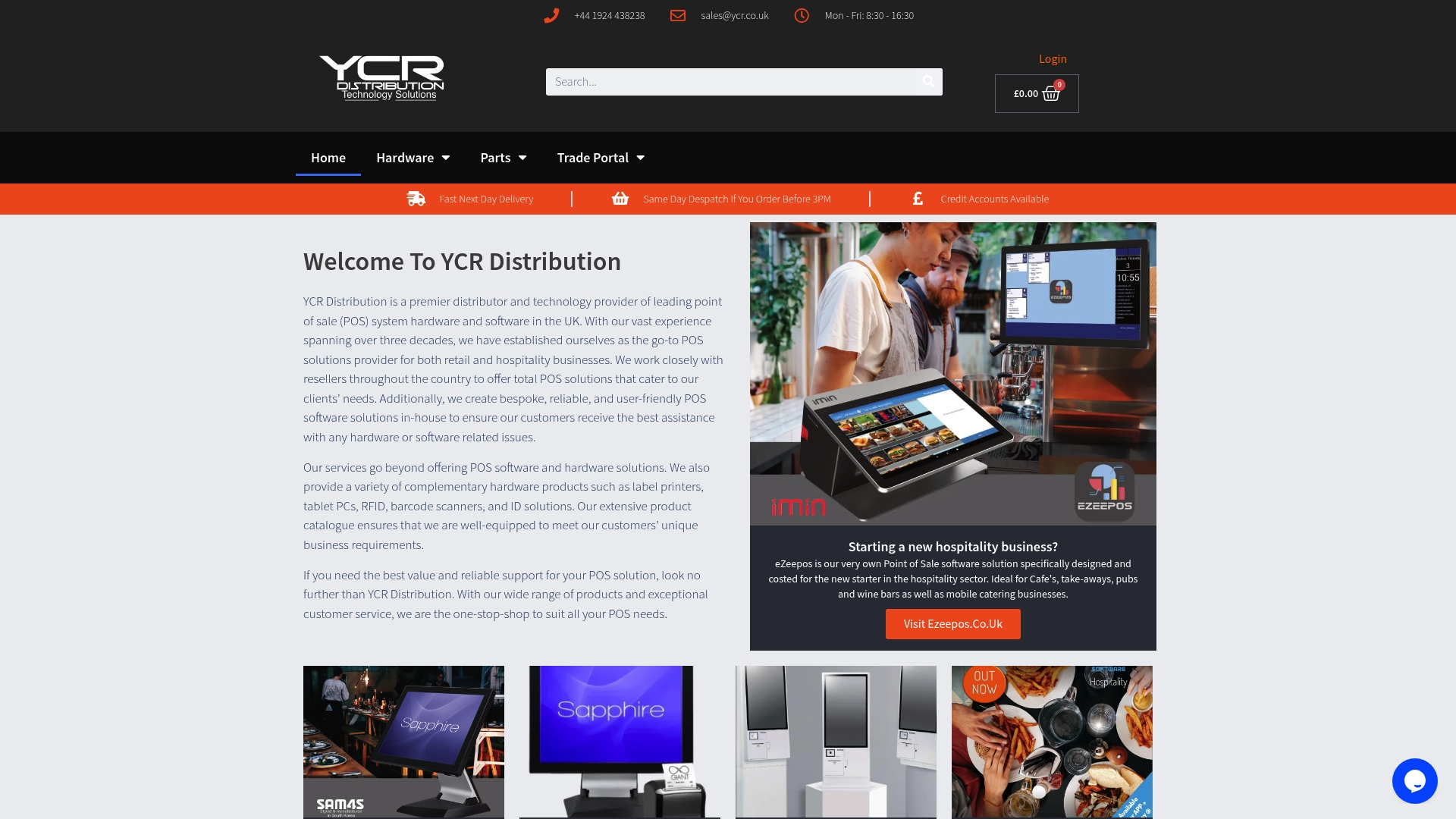
Experience the difference of a complete POS ecosystem tailored to your needs. Explore our customised POS software solutions, browse hardware options at YCR Distribution, and equip your business with the tools critical for growth right now.
Frequently Asked Questions
What are the key features of POS software?
POS software typically includes order management, inventory tracking, financial reporting, customer engagement tools, and multi-channel payment processing, making it a comprehensive business management solution.
How can POS software improve customer experience?
By streamlining transaction processes, providing personalised marketing options, and integrating loyalty programmes, POS software enhances customer interactions and satisfaction.
What types of businesses benefit from POS systems?
Various sectors, including retail, hospitality, and healthcare, benefit from POS systems as they tailor functionalities to meet specific operational needs.
Why is data security important for POS systems?
Data security is crucial for protecting sensitive financial and personal information from cyber threats and ensuring compliance with regulations, thereby maintaining customer trust.