
Security breaches in UK hospitality POS systems dropped by 40% since 2024, and the trend accelerates as we approach 2026. Modern bespoke POS software solutions combine cloud technology, AI analytics, and contactless payments to deliver unprecedented operational efficiency alongside robust security. This article guides you through the critical innovations reshaping hospitality POS technology, helping you make confident decisions for your venue’s future.
Table of Contents
- Introduction To Hospitality POS Technologies In 2026
- Cloud-Based POS Systems: Operational And Business Benefits
- AI And Machine Learning Enhancements In POS
- The Rise Of Contactless And Mobile Payment Integration
- Security And Compliance In Emerging POS Technologies
- Comparing POS Hardware Trends For 2026
- Enhancing Customer Experience With Integrated POS Solutions
- Common Misconceptions About Hospitality POS Technologies
- Conclusion: Choosing The Right POS System For 2026 And Beyond
- Discover Next-Gen Hospitality POS Solutions Today
Key Takeaways
| Point | Details |
|---|---|
| Cloud POS resilience | Reduces downtime by 80% and simplifies UK regulatory compliance through automatic updates |
| AI-driven efficiency | Predicts inventory needs, cuts waste, and personalizes customer service automatically |
| Contactless payments | Speeds transactions by 30%, improves customer satisfaction, and reduces queue times |
| Security advances | End-to-end encryption and PCI DSS compliance cut data breaches by 40% in UK hospitality |
| Hardware flexibility | Hybrid tablet and terminal solutions match diverse venue needs from cafes to full-service restaurants |
Introduction to Hospitality POS Technologies in 2026
The UK hospitality POS market is undergoing its most dramatic transformation in decades. Emerging technologies like cloud and AI will dominate UK hospitality POS market growth by 2026, with projections showing sustained double-digit expansion. Traditional cash registers and basic terminals are rapidly giving way to intelligent, interconnected systems that do far more than process transactions.
Since 2023, the shift from on-premises hardware to cloud-based platforms has accelerated sharply. Early adopters report measurable gains in operational efficiency, staff productivity, and customer satisfaction. Understanding this evolution helps you plan investments that remain relevant as technology advances.
Innovation drives competitive advantage in an increasingly demanding market. Customers expect fast service, seamless payments, and personalized experiences. Your POS system either supports these expectations or holds you back.
Several key factors are reshaping hospitality POS in 2026:
- Cloud infrastructure delivers real-time data access across multiple locations
- AI analytics automate inventory management and predict demand patterns
- Contactless and mobile payments become standard customer expectations
- Security protocols evolve to meet stricter data protection requirements
- Hardware designs balance portability with durability for demanding environments
These hospitality POS software innovations address longstanding operational pain points while opening new possibilities for service enhancement. The challenge is selecting solutions that fit your specific venue type, budget constraints, and growth plans.
Cloud-Based POS Systems: Operational and Business Benefits
Cloud POS systems fundamentally change how UK hospitality businesses manage operations. Unlike traditional terminals tied to physical locations, cloud platforms store data remotely and enable access from any internet-connected device. Adopting cloud POS reduces hospitality downtime by 80% and accelerates decision-making, delivering immediate operational advantages.

System reliability improves dramatically because remote monitoring detects issues before they cause failures. Software updates deploy automatically overnight, eliminating the downtime associated with manual installations. Your team always works with the latest features and security patches without scheduling maintenance windows.
Scalability represents another major benefit. You pay for what you use, adding terminals or features as your business grows. Opening a second location becomes straightforward because the cloud system already supports multi-site management. Real-time reporting consolidates data from all venues into a single dashboard.
Regulatory compliance becomes easier because cloud providers typically handle UK-specific requirements. When laws change, your system updates automatically rather than requiring expensive hardware replacements. This responsiveness to cloud POS benefits in UK hospitality saves both time and money.
Key operational improvements include:
- Remote troubleshooting reduces on-site technician visits by 75%
- Automatic backups protect transaction data without manual effort
- Staff training simplifies because interfaces remain consistent across updates
- Mobile POS advantages extend to tableside ordering and outdoor seating areas
- Integration with accounting and inventory systems happens through cloud APIs
Pro Tip: Start with a single terminal to test cloud POS functionality before committing your entire operation. This trial period lets staff adapt gradually while you verify the system meets your specific workflow needs.
IT maintenance burden drops significantly because you outsource server management to the provider. Your team focuses on serving customers rather than troubleshooting network issues. The importance of POS software becomes clear when you see how much time cloud systems save.
AI and Machine Learning Enhancements in POS
Artificial intelligence transforms POS systems from passive transaction recorders into active business intelligence tools. Machine learning algorithms analyze historical sales data to predict future demand with remarkable accuracy. This capability helps you order the right inventory quantities, reducing waste while ensuring popular items stay in stock.
Predictive analytics examine patterns across weeks, months, and years. You see which menu items sell together, when demand peaks occur, and how weather affects customer preferences. Armed with these insights, you optimize staffing schedules, adjust pricing strategies, and plan promotions that actually work.
Order entry validation catches mistakes automatically. If a server inputs an unusual combination or quantity, the system flags it for confirmation. This simple check reduces order errors by up to 60%, cutting food waste and improving customer satisfaction.
Sustainability tracking becomes practical through AI analysis of consumption patterns. You identify where waste occurs and test solutions based on data rather than guesswork. Some venues reduce food waste by 30% within six months of implementing AI in bespoke POS systems.
Customer behavior analytics enable personalized marketing that feels helpful rather than intrusive. The system recognizes returning customers and suggests items based on past orders. Loyalty programs become smarter, rewarding behaviors that actually drive revenue.
Practical AI applications in hospitality POS include:
- Dynamic pricing adjusts menu costs based on demand and ingredient availability
- Automated reordering triggers purchase orders when stock reaches preset thresholds
- Staff performance metrics identify training opportunities and reward excellence
- Menu engineering analyzes profitability and popularity to optimize offerings
- AI enhancements in POS software integrate seamlessly with existing workflows
Pro Tip: Focus AI implementation on your biggest operational pain point first. If inventory waste costs you thousands monthly, start there. Quick wins build team confidence in the technology.
Accessibility has improved dramatically. Small UK hospitality venues now access AI features that were previously exclusive to large chains. Modular pricing lets you add capabilities as you grow, starting with basic analytics and expanding into predictive modeling when ready.
The Rise of Contactless and Mobile Payment Integration
Contactless payment adoption in UK hospitality has skyrocketed, with customers increasingly expecting tap-to-pay convenience. Transaction speeds improve by up to 30% compared to chip-and-PIN methods, directly impacting how many customers you serve during peak periods. Faster payments mean shorter queues and happier guests.
Customer preference drives this shift. Mobile wallets like Apple Pay and Google Pay have become everyday tools rather than novelties. Your POS system must support these payment methods or risk frustrating tech-savvy customers who left their physical cards at home.
Higher throughput translates to measurable revenue gains. A busy cafe serving 200 customers daily gains an extra 15-20 transactions simply by reducing payment time. Over a year, this efficiency boost compounds significantly.
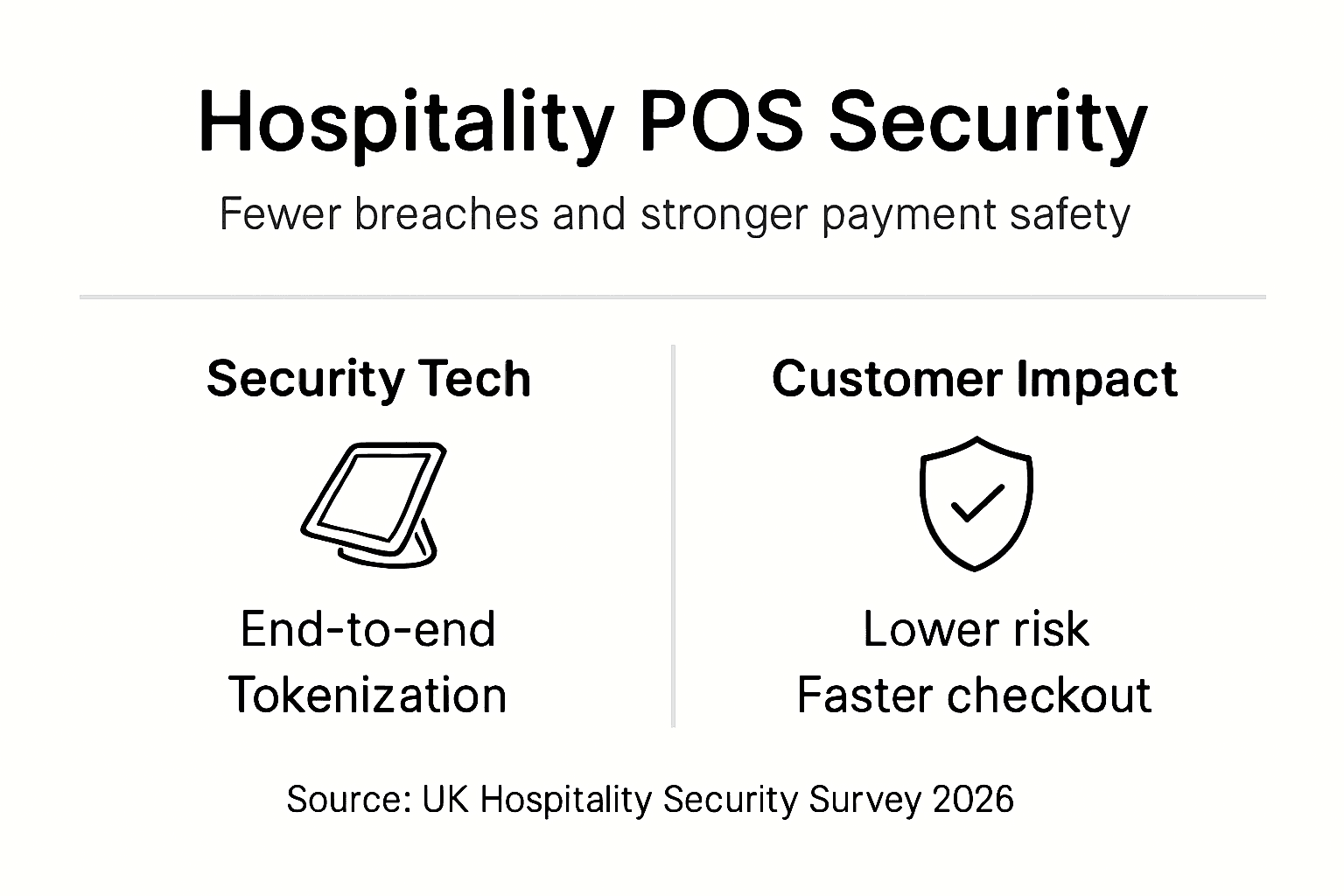
Security protocols for contactless payments have matured considerably. Tokenization replaces actual card numbers with unique identifiers, making intercepted data useless to fraudsters. Modern systems achieve convenience without compromising protection.
Integration challenges do exist, particularly when adding contactless capability to legacy terminals. However, contactless and mobile payment integration with contemporary POS hardware proves straightforward. Modular systems let you upgrade payment processing without replacing entire terminals.
Benefits extend beyond speed:
- Reduced cash handling lowers theft risk and speeds end-of-day reconciliation
- Digital receipts via email or SMS reduce paper costs and environmental impact
- Payment data integrates directly with accounting software
- Split bill functionality handles group payments effortlessly
- Tip management becomes transparent and accurate
Customer satisfaction scores consistently improve after venues implement modern payment options. The correlation between payment convenience and overall experience is stronger than many operators initially expect.
Security and Compliance in Emerging POS Technologies
Data security represents the foundation of trust in hospitality POS systems. Security enhancements using end-to-end encryption and PCI DSS compliance reduce POS data breaches in UK hospitality by 40% since 2024, demonstrating how modern protocols protect both businesses and customers. This improvement results from industry-wide adoption of stringent security standards.
End-to-end encryption ensures payment data remains unreadable from the moment a card is swiped until the transaction completes at the payment processor. Even if someone intercepts the data stream, they capture only meaningless encrypted strings. This protection applies whether you use wired terminals or mobile devices.
PCI DSS compliance sets minimum security requirements for any business handling card payments. Modern POS systems build these standards into their architecture rather than treating compliance as an afterthought. Cloud platforms typically demonstrate higher compliance rates than on-premises systems because professional security teams manage them.
UK data protection laws add another layer of requirements. The Data Protection Act 2018 and UK GDPR mandate careful handling of customer payment information. Non-compliance risks substantial fines and reputational damage that can devastate small businesses.
Regular software updates patch newly discovered vulnerabilities before exploits spread. Cloud POS systems deploy security patches automatically, while on-premises terminals require manual updates that operators often delay or skip. This difference partly explains why POS security advancements in UK hospitality favor cloud architecture.
Essential security practices include:
- Unique user credentials for each staff member with appropriate access levels
- Two-factor authentication for administrative functions
- Automatic logout after periods of inactivity
- Network segmentation isolating POS systems from guest WiFi
- Regular security audits and penetration testing
“The single biggest mistake hospitality businesses make is assuming their small size makes them unattractive targets. Criminals automate attacks that scan thousands of systems simultaneously, and small venues with weak security provide easy wins.”
Staff training matters as much as technology. Phishing attacks and social engineering exploit human vulnerabilities rather than technical ones. Your team needs to recognize suspicious requests and follow protocols when handling payment information.
Comparing POS Hardware Trends for 2026
Hardware selection significantly impacts how effectively your POS system supports daily operations. The right devices improve staff efficiency and customer service, while poor choices create frustration that undermines even the best software. Choosing POS hardware for hospitality requires balancing multiple factors specific to your venue type.
| Device Type | Best For | Key Advantages | Considerations |
|---|---|---|---|
| Traditional Terminals | Fixed checkout areas, high transaction volume | Durable, reliable, familiar interface | Limited mobility, requires counter space |
| Tablet POS | Tableside service, small venues, pop-ups | Portable, lower cost, intuitive touch interface | Battery life, screen visibility in bright light |
| Hybrid Systems | Full-service restaurants, multi-area venues | Flexibility for fixed and mobile use | Higher initial cost, requires more planning |
| Mobile Handhelds | Outdoor seating, festivals, delivery services | Ultimate portability, rugged designs available | Smaller screens, limited peripheral support |
Durability becomes critical in busy hospitality environments. Spills, drops, and constant use destroy consumer-grade devices quickly. Commercial POS hardware withstands these conditions through reinforced construction and sealed components.
Space constraints influence hardware choices significantly. Compact cafes benefit from tablet systems that free up counter space, while full-service restaurants need terminals that accommodate kitchen printers and customer displays.
Staff workflow efficiency depends on hardware placement and mobility. Tableside ordering via tablets reduces trips to fixed terminals, speeding service and improving accuracy. However, tablets require charging infrastructure and reliable WiFi coverage.
Hardware considerations for 2026 include:
- Processing power sufficient for AI analytics and multi-tasking
- Display quality readable in various lighting conditions
- Battery capacity supporting full shifts for mobile devices
- Connectivity options including WiFi, 4G, and wired Ethernet
- Peripheral compatibility for printers, scanners, and payment terminals
- Upgrade paths that protect your investment as technology evolves
Total cost of ownership extends beyond purchase price. Factor in maintenance, replacement cycles, and consumables like receipt paper. Higher quality hardware costs more initially but lasts longer and requires less troubleshooting.
Warranty terms and support responsiveness matter tremendously when devices fail during service. Same-day replacement options minimize disruption, while slow support leaves you scrambling with backup solutions.
Enhancing Customer Experience with Integrated POS Solutions
Customer experience improvements justify POS investments as clearly as operational efficiency gains. Integrated systems connect payment processing with inventory management, CRM tools, and analytics platforms. This connectivity enables personalized service that distinguishes your venue from competitors.
POS data reveals customer preferences with precision impossible through observation alone. You see purchase patterns, visit frequency, and average spending per customer segment. These insights drive targeted promotions that increase repeat visits rather than generic discounts that erode margins.
Faster service workflows directly impact satisfaction scores. When orders flow seamlessly from tablet to kitchen display to payment processing, customers notice the smooth experience. Table turnover improves without rushed service, increasing revenue per seat.
Loyalty programs become sophisticated when integrated with your POS. The system automatically tracks points, applies rewards, and suggests personalized offers at checkout. Customers appreciate recognition and relevant incentives.
Analytics identify your most valuable customers so you can treat them accordingly. Automated birthday reminders, exclusive previews, and VIP treatment drive emotional connections that transcend transactional relationships. POS-driven customer experience improvements compound over time as your database grows.
Integration benefits extend throughout the customer journey:
- Online ordering syncs with in-venue systems for consistent experiences
- Wait time estimates based on current kitchen load set accurate expectations
- Allergy and dietary preference flags alert staff automatically
- Feedback collection triggers after transactions to capture fresh impressions
- Multi-channel consistency ensures customers receive the same quality everywhere
Staff tasks simplify when systems communicate effectively. Servers spend less time on administrative work and more time engaging customers. This shift improves job satisfaction while enhancing service quality.
Competitive advantage emerges from consistent execution of these integrated capabilities. One excellent experience might bring a customer back, but reliable excellence builds loyalty that withstands competitor promotions.
Common Misconceptions About Hospitality POS Technologies
Several persistent myths discourage UK hospitality operators from adopting modern POS technologies. Addressing these misconceptions removes barriers to innovation that could transform your business.
Many operators believe on-premises systems offer better security than cloud platforms. Reality proves the opposite in most cases. Professional cloud providers employ dedicated security teams, implement enterprise-grade protections, and maintain certifications that individual venues cannot match. Your on-premises server likely lacks the constant monitoring and rapid patch deployment that cloud systems provide.
AI complexity intimidates small venue owners who assume the technology requires data science expertise. Contemporary AI features work automatically in the background, requiring no special knowledge. You interact with simple dashboards showing actionable insights rather than complex algorithms.
Cloud reliability concerns stem from early internet service limitations. Modern UK broadband delivers consistent uptime, and POS systems include offline modes that queue transactions during rare outages. Actual downtime data shows cloud systems outperform traditional terminals significantly.
Cost assumptions also mislead decision makers. While advanced systems require investment, poor POS choices cost more through inefficiency, errors, and missed opportunities. Subscription pricing spreads costs predictably, and efficiency gains typically offset fees within months.
Key misconceptions to overcome:
- Legacy terminals are simpler to maintain than cloud systems (reality: cloud systems require far less hands-on maintenance)
- Contactless payments increase fraud risk (reality: tokenization makes contactless more secure than magnetic stripe cards)
- Small venues cannot justify AI features (reality: modular pricing and clear ROI make AI accessible)
- Hardware upgrades mean replacing everything simultaneously (reality: modern systems support phased rollouts)
- Staff training for new systems takes weeks (reality: intuitive interfaces reduce training time to days)
Understanding facts rather than assumptions empowers better investment decisions. The gap between perception and reality has narrowed as POS technology matured, but outdated beliefs persist.
Conclusion: Choosing the Right POS System for 2026 and Beyond
Selecting a POS system for 2026 requires balancing immediate needs against future growth. Start by assessing your current pain points. Does slow service frustrate customers during rushes? Does inventory management consume excessive staff time? Does your current system lack the reporting you need for informed decisions?
Scalability should drive your evaluation criteria. Systems that work for a single location may struggle supporting multi-site operations. Cloud infrastructure provides the flexibility to expand without architectural overhauls.
Security and compliance cannot be negotiable. Any system you consider must meet PCI DSS standards, support end-to-end encryption, and facilitate UK data protection compliance. Cutting corners here invites catastrophic breaches.
Align POS features with your operational workflows and customer expectations. Full-service restaurants need tableside ordering, while quick-service venues prioritize transaction speed. Coffee shops benefit from loyalty program integration, while pubs may emphasize inventory tracking for kegs.
Implementation planning matters as much as selection. Gradual rollout reduces disruption and allows staff to adapt. Start with core functionality and add advanced features as your team gains confidence.
Future-proofing principles for 2026:
- Prioritize modular systems that add capabilities without wholesale replacement
- Ensure vendor roadmaps align with emerging technologies like AI and contactless payments
- Verify integration capabilities with your existing accounting and inventory tools
- Evaluate support quality and response times before committing
- Plan for staff training investment, not just hardware and software costs
The right POS system becomes a strategic asset rather than just operational infrastructure. It provides the data, efficiency, and flexibility that separate thriving venues from struggling competitors.
Discover Next-Gen Hospitality POS Solutions Today
Transforming your hospitality operation starts with the right technology foundation. Whether you manage a bustling restaurant, cozy cafe, or expanding chain, expert guidance helps you navigate POS options and identify solutions matching your specific requirements.
Explore comprehensive hardware ranges designed specifically for demanding hospitality environments. From durable terminals to flexible tablet systems, find devices that withstand daily pressures while delivering reliability. Choose POS hardware that supports your operational style and growth plans.
Understand how hospitality POS hardware impact extends beyond transaction processing into inventory management, staff coordination, and customer experience enhancement. Access POS software solutions that streamline UK hospitality operations while positioning your venue for future innovation.
FAQ
What are the most important POS features for UK hospitality businesses in 2026?
Security compliance including PCI DSS and end-to-end encryption tops the priority list, protecting your business and customer data. AI-driven analytics for inventory prediction and customer insights deliver measurable efficiency gains. Cloud scalability ensures your system grows with your business without expensive overhauls. Contactless payment support meets customer expectations and speeds transaction processing significantly.
How can small venues afford advanced AI-powered POS technology?
AI POS software now uses modular pricing that lets small venues start with basic features and add capabilities as budget allows. The cost savings from reduced waste, better inventory management, and improved staff efficiency typically offset subscription fees within months. Many providers offer tiered plans specifically designed for single-location businesses, making enterprise-level technology accessible at small business prices.
What steps ensure POS system security compliance in the UK?
Implement PCI DSS standards through certified hardware and software that encrypts payment data from capture to processing. Use end-to-end encryption for all transactions and ensure your provider maintains current compliance certifications. Regular software updates patch vulnerabilities as they emerge, while staff training prevents social engineering attacks. Annual security audits verify your protocols remain effective and compliant with evolving UK data protection regulations.
How does cloud POS reduce downtime compared to legacy systems?
Cloud POS enables remote monitoring that detects and resolves issues before they cause service interruptions, cutting downtime by up to 80% compared to on-premises terminals. Automatic software updates deploy during off-hours without requiring on-site technician visits. Real-time system health monitoring alerts providers to potential failures, enabling proactive maintenance. When problems occur, remote troubleshooting resolves most issues within minutes rather than waiting for on-site support.