
Think your till is just for ringing up sales? Modern POS systems are the operational backbone of UK restaurants in 2026. Over 70% of UK venues integrate POS systems for comprehensive operational management beyond payments, transforming how you handle orders, inventory, analytics, and customer service. This article clarifies the role of POS in hospitality, showing precisely how the right system drives measurable gains in efficiency and profitability.
Table of Contents
- Introduction To Pos Systems In Uk Restaurants
- Core Functions And Types Of Restaurant Pos Systems
- Operational And Financial Benefits Of Pos Systems
- Integration Capabilities And Payment Innovations
- Common Misconceptions About Pos Systems
- Choosing And Implementing The Right Pos For Your Restaurant
- Future Trends And Strategic Outlook For Restaurant Pos In The Uk
- Frequently Asked Questions About Pos Systems In Uk Restaurants
Key takeaways
| Point | Details |
|---|---|
| Integrated platform | Modern POS systems combine ordering, payments, inventory, and analytics in one solution. |
| Service model matters | Choose POS based on your restaurant’s service style and operational complexity. |
| Measurable impact | POS systems reduce errors, accelerate service, and increase profitability measurably. |
| Payment flexibility | Systems support contactless, mobile wallets, and online ordering integration. |
| Implementation critical | Proper training and rollout maximise POS benefits and staff adoption. |
Introduction to POS systems in UK restaurants
What is a POS system? It’s the central hub coordinating every transaction and operational task in your restaurant. No longer just electronic cash registers, today’s platforms capture orders, process payments, track inventory in real time, and generate analytics guiding smarter decisions. This evolution stems from surging digital payment adoption and data-driven management demands across UK hospitality.
In 2026, customer expectations for speed and accuracy push innovation further. QR code ordering, contactless cards, and mobile wallets now dominate UK dining. Modern UK restaurant POS systems integrate ordering, payments, inventory, and analytics into a single platform, improving operational efficiency and accuracy. This integrated approach allows you to monitor sales trends, adjust menus dynamically, and optimise staffing based on live data.
Key capabilities defining modern POS technology in UK hospitality include:
- Order capture across multiple channels (table, counter, online)
- Multi-tender payment processing including chip and PIN, contactless, and mobile
- Real-time inventory tracking and automated stock alerts
- Detailed sales, labour, and profitability reporting
- Integration with third-party delivery platforms and loyalty programmes
These features shift POS from passive transaction recorders to active management tools that enhance customer experiences and streamline operations.
Core functions and types of restaurant POS systems
Every effective POS system delivers essential functions: order management routes requests to kitchen displays, payment processing handles diverse tender types securely, inventory modules prevent stockouts by tracking ingredient usage, and reporting dashboards reveal profit drivers. Understanding these core capabilities helps you match systems to your specific needs.
Different POS types suit varied restaurant models. Cloud-based systems store data online, enabling remote access and automatic updates. Traditional on-premise solutions keep data locally, offering control but requiring manual maintenance. Mobile POS devices support tableside ordering and payment. Hybrid models blend cloud flexibility with local reliability.
Choosing the right POS system depends on service style, menu complexity, and payment processing needs, with different systems optimised for counter-service, table-service, or hybrid models. Quick-service restaurants benefit from fast counter POS with mobile ordering integration. Fine dining venues need table management, course timing, and split billing features. Cafés often prefer mobile devices for flexibility.
| POS Type | Best For | Key Features | Typical Cost Range |
|---|---|---|---|
| Cloud-based | Multi-location, scalability | Remote access, auto updates, online/offline mode | £50-150/month per terminal |
| Traditional on-premise | Single location, data control | Local storage, one-time licence, manual updates | £1,000-3,000 upfront |
| Mobile | Tableside service, pop-ups | Portability, lower hardware cost, wireless | £30-80/month plus devices |
| Hybrid | Restaurants needing reliability | Cloud benefits, local backup, best of both | £70-180/month per terminal |
Pro Tip: Prioritise cloud or hybrid systems if you plan to expand locations or need real-time reporting across sites, ensuring your technology scales with growth.
When evaluating options, consider how each type aligns with your workflow. Counter-service venues value speed, table-service restaurants need reservation and seating management, and delivery-focused operations require seamless third-party platform integration. Selecting the right role of POS software becomes straightforward once you map your operational priorities.
Operational and financial benefits of POS systems
POS systems deliver measurable improvements across daily operations. Automated order routing eliminates handwriting errors and kitchen miscommunication. Faster transaction processing reduces queue times and serves more customers during peak periods. Real-time inventory tracking prevents ingredient shortages and waste, directly protecting margins.

Smart labour management emerges from detailed reporting. POS data reveals your busiest hours, enabling precise staff scheduling that cuts unnecessary labour costs. Sales analytics identify top-performing menu items and underperformers, guiding menu engineering for higher profitability. UK restaurants integrating advanced POS systems have seen reductions in order errors by over 20%, faster service times, and profit margin improvements up to 2 percentage points.
Follow these steps to measure POS impact on your restaurant’s performance:
- Establish baseline metrics for order accuracy, average transaction time, and food cost percentage before implementation.
- Track the same metrics weekly during the first three months post-implementation.
- Compare labour hours scheduled against actual sales volume to identify efficiency gains.
- Monitor ingredient waste levels and stockout incidents monthly.
- Calculate gross profit margin changes attributable to better menu mix and portion control.
- Survey staff and customers to assess usability and satisfaction improvements.
These quantifiable outcomes demonstrate why use POS systems beyond basic transaction processing. The data-driven insights empower you to make informed decisions about pricing, promotions, and resource allocation.
“The right POS system transforms raw transaction data into actionable intelligence, turning every sale into a strategic opportunity for improvement.”
Pro Tip: Monitor key metrics like table turn time, average cheque size, and food cost percentage weekly to optimise menu pricing and staffing decisions, maximising the financial return from your POS investment.
Beyond immediate efficiency, POS systems support strategic planning. Historical sales patterns inform seasonal menu changes. Customer purchase history enables targeted marketing. Integration with accounting software simplifies financial reporting and tax compliance, saving hours of manual reconciliation.
Integration capabilities and payment innovations
Modern POS platforms function as integration hubs connecting diverse systems. Payment processors link directly, accepting contactless cards, Apple Pay, Google Pay, and increasingly popular QR code payments. This flexibility meets customer preferences while ensuring secure, compliant transactions.
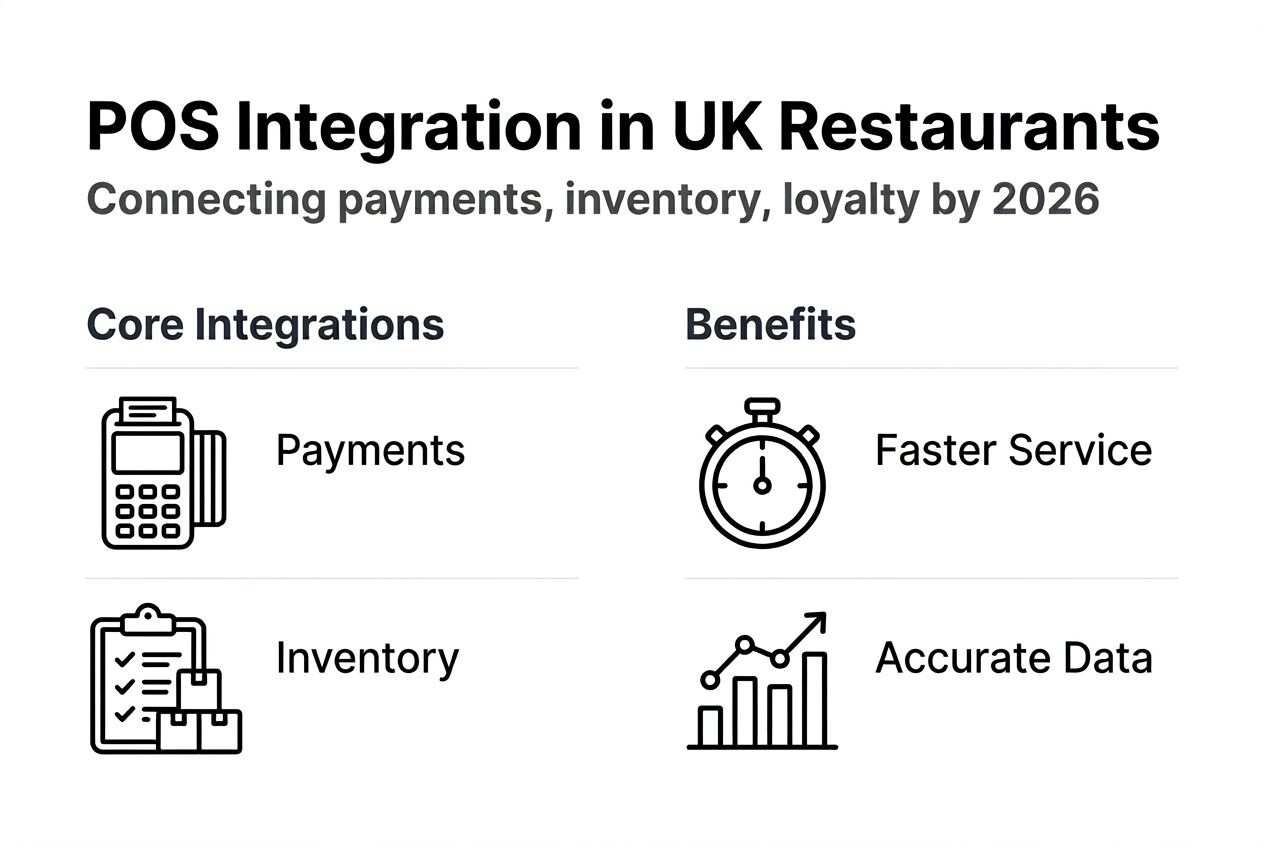
Over 70% of UK hospitality venues use POS integration with digital payments like contactless and mobile wallets, plus online ordering platforms. Connecting your POS to delivery aggregators like Deliveroo and Uber Eats centralises order management, preventing kitchen chaos from multiple channels. Menu updates sync instantly across all platforms, maintaining consistency.
Compliance remains paramount. PCI DSS standards govern card data security, and robust POS systems handle encryption automatically. UK VAT calculations integrate seamlessly, with systems correctly applying standard, reduced, or zero rates to menu items. Detailed transaction logs simplify audit trails and tax reporting.
| Payment Method | UK Adoption Rate | POS Integration | Customer Benefit |
|---|---|---|---|
| Contactless cards | 85% | Standard in modern systems | Fastest checkout |
| Mobile wallets (Apple Pay, Google Pay) | 62% | Requires NFC-enabled terminals | Convenience, security |
| QR code payments | 38% | App or software integration | Contactless, order ahead |
| Traditional chip and PIN | 95% | Universal support | Familiarity, security |
| Cash | 45% (declining) | Manual entry or cash drawer link | No transaction fees |
Loyalty programme integration transforms one-time visitors into regulars. Your POS automatically tracks purchase history, applies rewards, and triggers personalised offers. CRM connections enable targeted email campaigns based on dining frequency and preferences, driving repeat business measurably.
POS terminals in UK hospitality now support diverse payment innovations, but integration quality varies. Assess whether your prospective system offers native integrations or relies on third-party middleware, which can introduce delays and compatibility issues. Direct API connections provide the most reliable performance.
Online ordering integration deserves special attention. Customers increasingly expect to browse menus, place orders, and pay digitally before arriving. Your POS should receive these orders seamlessly, routing them to kitchen displays alongside dine-in requests. This unified order flow prevents missed tickets and maintains kitchen efficiency during mixed service periods.
Common misconceptions about POS systems
Many restaurant operators still view POS as merely an electronic cash register. This outdated perspective undervalues the strategic role these systems play in modern hospitality management. A POS is your operational nervous system, coordinating information flow across front and back of house.
Another frequent belief holds that all POS systems function identically, making selection simple. Many mistakenly think POS is just a cash register or too complex and costly; in reality, modern POS offer scalable features essential for operational success. Systems differ significantly in capabilities, integration options, user interface design, and pricing models.
Cost concerns often deter investment, yet modern cloud-based solutions start affordably with monthly subscriptions eliminating large upfront expenses. Scalability allows you to begin with essential features and add modules as your business grows, spreading costs over time.
Complexity fears also discourage adoption. Contemporary POS interfaces prioritise intuitive design, requiring minimal training for basic functions. Staff familiar with smartphones adapt quickly to touchscreen navigation and visual menu layouts.
Common myths versus reality:
- Myth: POS is only for taking payments. Reality: Modern systems manage orders, inventory, staff, analytics, and customer relationships.
- Myth: Implementation disrupts operations severely. Reality: Phased rollouts and proper training minimise disruption, often improving service within weeks.
- Myth: Small restaurants don’t need sophisticated POS. Reality: Even small venues benefit from inventory tracking, sales reporting, and payment flexibility.
- Myth: POS systems are too expensive for independents. Reality: Subscription models and scalable features make advanced systems accessible at all business sizes.
- Myth: Staff resist new technology. Reality: Intuitive interfaces and efficiency gains typically generate staff enthusiasm once initial training concludes.
Understanding why POS software matters requires looking beyond transaction processing to the broader operational and strategic value these platforms deliver.
Choosing and implementing the right POS for your restaurant
Selecting your ideal POS system starts with honest assessment of your restaurant’s specific needs. Consider your service model: quick-service, casual dining, fine dining, or delivery-focused. Each demands different feature priorities. Evaluate menu complexity, noting whether you need modifiers, combo meals, or course sequencing.
Effective POS selection involves matching service style, menu complexity, and integration needs, plus planning staff training and monitoring ROI post-implementation. Payment requirements matter too. Will you accept online orders, gift cards, or loyalty points? List must-have integrations like accounting software, delivery platforms, or reservation systems.
Budget realistically for both software subscriptions and hardware costs. Cloud systems typically charge monthly per terminal, while traditional solutions require upfront licence purchases. Factor in payment processing fees, which vary by provider and transaction volume. Hardware includes terminals, tablets, printers, cash drawers, and kitchen displays.
Implementation planning determines success. Follow these key phases:
- Conduct needs assessment documenting your service model, menu structure, and integration requirements.
- Research systems matching your criteria, requesting demos from at least three providers.
- Compare pricing models including software, hardware, payment processing, and ongoing support costs.
- Select your system and negotiate terms, clarifying training, data migration, and support provisions.
- Plan rollout timeline allowing adequate setup, testing, and training before go-live.
- Pilot test with a subset of staff during off-peak hours to identify issues.
- Train all staff thoroughly on core functions, providing reference materials and ongoing support access.
- Launch fully while monitoring closely for technical issues or workflow bottlenecks.
- Gather staff and customer feedback during the first month to refine configuration.
- Measure ROI by tracking efficiency metrics, error rates, and financial performance improvements.
Pro Tip: Involve staff early in selection and provide continuous support after launch to ensure adoption and maximise the system’s benefits for your team and customers.
Don’t overlook vendor support quality. Responsive technical assistance prevents minor issues from disrupting service. Check whether support is included, available 24/7, and delivered via phone, chat, or email. Read reviews focusing on reliability and support responsiveness.
Data migration from existing systems requires careful planning. Ensure your new provider offers migration assistance for menu items, pricing, customer records, and historical sales data. Test thoroughly before discontinuing your old system.
Future trends and strategic outlook for restaurant POS in the UK
Artificial intelligence increasingly powers POS capabilities. Predictive algorithms forecast demand patterns, optimising inventory orders and reducing waste. Machine learning analyses sales data to recommend menu pricing adjustments and identify emerging customer preferences.
Mobile and cloud-based systems continue gaining market share. These platforms offer flexibility for pop-up events, outdoor dining, and multi-location management. Remote monitoring lets you oversee operations from anywhere, essential for restaurant groups and franchises.
Data security and regulatory compliance grow more stringent. POS providers invest heavily in encryption, tokenisation, and secure cloud infrastructure. UK regulations around data protection and payment security evolve constantly, making system updates critical.
Sustainability initiatives integrate into POS reporting. Track food waste by ingredient, monitor energy consumption patterns, and measure the carbon footprint of supply chains. This data supports both environmental goals and cost reduction efforts.
Key trends shaping restaurant POS in the UK include:
- AI-driven inventory forecasting and dynamic menu pricing
- Expanded mobile POS adoption for tableside and outdoor service
- Enhanced data security with biometric authentication and blockchain payment verification
- Integration of sustainability metrics for waste reduction and environmental reporting
- Personalised marketing through customer behaviour analytics and loyalty programme automation
- Voice-activated ordering and payment processing for accessibility and efficiency
These innovations position POS systems as strategic assets rather than operational necessities. Early adopters gain competitive advantages through superior efficiency, customer insights, and adaptability. The future of POS in hospitality centres on intelligence, integration, and agility.
Find the right POS solutions for your restaurant with YCR
Navigating POS options feels overwhelming, but expert guidance simplifies the journey. YCR Distribution has specialised in hospitality POS solutions for over three decades, helping UK restaurants select, implement, and optimise systems that truly fit their operations.
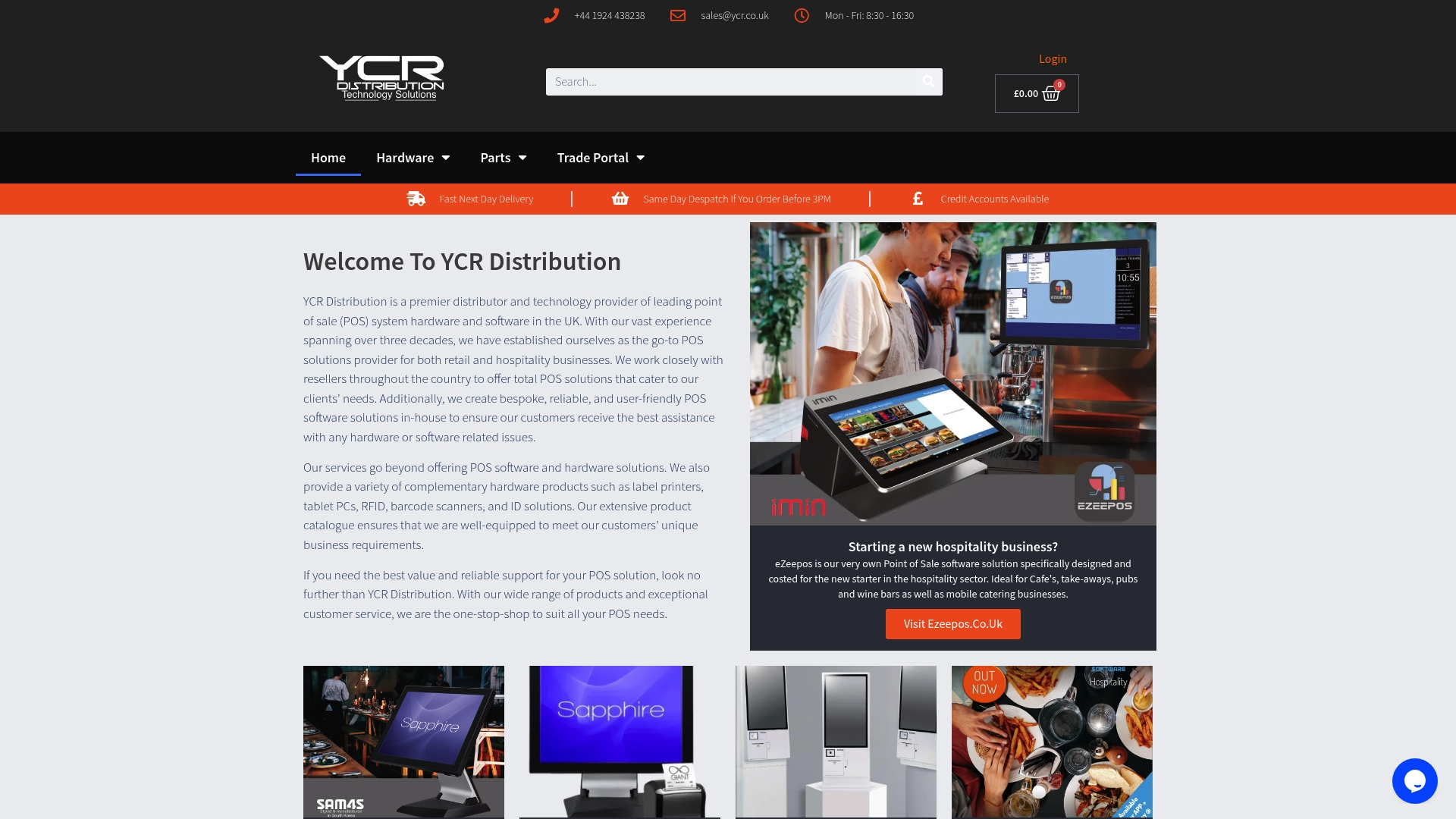
Our comprehensive range includes everything from robust POS hardware like terminals and tablets to sophisticated POS software platforms designed specifically for restaurant workflows. We partner with leading brands including SAM4S and iMin, offering reliable POS terminals backed by responsive support.
Whether you operate a busy café, fine dining restaurant, or multi-location group, YCR provides tailored solutions matching your service model and growth ambitions. Our team understands UK hospitality demands and delivers systems that genuinely improve efficiency and profitability.
Frequently asked questions about POS systems in UK restaurants
What core functions should a restaurant POS system have in 2026?
Essential functions include multi-channel order management, secure payment processing for all tender types, real-time inventory tracking, detailed sales and labour reporting, and integration capabilities for delivery platforms and loyalty programmes. These features form the operational foundation for efficient restaurant management.
How do POS systems help with UK VAT compliance?
Modern POS systems automatically apply correct VAT rates to menu items based on your configuration, maintaining detailed transaction records required for HMRC reporting. The software generates VAT reports covering sales periods, simplifying your tax return preparation and ensuring compliance with UK regulations.
What are the typical costs associated with installing a POS system?
Cloud-based systems typically range from £50 to £150 monthly per terminal, with hardware costing £300 to £800 per device. Traditional systems require £1,000 to £3,000 upfront for software licences plus similar hardware costs. Payment processing fees add 1.5% to 3% per transaction depending on your provider and volume.
Can a POS system integrate with mobile and contactless payments?
Yes, modern POS platforms support contactless cards, Apple Pay, Google Pay, and QR code payments through NFC-enabled terminals. Most systems also integrate with online ordering platforms and mobile apps, centralising all payment channels for simplified reconciliation and reporting.
How long does it take to train staff on a new POS system?
Basic functions typically require 2 to 4 hours of training for staff familiar with touchscreen devices. Full proficiency including advanced features develops over 1 to 2 weeks of regular use. Intuitive interfaces and ongoing support from providers like YCR accelerate adoption, and choosing the right POS system with user-friendly design minimises training time.