
TL;DR:
- Retailers integrating modern POS technology can reduce manual processing time and errors. Future trends include AI inventory management, mobile POS, automation, and omnichannel integration. Successful implementation depends on staff training, strategic planning, and involving employees throughout the process.
UK retailers lose on average 12 hours weekly due to manual processing and inventory errors, and that time is money most shops simply cannot afford to waste. In 2026, the gap between retailers who embrace modern point of sale technology and those still relying on legacy systems is widening fast. From AI-powered stock management to cloud-based analytics and seamless omnichannel selling, the technology landscape is shifting at pace. This guide breaks down the most impactful retail technology trends for 2026, helping you identify which investments will genuinely move the needle for your business.
Table of Contents
- Key criteria for choosing retail technology in 2026
- Top retail technology trends shaping UK shops in 2026
- comparison of leading retail technology options
- How to implement retail technology for maximum ROI
- The real driver of retail tech success in 2026: people, not just innovation
- Your next step: upgrading with expert retail technology support
- frequently asked questions
Key Takeaways
| Point | Details |
|---|---|
| Automation leads efficiency | Embracing automation in POS and inventory saves time and reduces manual labour costs. |
| Integration is essential | Seamless integration with accounting, e-commerce, and loyalty platforms future-proofs your business. |
| Staff buy-in matters | Engaging and upskilling staff is as important as the technology itself for success. |
| Measure for ROI | Always track KPIs like error rates and margins before and after upgrading retail technology. |
Key criteria for choosing retail technology in 2026
Before you commit budget to any new system, it pays to think clearly about what you actually need. The market is full of shiny features, but only a handful of criteria truly matter when you are investing in retail technology for the long term.
Here are the six most important factors to weigh before making a decision:
- Integration capability: Your POS system must connect with your e-commerce platform, accounting software, and loyalty programmes without friction. POS integration strategies are now a baseline expectation, not a bonus feature.
- scalability: A system that works for one shop today should scale to five locations tomorrow without a complete overhaul.
- Staff training requirements: Complex systems slow adoption. Look for intuitive interfaces that reduce the learning curve.
- Security and compliance: With card fraud and data breaches rising, robust security features and PCI DSS compliance are non-negotiable.
- Support and reliability: UK-based support with fast response times matters enormously when a terminal goes down mid-trading.
- ROI measurability: You need clear metrics before and after implementation. Implementation success hinges on assessing needs, ensuring integrations with accounting, loyalty, and e-commerce systems, and measuring ROI metrics such as a 20% drop in order errors.
The POS upgrade benefits become most visible when you track concrete improvements, think error reduction, margin increases, and hours reclaimed each week. Analytics for retail growth tools make this measurement straightforward by connecting sales data directly to operational outputs.
Pro tip: Before finalising any system, involve your front-line staff in the evaluation process. They spot practical usability problems that managers miss entirely, and early buy-in dramatically improves adoption rates post-launch.
Integration with e-commerce and loyalty platforms matters more than ever in 2026 because customers expect a consistent experience whether they shop online or in-store. A POS system that siloes data from your webshop is no longer fit for purpose.
Top retail technology trends shaping UK shops in 2026
With a clear decision framework in place, you can evaluate the specific trends driving change across UK retail this year with far greater confidence.
The five technology trends making the biggest impact right now are:
- AI-driven inventory management: Machine learning analyses sales patterns and flags reorder points automatically, cutting overstock and stockouts.
- Mobile POS (mPOS): Queue-busting handheld terminals let staff process payments anywhere on the shop floor, reducing customer wait times significantly.
- POS automation: Modern POS automation saves retailers time and reduces checkout errors, enabling faster customer service at every touchpoint.
- Cloud-based analytics: Real-time dashboards give owners and managers instant visibility into sales, margins, and product performance without waiting for end-of-day reports.
- omnichannel integration: A unified commerce approach connects in-store, online, and click-and-collect into one seamless customer journey.
The AI automation growth trend is particularly striking. AI-assisted stock replenishment alone can reduce shrinkage and overordering costs by a meaningful percentage across a multi-site estate.
Key insight: A faster checkout does not just improve customer satisfaction. It directly increases the number of customers you can serve per hour, turning speed into revenue.
For streamlined retail operations, the priority should be combining automation with mobile capability. These two trends together deliver the most immediate return in high-footfall environments. If you are unsure where to start, reviewing the main types of POS systems available will help you map the right technology to your shop format.
Pro tip: Do not chase every trend at once. Pick the single biggest operational pain point in your shop, whether that is long queues, stockroom errors, or disconnected sales channels, and choose the trend that solves it most directly.
comparison of leading retail technology options
Knowing which trends are relevant is useful. But directly comparing the technology options that deliver those trends is what helps you make a confident, informed decision.
| Technology option | Best suited for | Key strength | Main limitation | Integration level | Cost bracket (typical) |
|---|---|---|---|---|---|
| All-in-one POS terminal | Independent shops, convenience stores | Speed, reliability, full feature set | Less portable | High | Mid-range |
| Mobile POS (tablet-based) | Fashion, events, pop-ups | Queue-busting, flexible | Battery dependence | Medium-high | Low-mid |
| Cloud POS platform | Multi-site chains | Real-time data, remote management | Internet dependency | Very high | Mid-high |
| Self-service kiosk | High-volume food, pharmacy | Staff cost reduction | High upfront cost | Medium | High |
Modern POS platforms centralise analytics for real-time inventory optimisation, which is especially valuable for retailers managing multiple product lines or locations. The table above reflects how different shop types have different priorities. A convenience store needs reliability and speed above all else. A growing fashion chain needs cloud connectivity and scalability.
Key considerations when comparing options:
- All-in-one terminals offer the most stability and feature depth but require a fixed counter setup.
- Mobile POS solutions are ideal for increasing sales floor coverage but require a solid Wi-Fi infrastructure.
- Cloud platforms shine for data-driven retailers but come with recurring subscription costs to budget for.
- Self-service kiosks reduce staffing pressure but require customer familiarity and a clear return on the upfront investment.
“The question is not which technology is best in isolation. It is which technology fits your shop’s operational model, customer expectations, and growth trajectory.” Review retail tech implementation examples to see how other UK shops have matched these options to real-world scenarios.
How to implement retail technology for maximum ROI
Choosing the right technology is only half the challenge. Implementation is where many retailers stumble, and a poor rollout can undermine even the best system on the market.
Follow these steps to give your upgrade the best possible chance of success:
- conduct a needs assessment: Map your current pain points precisely. Where are errors occurring? Where is time being lost? This baseline data becomes your ROI benchmark.
- Plan integrations first: Before purchasing hardware, confirm compatibility with your existing accounting software, e-commerce platform, and loyalty scheme.
- Set measurable targets: Track metrics after implementation, order errors (targeting a 20% drop), margin improvements, and the 12 hours weekly saved on manual processes are all proven benchmarks.
- Run a pilot before full rollout: Launch the new system in one store or department first. Real-world feedback from a controlled environment is worth more than any vendor demonstration.
- Train thoroughly and repeatedly: Initial training is rarely enough. Schedule refresher sessions after one month and three months to cement good habits.
- monitor and review continuously: Set a formal post-launch review at 30, 60, and 90 days. Use automation strategies to flag performance anomalies automatically rather than waiting for manual reports.
The role of POS in retail growth becomes tangible only when implementation is treated as a project, not just a procurement decision. Staff involvement at every stage is the single biggest predictor of a smooth go-live.
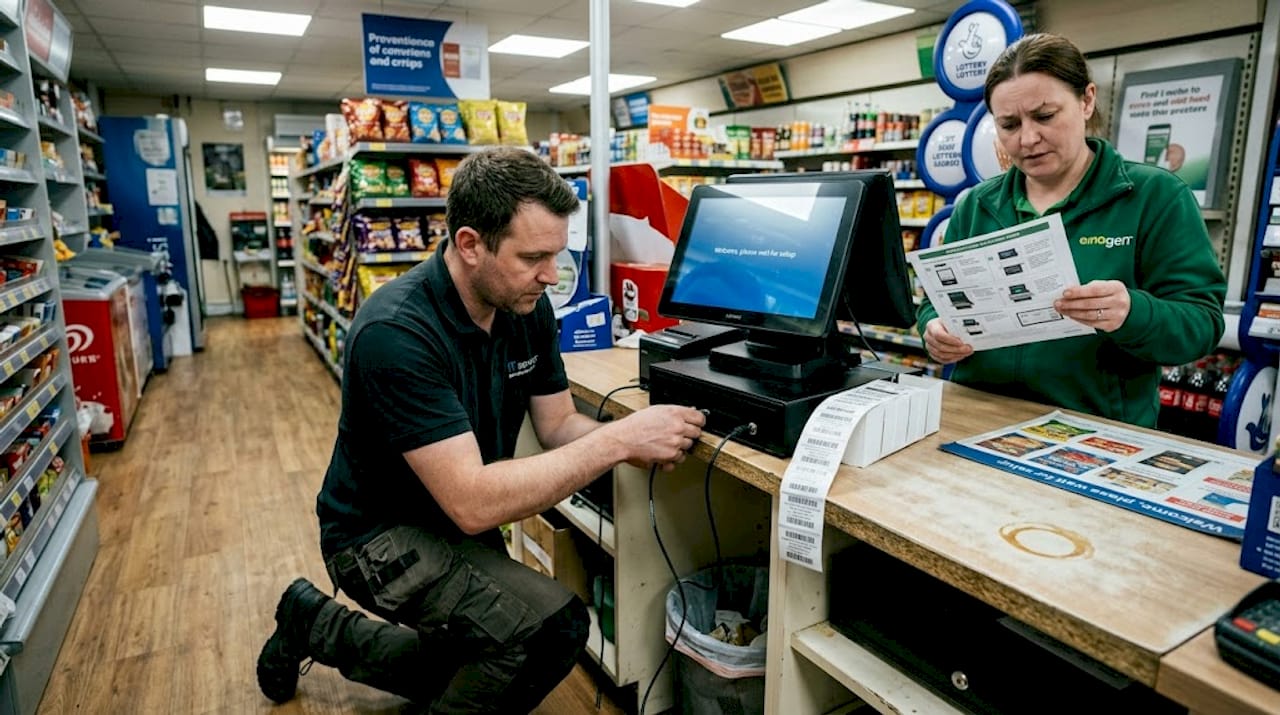
Pro tip: Start with a pilot at your busiest location. If the system handles your peak trading without issues, it will handle anything.
The real driver of retail tech success in 2026: people, not just innovation
We talk a great deal about features, integrations, and data dashboards. But after working with retailers across the UK for over three decades, the truth is that technology rarely fails on its own. It fails because people are not brought along with it.
The retailers who see the strongest returns from new POS systems are not always those with the most advanced setups. They are the ones whose staff genuinely understand the tools, trust the process, and feel empowered rather than surveilled. A self-checkout kiosk that staff resent will be quietly sabotaged. An AI inventory tool that no one understands will be ignored in favour of gut feel.
Change management is not a soft skill. It is a hard commercial requirement. Before you spend a single pound on hardware, ask yourself whether your team is prepared for the change, not just technically, but culturally. Read more about the human side of POS and why employee engagement is as important as software selection. The shops that will thrive in 2026 are those that invest in their people at the same time as their platforms.
Your next step: upgrading with expert retail technology support
The trends and implementation steps covered in this guide give you a clear picture of where UK retail technology is heading in 2026. Acting on them with the right partner makes all the difference.
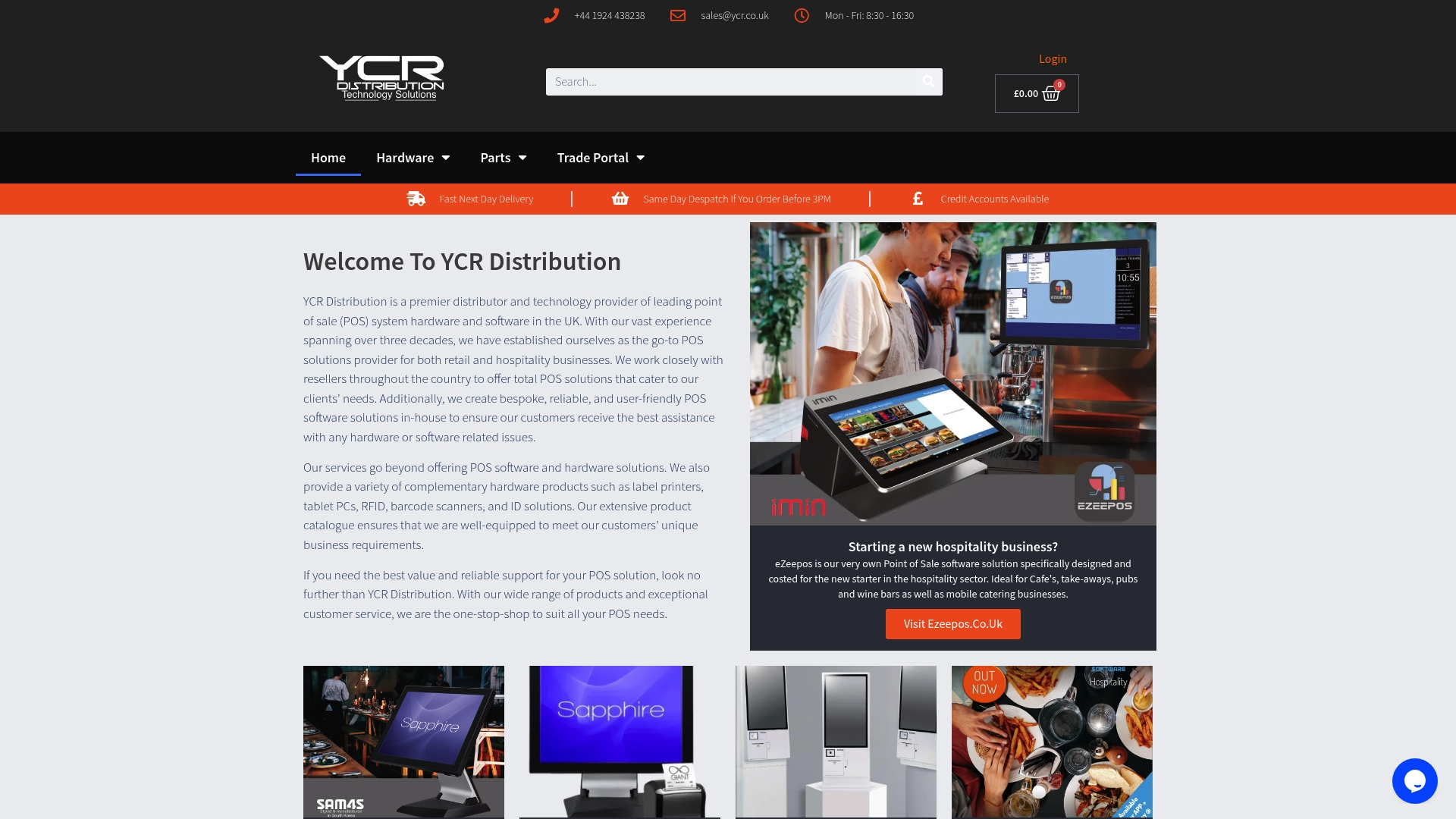
At YCR Distribution, we combine over 30 years of UK retail expertise with a full range of retail POS software and POS hardware expertise tailored to modern shop operations. Whether you are equipping a single convenience store or rolling out a multi-site cloud solution, our team helps you match the right system to your real-world needs. With next-day delivery, same-day dispatch, and UK-based support, we are built for the pace of retail. Talk to us today and discover how the right technology investment can transform your shop’s performance this year.
frequently asked questions
What is the most important retail technology trend in 2026?
Automation, especially AI-driven POS and inventory systems, stands out for saving time and reducing errors across UK retail. Modern POS automation saves retailers time and reduces checkout errors at every stage of the customer journey.
How can I measure the ROI of upgrading my retail technology?
Track metrics like order error reduction, improved profit margins, and time saved on manual processes to evaluate ROI clearly. Order errors down 20%, margins up 2%, and 12 hours saved weekly are proven benchmarks following POS upgrades.
Are new POS systems hard for staff to learn?
With thorough training and phased implementation, staff can adapt quickly to modern POS, making the transition smooth and efficient. Train staff well and ensure integrations are mapped before go-live to maximise technology uptake from day one.
Which retail KPIs improve most with advanced technology?
Order accuracy, transaction speed, and stock availability are the main KPIs improved by modern POS solutions. Modern POS improves order accuracy, transaction speed, and real-time inventory analytics across all shop formats.
Recommended
- Point Of Sale Trends 2026: Enhancing Retail Efficiency
- POS technology trends 2026: Upgrade for efficiency
- 6 Practical Examples of Retail Technology for Shop Success
- Mobile POS trends transforming UK retail in 2026
- Dlaczego warto mieć sklep internetowy w 2026 roku – Publikacje eksperckie dotyczące stron www i rozwiązań webowych