
Hospitality technology checklist for operators in 2026

A hospitality technology checklist is a structured evaluation tool that maps every digital system your property needs to run efficiently, serve guests well, and protect its margins. The recognised industry term for this collection of tools is a “hotel tech stack,” and building one without a checklist is how operators end up paying for software nobody uses. In 2026, the five non-negotiable systems are a cloud-based property management system (PMS), channel manager, direct booking engine, payment gateway, and accounting software. Platforms like Cloudbeds, Opera Cloud, and Toast POS each occupy distinct positions in that stack, and understanding where they fit saves you from expensive duplication.

1. The hospitality technology checklist: core systems you cannot skip
Every hospitality business, from a 10-room B&B to a 200-cover restaurant group, needs the same five foundational systems. These are not optional upgrades. They are the operational backbone that every other tool connects to.
- Cloud-based PMS. Cloud-native PMS platforms with open APIs and responsive support are the non-negotiable centre of your tech stack. Smaller properties do well with systems like Cloudbeds or Little Hotelier. Larger operations typically require enterprise-grade platforms such as Oracle Opera Cloud or Mews.
- Channel manager. OTA commission rates generally range from 15 to 25%, which makes rate parity and availability synchronisation across Booking.com, Expedia, and Airbnb a direct revenue issue, not just an administrative one.
- Direct booking engine. A booking engine integrated with your PMS captures commission-free reservations. SiteMinder and Triptease are two widely used options for properties looking to reduce OTA dependency.
- Payment gateway. PCI-DSS compliance is mandatory, not aspirational. Your gateway must integrate cleanly with your PMS and POS to avoid manual reconciliation errors.
- Accounting software. Xero and Sage both offer hospitality-friendly integrations. The goal is automated data flow from your PMS and payment systems, eliminating double-entry and reducing month-end close time.
Pro Tip: Before signing any software contract, ask the vendor for a written integration map showing exactly which data fields sync with your PMS. Vague promises of “full integration” are the single most common source of post-launch regret.
2. How to audit your existing hospitality tech stack
A technology audit is not a one-afternoon exercise. The five-phase audit framework used by hospitality technology consultants covers inventory, cost analysis, performance scoring, gap analysis, and roadmap development. Each phase builds on the last.
- Inventory all systems. List every tool your team uses, including shadow IT (the apps staff have adopted without IT approval). You cannot optimise what you have not counted.
- Analyse costs. Identify shelfware, which is software you are paying for but not using. Many properties discover they are running two tools that perform the same function.
- Score performance. Rate each system across five dimensions: functionality, integration depth, usability, cost efficiency, and future-readiness. A simple 1 to 5 scale works.
- Conduct a gap analysis. Map your scores against eight functional technology layers: reservations, operations, guest experience, revenue management, food and beverage, finance, sales and events, and workforce management.
- Build a prioritisation roadmap. Rank gaps by revenue impact and operational urgency. Fix the systems that cost you money or guests first.
| Audit phase | Primary output |
|---|---|
| Inventory | Full system register including shadow IT |
| Cost analysis | Shelfware identified, redundancies flagged |
| Performance scoring | Scored matrix across five dimensions |
| Gap analysis | Functional gaps mapped to eight tech layers |
| Prioritisation roadmap | Ranked action list by revenue and urgency |
Pro Tip: Run your audit with input from front-of-house staff, not just management. The people using the systems daily know exactly where the friction points are, and their feedback will surface gaps that no spreadsheet will show you.
3. Infrastructure and integration: the foundations your checklist must cover
Technology decisions made at the infrastructure level affect every system you install above them. This is where operators most often underinvest, and where the consequences are most expensive to fix later.
Structured network cabling is the clearest example. A well-specified Cat6A installation lasts 20 years and supports every technology upgrade you will make in that period. Poor cabling, by contrast, typically forces costly replacement within five years. The cabling decision you make during a fit-out or refurbishment is not a minor line item. It is a 20-year infrastructure commitment.
Network segmentation is equally non-negotiable. Isolating guest WiFi from operational systems reduces your PCI-DSS compliance burden and limits the attack surface if a guest device is compromised. Your payment systems, PMS, and back-office tools should sit on a completely separate network segment from the WiFi you hand to guests.
PMS integration is where operators most frequently overestimate what they are getting. Detailed documentation of APIs, event subscriptions, field mapping, and support responsibility varies significantly between vendors. Assuming that two systems will “just talk to each other” because both vendors claim compatibility is a costly mistake.
“Operators often overestimate how well PMS platforms integrate. Detailed integration mapping prevents costly issues that only surface after go-live.” — PMS integration checklist for luxury hotels
Finally, resist feature creep. The most successful hotels in 2026 add new technology only when it addresses a specific operational or revenue bottleneck. A focused stack with fewer, well-integrated systems consistently outperforms a sprawling collection of loosely connected tools.
4. Guest experience technology and operational tools worth adding
Once your core systems are solid and your infrastructure is sound, the following tools deliver measurable returns. These are not luxuries. They are the layer of hospitality tech tools that separates average operations from high-performing ones.
- Guest messaging platforms. Automated guest messaging systems reduce front desk workload and drive service recovery before a complaint becomes a review. Tools like Whistle for Cloudbeds or Bookboost integrate directly with your PMS to trigger pre-arrival, in-stay, and post-departure messages automatically.
- Revenue management systems (RMS). AI-driven RMS platforms such as IDeaS and Duetto analyse demand signals and competitor rates to set dynamic pricing. For properties running manual rate strategies, an RMS typically pays for itself within the first quarter of use.
- Housekeeping and maintenance tracking. IoT-enabled tools like Quore and HotSOS allow housekeeping supervisors to assign rooms in real time and flag maintenance issues before they affect a guest stay. Predictive maintenance alerts reduce reactive repair costs significantly.
- Sales and events management software. For properties with function space, platforms like Tripleseat manage enquiries, proposals, contracts, and billing in one place. This removes the spreadsheet chaos that plagues event-heavy venues.
- Workforce management tools. Scheduling, onboarding, and compliance tracking through platforms like Fourth or Deputy reduces labour cost overruns and simplifies rota management across multiple departments.
5. How to plan your technology implementation timeline
Rushed technology implementations are the primary cause of go-live failures in hospitality. The ideal timeline starts 12 to 18 months before opening with IT consultancy and architectural planning. Smaller hotel tech stacks can be set up for under £1,200 per month, but only if procurement decisions are made with enough lead time to avoid premium pricing on rushed orders.
- 12 to 18 months out. Engage an IT consultancy to design your network architecture, specify cabling, and define your system requirements. This is when infrastructure decisions are made, not later.
- 9 to 12 months out. Run your vendor selection process. Issue RFPs, conduct demos, check integration compatibility, and negotiate contracts. Never select a PMS without first confirming it integrates with your chosen POS and payment gateway.
- 3 to 6 months out. Begin installation and integration work. This phase includes physical infrastructure, system configuration, and data migration from legacy platforms.
- 4 to 8 weeks out. Conduct end-to-end systems testing and deliver staff training. Test every integration under realistic load conditions, not just in isolation.
- Opening day onwards. Proactive 24/7 managed IT support is non-negotiable from day one. Installation contractors and ongoing operational support require separate expertise and separate contracts.
Pro Tip: Book your staff training sessions at least six weeks before go-live, not two. Systems that staff do not understand on day one create workarounds that persist for years and undermine the value of every tool you have invested in.
Key takeaways
A hospitality technology checklist works only when it covers infrastructure, core systems, integration depth, and a phased implementation timeline in equal measure.
| Point | Details |
|---|---|
| Core systems are non-negotiable | PMS, channel manager, booking engine, payment gateway, and accounting software form the foundation. |
| Audit before you add | A five-phase audit identifies shelfware and gaps before you spend on new tools. |
| Infrastructure dictates everything | Cat6A cabling and network segmentation protect your investment for 20 years. |
| Integration must be documented | Require written API and field-mapping documentation from every vendor before signing. |
| Timeline determines success | Begin IT planning 12 to 18 months before opening to avoid costly last-minute decisions. |
Why I think most operators get their tech stack backwards
After years of working with hospitality businesses across the UK, the pattern I see most often is this: operators buy guest-facing technology first because it is exciting, and then discover their back-end infrastructure cannot support it. A beautiful self-check-in kiosk connected to a poorly integrated PMS is not a guest experience upgrade. It is a liability.
The properties that get technology right start with the unglamorous decisions. Cabling. Network segmentation. A PMS with a genuinely open API. These are not the tools you photograph for your Instagram feed, but they are the reason your payment processing does not fail on a Saturday night.
I also think the industry underestimates how much damage feature creep does to operational culture. Every new system requires training, maintenance, and someone to own it. When staff are managing eight loosely connected tools instead of three well-integrated ones, the cognitive load shows up in service quality. Fewer systems, chosen carefully and integrated properly, protect your margins and your team’s attention.
The technology solutions for hospitality that deliver the best returns in 2026 are not the newest ones. They are the ones that reduce manual work, connect cleanly to your existing stack, and give your team one less thing to think about during a busy service.
— John
Complete your checklist with Ycr’s POS solutions
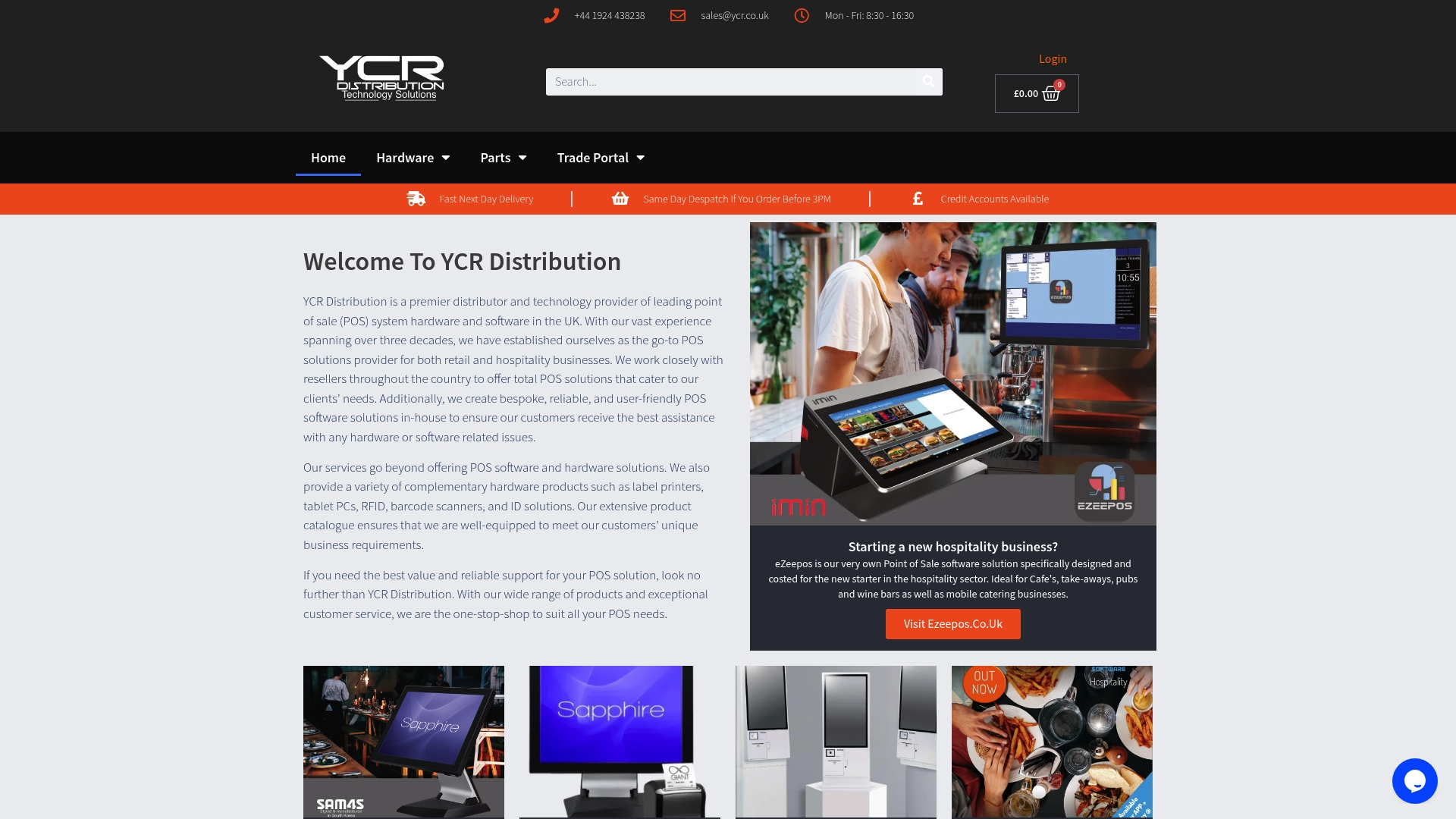
Your hospitality technology checklist is only as strong as its weakest link, and for many operations that link is the point of sale. Ycr supplies POS hardware for hospitality from leading brands including SAM4S and iMin, covering terminals, barcode scanners, receipt printers, and digital signage suited to restaurants, cafes, and takeaways across the UK. Their POS software solutions, including SAMTOUCH and EZEEPOS, are built specifically for hospitality workflows and integrate with the core systems covered in this checklist. With next-day delivery and same-day dispatch available, Ycr makes it straightforward to source, upgrade, or expand your POS setup without delays.
FAQ
What is a hospitality technology checklist?
A hospitality technology checklist is a structured list of the systems, infrastructure requirements, and integration criteria a hospitality business needs to operate efficiently and serve guests well. It covers everything from PMS and payment gateways to network cabling and staff training timelines.
What are the five core systems every hotel needs?
The five core systems are a cloud-based PMS, channel manager, direct booking engine, PCI-compliant payment gateway, and accounting software. These form the foundation of any hotel technology guide and should be in place before any additional tools are considered.
How long does a hotel technology implementation take?
The recommended timeline starts 12 to 18 months before opening for IT planning and architecture, with vendor selection at 9 to 12 months, installation at 3 to 6 months, and staff training 4 to 8 weeks before go-live.
Why does network segmentation matter for hospitality businesses?
Network segmentation isolates guest WiFi from your operational and payment systems, which reduces your PCI-DSS compliance scope and prevents guest devices from exposing your payment infrastructure to security threats.
How do I know if my current tech stack needs an audit?
If you are paying for systems your team does not use, managing manual workarounds between tools, or unable to pull a consolidated performance report, your stack needs a structured audit using the five-phase framework covering inventory, cost analysis, performance scoring, gap analysis, and roadmap development.