
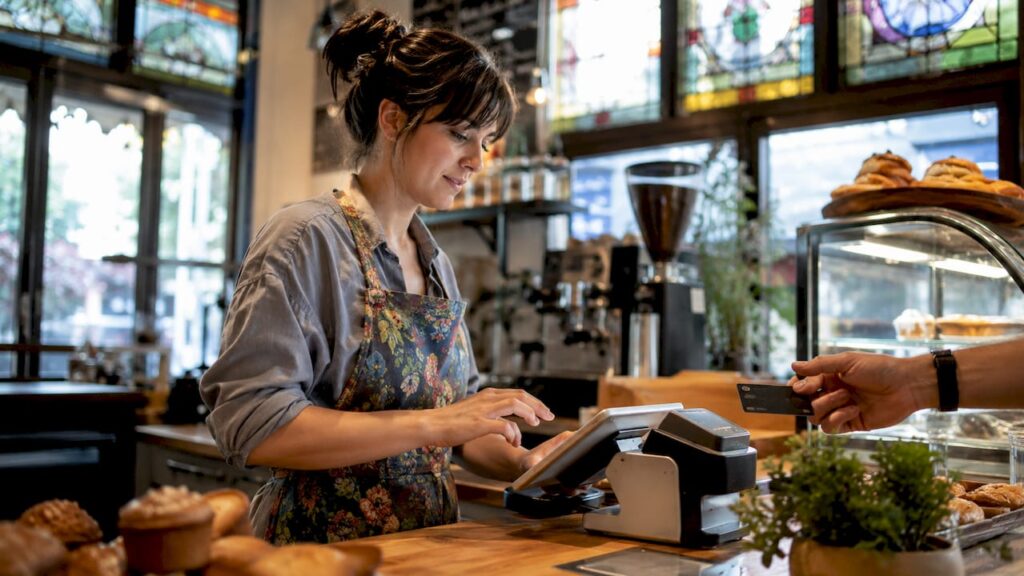
Guide to optimising café transactions in 2026
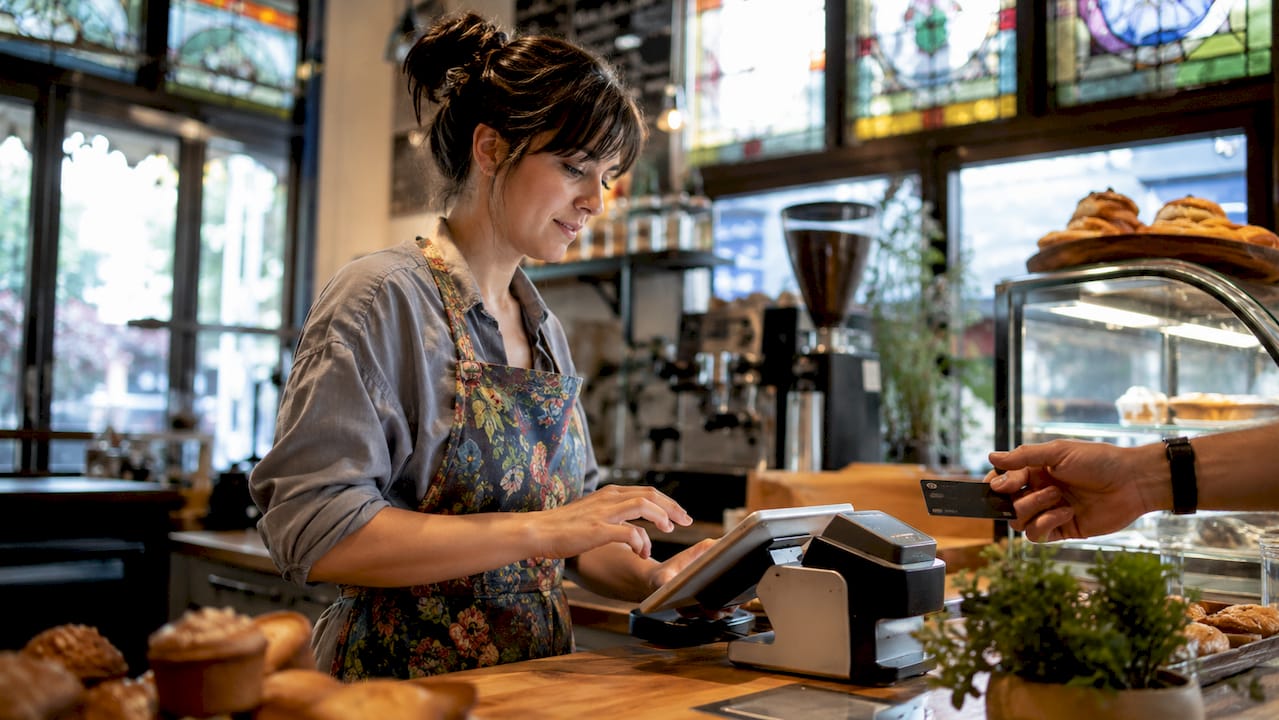
Transaction optimisation in a café context is defined as the process of reducing friction at every point of sale, from payment processing to menu pricing, to increase revenue per customer and lower operational costs. This guide to optimising café transactions covers the three levers that matter most: payment processor selection, POS hardware and software, and menu architecture. Get these right and you will serve more customers per hour, spend less on fees, and earn more from every order.
What payment processing options best reduce fees and speed transactions?
Payment processing fees are one of the most overlooked costs in café management. Switching to interchange-plus pricing can save cafés 30–40% on processing fees compared with flat-rate models. A café turning over £48,750 per month can save £600–2,000 monthly by adopting a cash discount or dual pricing programme. That is money that goes directly to your bottom line without serving a single extra customer.

Interchange-plus vs flat-rate pricing
Flat-rate pricing charges a fixed percentage on every transaction regardless of card type. Interchange-plus passes the actual card network cost to you and adds a small fixed margin on top. For high-volume cafés, interchange-plus is almost always cheaper. The savings compound quickly across thousands of daily transactions.
Cash discount and dual pricing programmes work differently. You display a cash price and a card price, and the processing fee is absorbed by customers who choose to pay by card. This approach can reduce your processing costs by up to 100%, though it requires clear signage and customer communication to avoid friction at the till.
How transaction speed affects morning rush revenue
Contactless payments complete in under 2 seconds, while chip-and-pin takes 3–5 seconds per transaction. That gap sounds trivial until you multiply it across a 90-minute morning rush with 200 customers. Slower terminals cause a 15–20% cumulative efficiency loss during peak flow. Choosing NFC-capable card terminals is not a luxury for a busy café. It is a structural requirement.
- Audit your current processor contract for hidden fees and rate tiers.
- Request interchange-plus quotes from at least two providers.
- Confirm your card terminal supports NFC contactless as standard.
- Check that your terminal integrates directly with your POS system.
- Evaluate whether a cash discount programme suits your customer base.
Pro Tip: Never lease card terminal equipment. Leasing contracts often cost two to three times the purchase price over their term and lock you into a single processor. Buy your hardware outright and retain the freedom to switch providers.
Loyalty programmes, when used as data tools rather than simple discount schemes, push customers towards high-margin add-ons and reward repeat visits. This offsets the cost of any loyalty incentive with a larger average basket. Integrate loyalty directly with your payment flow so staff do not need to manage it separately.
How can POS hardware and software enhance café operational efficiency?
The right POS system does more than process payments. It captures sales data, manages stock, and keeps your kitchen in sync with your counter. Café tills with kitchen display screens eliminate paper tickets and order confusion, showing orders immediately to kitchen staff. This reduces waste, cuts preparation mistakes, and improves the freshness of food served. The operational gain is measurable within the first week of use.
Offline-first vs cloud-based POS systems
| Feature | Offline-first POS | Cloud-based POS |
|---|---|---|
| Internet dependency | Operates without connection | Requires stable connection |
| Data resilience | Local storage preserves sales | Outage can halt transactions |
| Reporting access | On-device and delayed sync | Real-time from any device |
| Update management | Manual or scheduled | Automatic |
| Best suited for | High-traffic cafés, rural sites | Multi-site operators |
Offline-first POS systems provide resilience against internet outages, preserving sales continuity and data integrity. A cloud-only system that goes down during a Saturday morning rush is not a minor inconvenience. It is a revenue crisis. For most UK cafés, an offline-capable system is the safer default.
Key criteria when selecting POS hardware for a café:
- Transaction speed: the terminal must process contactless payments in under 2 seconds.
- Processor flexibility: choose a system that lets you switch payment processors without replacing hardware.
- Inventory integration: stock levels should update automatically with each sale.
- Kitchen display compatibility: the system should support KDS screens without third-party workarounds.
- Compact footprint: counter space is limited; hardware must fit without obstructing service flow.
Pro Tip: Hardware bottlenecks are often invisible until you time your own transactions. Stand at your counter during a peak period and count the seconds between order confirmation and payment completion. If the total exceeds 15 seconds consistently, your hardware is costing you customers.
Inventory management linked to your POS gives you real-time visibility of stock depletion. You can set low-stock alerts for high-volume items like espresso beans or pastries, and avoid the revenue loss that comes from running out of your best sellers mid-service. This is one of the clearest POS operational benefits that café owners underestimate before they experience it.
What menu and pricing strategies optimise the value of each café transaction?
Menu architecture is one of the most direct routes to improving café sales without increasing footfall. High-performing cafés target a food-and-beverage attach rate of 55–65%, while unoptimised operations sit at 30–45%. The attach rate measures how often a customer buys a food item alongside a drink. Closing that gap is pure revenue with no additional customer acquisition cost.
Bundle offers and discount tactics
Bundling a coffee with a pastry at a 5–10% combined discount improves attach rates without requiring any sales effort from your baristas. The customer perceives value; you increase the average transaction value. The key is placing bundles prominently at the point of decision, either on a digital display above the counter or as a printed prompt on the till screen.
- Identify your three highest-margin food items.
- Pair each with your most popular drink.
- Price the bundle at a 5–8% discount versus buying separately.
- Display the bundle at eye level on your menu board.
- Train staff to mention the bundle when a customer orders a drink alone.
Pricing to total contribution, not just ingredient cost
Most café owners price against ingredient cost alone, ignoring labour time and overhead. A drink with a 35% food cost that takes 45 seconds to prepare often outperforms a drink with a 25% food cost that takes 4 minutes. Total contribution pricing accounts for ingredients, labour, and a share of fixed overhead per item. This approach reveals which menu items are genuinely profitable and which are quietly draining your margins.
Seasonal specials priced £1.50–2.00 above standard menu items add 8–15% to average check sizes during promotion periods. Customers accept seasonal premiums because they expect them. A pumpkin spice latte or a Christmas spiced hot chocolate carries an implied premium that most customers do not question. Price these items confidently and rotate them to maintain novelty.
Menu complexity is a hidden bottleneck. Every item you add increases preparation time, stock requirements, and the chance of errors. A focused menu of 20–30 items consistently outperforms a sprawling menu of 60+ in both speed and profitability. Use your POS menu management data to identify items that sell fewer than five units per day and remove them.
How to implement and troubleshoot transaction optimisation initiatives
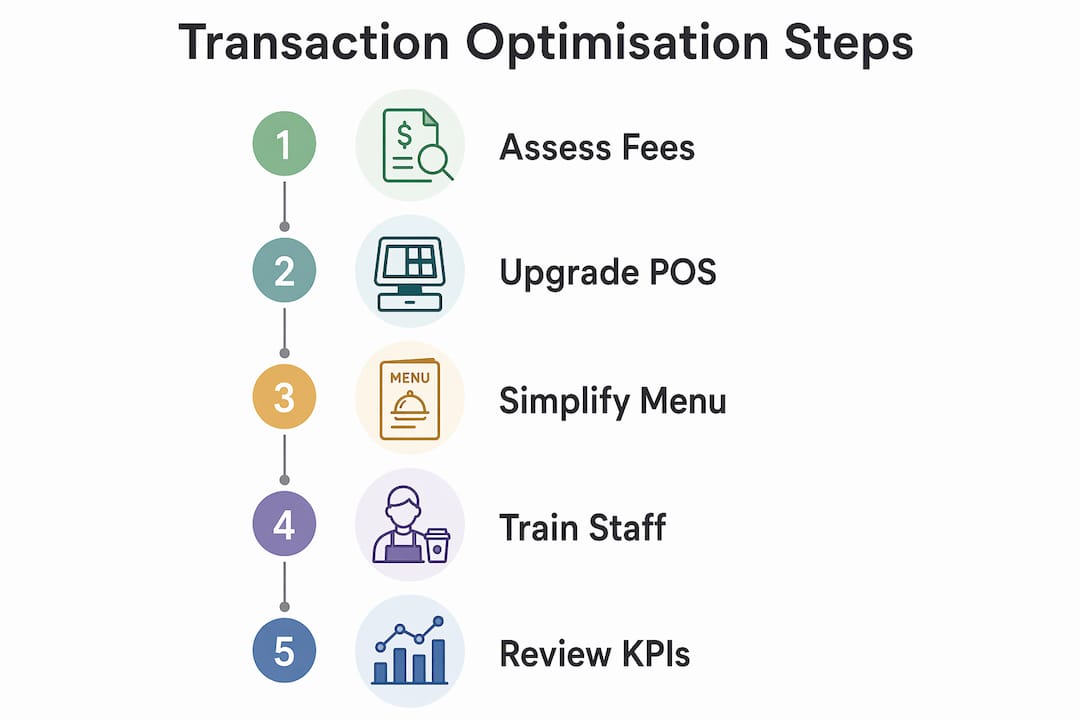
Implementation works best as a phased process rather than a simultaneous overhaul. Changing your payment processor, your POS system, and your menu at the same time creates confusion for staff and customers alike. Start with the change that delivers the fastest financial return, which is almost always payment processing fees.
- Week 1–2: Audit current processing fees and request interchange-plus quotes.
- Week 3–4: Assess POS hardware speed and identify any bottleneck terminals.
- Week 5–6: Review menu attach rates using POS sales reports.
- Week 7–8: Introduce one bundle offer and one seasonal special.
- Week 9–12: Measure KPIs and adjust based on data.
KPIs worth tracking every week
- Attach rate: food items sold as a percentage of drink orders.
- Average transaction value: total revenue divided by number of transactions.
- Transaction time: seconds from order entry to payment confirmation.
- Gross margin by item: revenue minus total contribution cost per menu item.
- Queue abandonment: customers who leave without ordering during peak periods.
Common mistakes that undermine café transaction strategies include ignoring hardware delays, overcomplicating the menu after initial success, and failing to train staff on new systems before going live. A new POS system that staff do not understand creates slower service, not faster. Healthy cafés target a 10–20% net profit margin with beverage gross margins of 65–80%. If your numbers fall outside these ranges, the KPIs above will show you exactly where the gap is.
Pro Tip: Run a 30-minute staff briefing before any new system or pricing change goes live. Show staff the “why” behind the change, not just the “how”. Staff who understand that faster transactions mean shorter queues and better tips are far more motivated to adopt new processes.
Café performance depends on structural alignment: counter design, menu architecture, pricing, and service speed work together. Fixing one element in isolation produces limited results. The cafés that see the biggest gains treat transaction optimisation as an ongoing discipline, not a one-off project.
Key takeaways
Optimising café transactions requires aligning payment processing, POS hardware, and menu pricing into a single, data-driven system rather than treating each as a separate fix.
| Point | Details |
|---|---|
| Switch payment pricing model | Interchange-plus pricing cuts processing fees by 30–40% versus flat-rate contracts. |
| Prioritise contactless speed | NFC terminals complete payments in under 2 seconds, reducing peak-hour queue loss. |
| Target a 55–65% attach rate | Bundle food with drinks at a 5–10% discount to close the gap from underperforming 30–45%. |
| Price to total contribution | Factor in labour and overhead per item, not just ingredient cost, to identify true margin. |
| Implement in phases | Change payment settings first, then hardware, then menu, to avoid disrupting service. |
Why most cafés fix the wrong thing first
After years of working with hospitality operators across the UK, the pattern I see most often is this: a café owner invests in a new espresso machine or a fresh interior fit-out, then wonders why profits have not moved. The machine is beautiful. The margins are still thin. The real problem was never the coffee quality.
The uncomfortable truth is that most cafés lose money in the gap between the customer deciding to buy and the transaction completing. That gap is filled with slow terminals, missed upsell moments, and menu items that look profitable but are not once you account for the four minutes of labour they consume.
Technology alone does not close that gap. I have seen cafés with excellent POS systems still running a 32% attach rate because nobody trained staff to mention the bundle. The system was right. The process was not. The operators who consistently hit 60%+ attach rates treat their POS data as a weekly management tool, not a quarterly report.
My honest view is that the payment processing fee conversation is the most underrated one in café management. Operators spend hours debating milk suppliers and minutes reviewing their processor contract. Switching from flat-rate to interchange-plus, or adopting a cash discount programme, can return more money per month than most menu changes ever will. Start there.
— John
How Ycr helps cafés put this into practice
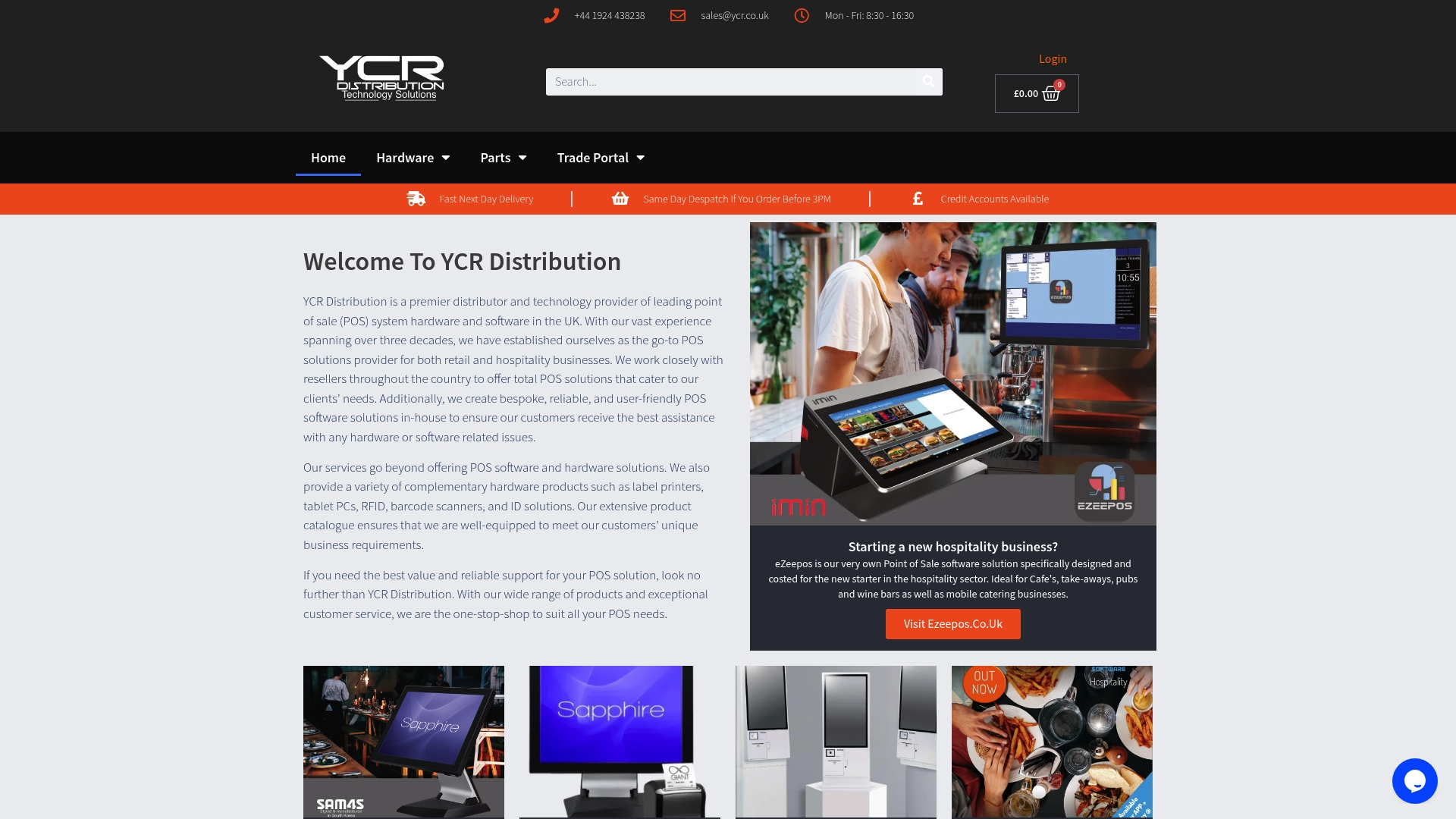
Ycr supplies the hardware and software that make transaction optimisation practical rather than theoretical. SAMTOUCH POS software, available with hardware bundles or as a software-only licence, is built specifically for hospitality environments and supports kitchen display screens, inventory management, and flexible payment processor integration. For card payment hardware, the SumUp Solo card terminal delivers fast NFC contactless processing in a compact form factor suited to busy café counters. Ycr offers next-day delivery and same-day dispatch across the UK, so you are not waiting weeks to act on what you have read here. Explore the full café POS solutions range to find the right fit for your operation.
FAQ
What is transaction optimisation in a café?
Transaction optimisation is the process of reducing cost and time at every point of sale, covering payment fees, hardware speed, and menu pricing, to increase revenue per customer.
How much can I save by switching payment processors?
Switching from flat-rate to interchange-plus pricing saves most cafés 30–40% on processing fees. A cash discount programme can reduce card processing costs by up to 100%.
What attach rate should a café aim for?
High-performing cafés target a food-and-beverage attach rate of 55–65%. Cafés below 45% are leaving significant revenue uncaptured on every shift.
Does POS hardware really affect transaction speed?
Yes. Contactless NFC payments complete in under 2 seconds, while chip-and-pin takes 3–5 seconds. Slower terminals cause a 15–20% cumulative efficiency loss during peak trading hours.
How often should I review my café’s transaction KPIs?
Review attach rate, average transaction value, and gross margin by item weekly. Monthly reviews are too infrequent to catch problems before they compound into significant revenue loss.