
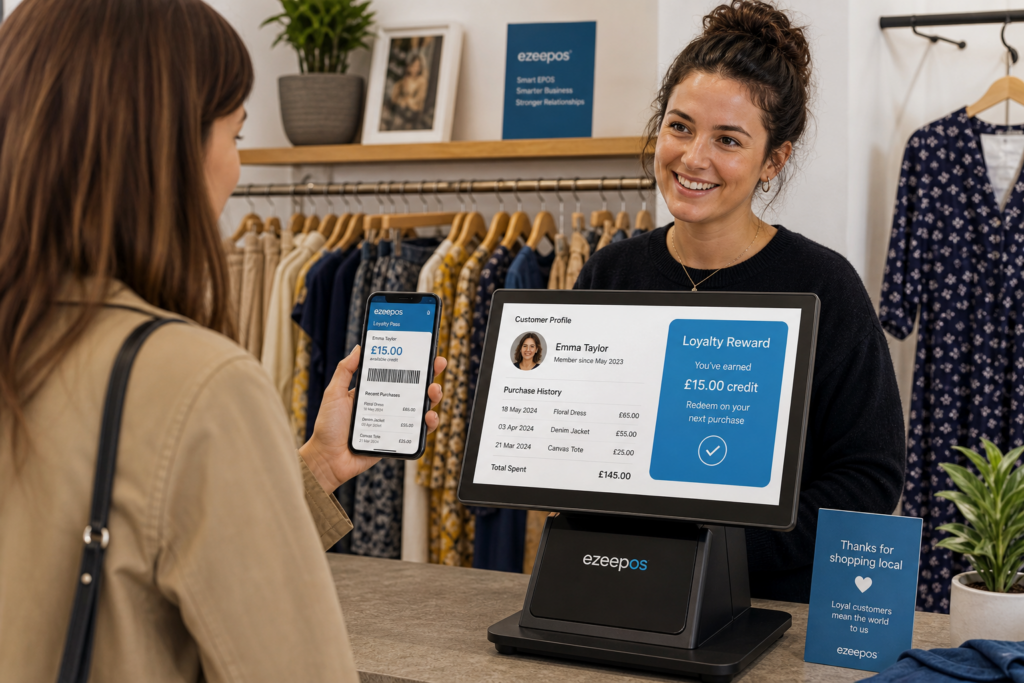
Independent fashion and clothing shops often compete on more than price. Customers return because of the service, the product mix and the feeling that a shop understands their style. That is why customer loyalty still matters so much in this sector. The right retail EPOS setup can help make that loyalty easier to track, easier to reward and easier to manage day to day.
For UK retailers looking to improve repeat visits, eZeePOS is a practical option to explore. It is designed to help retail and hospitality businesses stay organised at the till, with tools that support everyday service rather than getting in the way of it.
Why loyalty matters in fashion retail
Fashion shops often rely on seasonal trading, new arrivals and regular changes in customer demand. Even when footfall is strong, it can be difficult to turn one-off visitors into repeat buyers if the experience feels generic. Loyalty gives independent retailers a simple way to encourage customers back without relying only on discounts.
In fashion and clothing, loyalty can mean many things: a customer returning for a new season’s collection, coming back for the right fit after a helpful first visit, or choosing a familiar local shop over a larger chain. A good EPOS system supports that relationship by helping staff keep track of purchases, reward repeat trade and provide a more personal checkout experience.
How EPOS can support repeat visits
Modern EPOS software can do much more than process a sale. In a clothing shop, it can help staff recognise regular customers, record purchase patterns and keep loyalty schemes running smoothly at the counter. That makes it easier to create a consistent experience, whether the customer is shopping in-store every week or only visiting a few times a year.
1. Making rewards simple to use
Customers are more likely to engage with loyalty when the process is quick and clear. If staff have to ask too many questions or switch between systems, the benefit is lost. A well-structured till system can keep the reward process straightforward, so staff can move from sale to service without slowing down the queue.
2. Helping staff personalise service
Independent fashion shops often win loyalty through personal recommendations. EPOS data can help staff see what a customer has bought before, which sizes or product ranges are popular, and what they may want to try next. That makes the service feel more relevant and less transactional.
3. Reducing manual admin
Loyalty should not create more work for the team. If the process depends on paper cards, manual spreadsheets or separate sign-up steps, staff are less likely to keep it consistent. A modern EPOS setup can reduce that friction by keeping sales, customer details and loyalty activity within one system.
What to look for in a loyalty-friendly till setup
If your shop is reviewing its EPOS software, it is worth thinking about loyalty as part of the wider customer experience. The best system for an independent retailer is not just the one that processes sales quickly. It is the one that helps staff serve customers well, keep information organised and build repeat business with less effort.
- Fast checkout flow: Loyalty should fit naturally into the sale.
- Clear customer records: Staff should be able to find information quickly when needed.
- Simple reporting: You should be able to see what is working and what is not.
- Flexible retail use: The system should suit clothing, footwear, accessories or mixed product ranges.
- Easy staff training: New team members should be able to learn the process quickly.
If you are also reviewing the wider setup, it can help to think beyond the till screen itself. A complete EPOS solution should support the way your shop actually works, from customer service and checkout speed to reporting and day-to-day front-of-house organisation.
Loyalty should feel natural, not forced
One of the most common mistakes in loyalty programmes is making them feel complicated. Customers do not want extra steps for the sake of it, and busy retail staff do not want to spend time explaining a process that should be simple. For fashion and clothing shops, the most effective loyalty approach is often the one that feels like part of normal service.
That might mean recognising repeat customers, offering targeted promotions to regular shoppers, or making it easy to return for the next season’s collection. It can also mean using sales history to make better decisions about product ranges and customer preferences. Loyalty is not just about points or rewards; it is about keeping the relationship with the customer active and relevant.
Using data responsibly to improve service
Retailers should always be careful with customer information and data protection. Loyalty systems only work if customers trust you to handle their details appropriately. That means clear processes, sensible access controls and a system that helps you manage records properly.
For many independent shops, the value of loyalty data is practical rather than technical. It helps the team understand what sells, who returns and which promotions are worth repeating. A good EPOS platform makes that information easier to use without making the shop feel overly complicated.
A good fit for independent retailers
For smaller fashion and clothing shops, loyalty should support the business model, not replace it. The strongest shops still succeed through product knowledge, personal service and a good customer experience. EPOS software should simply make those strengths easier to deliver every day.
That is where a system like eZeePOS can be useful. It gives retailers a practical way to manage sales, handle customer interactions more consistently and support repeat trade without adding unnecessary admin. For shops that want to grow steadily, that kind of support can make a real difference.
If you would like to learn more about how eZeePOS can support your retail business, visit www.ezeepos.co.uk.
Contact YCR Distribution at sales@ezeepos.co.uk or call 01924 438238.