
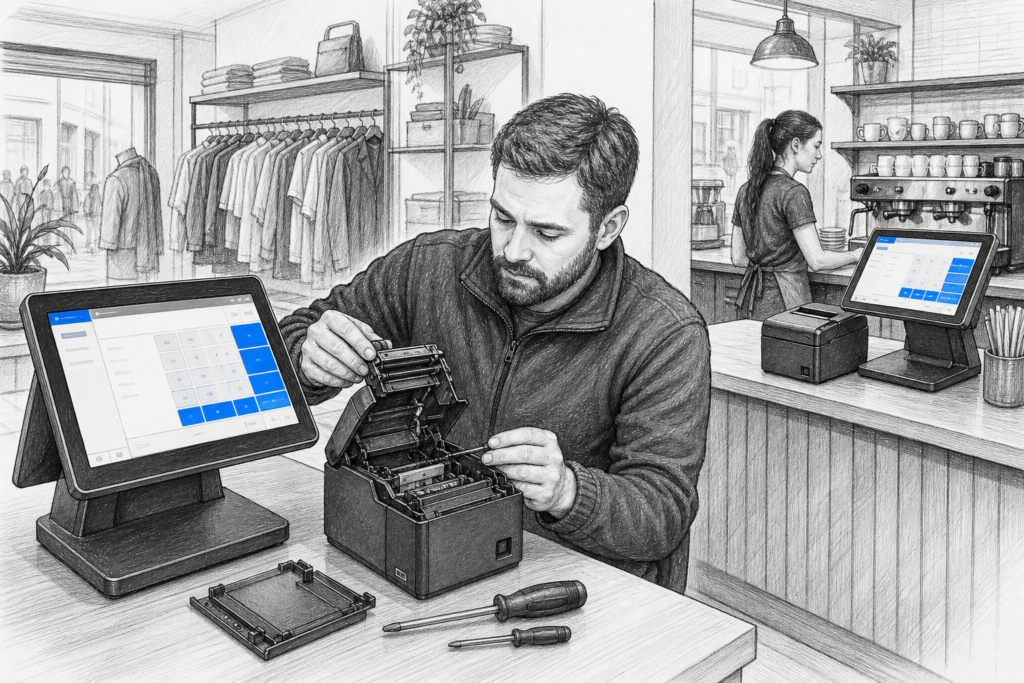
When a checkout goes down, the problem is rarely just technical. For a shop, café or restaurant, a faulty terminal or printer can slow staff down, frustrate customers and put pressure on every part of the operation. That is why serviceability is becoming a more important factor in point-of-sale UK projects, not just raw specification.
For EPOS installers, resellers and business owners, serviceable POS hardware is easier to support, easier to maintain and often easier to keep in operation for longer. In practice, that can mean fewer full replacements, quicker investigations when something fails and a more practical approach to planned lifecycle management.
What serviceability means in POS hardware
Serviceability is the ability to inspect, access, repair or replace parts of a device without treating the whole unit as disposable. In the POS world, that can apply to terminals, receipt printers, customer displays and even smaller components such as print mechanisms or cutter assemblies.
For a business, this matters because EPOS equipment is used constantly. A touchscreen terminal in a busy retail shop might be touched thousands of times a day. A receipt printer in hospitality may print continuously during service. Over time, wear is normal. The question is whether the hardware has been designed with maintenance in mind.
Why it matters more now
Many businesses are moving away from the idea that point-of-sale equipment should simply be replaced when it ages. That approach can be expensive, disruptive and unnecessary if individual elements can still be supported.
There are several practical reasons serviceability matters:
- Less downtime: if a printer component or terminal part can be replaced quickly, the till point returns to service sooner.
- Lower disruption: replacing a part is often simpler than changing an entire POS setup.
- Better lifecycle planning: businesses can extend the useful life of installed hardware where it still meets operational needs.
- Support for existing installations: resellers and installers can maintain systems more effectively when hardware is easier to work on.
- More sustainable decisions: keeping serviceable equipment in operation can reduce unnecessary hardware replacement.
Where serviceability makes the biggest difference
Receipt printers
Receipt printers are one of the most heavily used items in retail EPOS and hospitality EPOS. When a printer begins to misfeed, cut poorly or produce inconsistent output, a serviceable design can make diagnosis far easier. For dealers and service teams, access to the right internal parts can be more useful than replacing an entire printer if the rest of the unit is still sound.
That can be especially important in environments such as cafés, bars and quick-service counters where a printer fault quickly affects queue times and order fulfilment.
Touchscreen terminals
Commercial touchscreen POS hardware is expected to cope with daily use, but eventually screens, stands, power supplies or internal assemblies may need attention. A terminal that is designed with support in mind can be easier to keep in circulation, particularly where a business wants to standardise hardware across several sites.
For multi-site operators, serviceability can also help avoid the hidden cost of having to replace more hardware than necessary just to restore one till point.
Printer components and spare parts
Replacement components are often overlooked, but they are central to practical EPOS support. For installers and service companies, access to genuine or appropriate replacement parts can mean the difference between a same-day fix and a complete swap-out. That applies to the broader category of printer components on the YCR Distribution store, especially where maintenance of existing kit is a priority.
What installers and resellers should look for
When specifying POS hardware UK businesses will depend on for years, installers and resellers should think beyond the initial deployment. A few questions are worth asking:
- Can key parts be accessed without dismantling the entire unit?
- Is the hardware suitable for ongoing maintenance in a busy commercial setting?
- Are spare parts and replacement assemblies available when needed?
- Will the device fit into a long-term support plan for the customer?
- Does the manufacturer or distributor provide enough product knowledge to assist with servicing?
These questions are especially relevant where a customer is not buying a standalone device, but a complete EPOS system that needs to stay operational during trading hours.
Balancing repair, replacement and standardisation
There will always be times when a full replacement makes more sense than repair. If a device is outdated, incompatible with the customer’s current workflow or no longer meets business requirements, a new terminal or printer may be the right answer. But serviceability gives businesses more options in between.
That flexibility is useful for retailers and hospitality operators who want to standardise equipment across several locations. If the same model family can be supported consistently, training is simpler, on-site troubleshooting is easier and spare units can be managed more effectively.
It also helps when a business wants to plan hardware refreshes gradually rather than all at once. A serviceable installation can give a more realistic replacement cycle, which is often better for budgets and less disruptive to staff.
The value of UK support in keeping systems running
This is where a UK-based POS distributor can make a practical difference. YCR Distribution works with EPOS resellers, installers and business customers who need hardware that can be supported properly after installation, not just sold once and forgotten. Access to product knowledge, replacement parts and advice on suitable hardware can help reduce avoidable downtime and make long-term support more manageable.
For businesses running busy till points, that local support can be just as important as the original product choice. It is not only about buying hardware; it is about keeping the checkout reliable when trading pressures build.
For more information about point-of-sale hardware and EPOS solutions, contact YCR Distribution on 01924 438238 or visit www.ycr.co.uk.
Whether you are planning a new installation or maintaining existing equipment, thinking about serviceability early can help you choose POS hardware that is easier to support, simpler to maintain and more practical over time.