
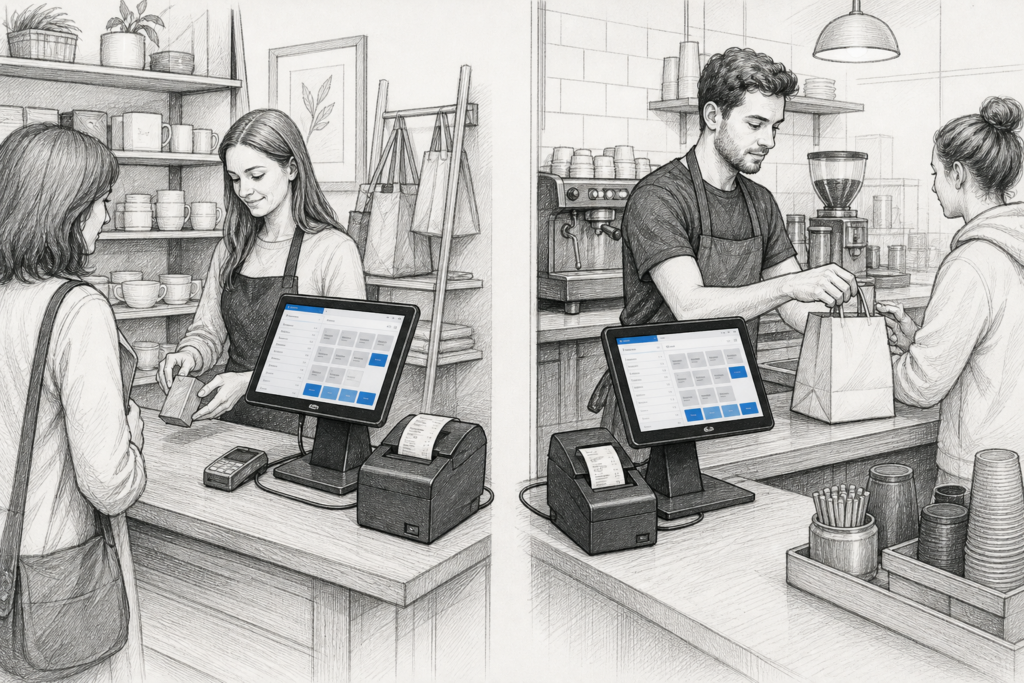
Thermal receipt printers may not be the most visible part of a point-of-sale setup, but they still play a central role in many UK retail and hospitality businesses. When a receipt printer works well, staff can move quickly, customers get clear proof of purchase, and the wider EPOS system feels dependable. When it causes delays, the whole checkout or service flow can suffer.
For EPOS resellers, installers and business owners, choosing the right printer is not just about matching a device to a till point. It is about finding hardware that suits the way the business actually operates: whether that means front-of-house receipts, kitchen tickets, bar orders or customer collection paperwork. YCR Distribution supplies POS and EPOS hardware to the UK market, including receipt printing solutions for a wide range of environments.
Why thermal printing still matters
Thermal receipt printers remain popular because they are simple to use, fast in operation and well suited to everyday transaction printing. They do not rely on ink or ribbons in the same way as some other printer types, which means there are fewer consumables to manage and less day-to-day maintenance for staff.
That practical simplicity is important in busy sites. A café may be printing drink orders all morning, a convenience store may be issuing dozens of receipts per hour, and a takeaway may need clear order tickets that keep pace with demand. In each case, the printer needs to support the workflow rather than slow it down.
Think about the printing job first
The right receipt printer depends on what it will actually be doing. A front-of-house retail printer has different priorities from a kitchen printer, even if they look similar at first glance.
Retail checkout printing
In retail, a receipt printer usually needs to keep transaction flow moving, sit neatly at the till point and integrate cleanly with the rest of the EPOS hardware. For small shops, gift stores and specialist retailers, space is often limited, so a compact desktop unit can be a better fit than a larger unit designed for heavier-duty environments.
Hospitality order and receipt printing
In hospitality, the printer often becomes part of an internal communication chain. Front-of-house teams may print customer receipts, while kitchen or bar tickets need to arrive quickly and clearly so orders are prepared correctly. In these settings, reliability is often more important than anything else, because a printer fault can affect service during the busiest parts of the day.
Connectivity affects installation and support
One of the most important decisions is how the printer connects to the EPOS system. The best choice depends on the existing setup, the software in use and the way the counter or kitchen is laid out.
- USB can suit a straightforward single-terminal install where the printer sits directly beside the POS terminal.
- Ethernet is often preferred where the printer needs to be shared across a network or positioned away from the terminal.
- Other connection options may be useful in specific installations, but should always be checked carefully against the exact printer model and the requirements of the EPOS system.
For installers and resellers, connectivity is not just a technical detail. It affects mounting, cable routing, network planning and how easily the printer can be supported later. A well-chosen connection method can make an installation cleaner and simpler to service.
Serviceability and everyday maintenance
Receipt printers work hard in commercial settings, so serviceability matters. Businesses benefit from hardware that is easy to load, easy to clean and straightforward to maintain as part of a wider EPOS estate. In practice, this can reduce downtime and make staff training easier.
It is also worth thinking about the long term. Printers that are supported by a distributor with genuine product knowledge can be easier to spare, replace or integrate into an existing setup. That matters for businesses running multiple sites, or for EPOS dealers supporting a customer base with different terminal and printer combinations.
YCR Distribution’s position as a UK POS distributor means resellers and business users can discuss appropriate hardware choices with a supplier that understands the practical side of EPOS installation, not just the product headline. That can be useful when planning replacements, standardising equipment across sites or choosing peripherals for a new installation.
Choosing the right printer for the environment
Before choosing a thermal receipt printer, it helps to ask a few basic questions:
- Will the printer be used for receipts, kitchen orders or both?
- Does the business need a shared network printer or a direct connection to one terminal?
- How much counter or back-of-house space is available?
- How busy is the site during peak trading periods?
- Will staff need a simple, easy-to-train solution?
These questions matter because the best printer is not always the one with the most features. Often, the right choice is the one that fits the workflow without creating unnecessary complexity. For example, a compact retail printer may be perfect for a small counter, while a hospitality site may need a model that is better suited to continuous ticket printing through service.
Planning for new installations and replacements
Receipt printers are often replaced when a business upgrades its EPOS system, but they can also be refreshed as part of a wider maintenance plan. If an existing printer is becoming unreliable, replacing it before it fails completely can avoid service disruption and reduce pressure on staff at the till point.
For resellers and installers, this is where good product knowledge pays off. Matching the printer to the customer’s workflow, existing configuration and support needs can make the whole project more successful. It also helps businesses avoid buying hardware that is technically suitable but awkward to live with day to day.
For businesses looking to improve reliability at the till or in the kitchen, a thermal receipt printer remains one of the most practical pieces of EPOS hardware to get right. It is a small device with a big impact on speed, accuracy and customer experience.
For more information about point-of-sale hardware and EPOS solutions, contact YCR Distribution on 01924 438238 or visit www.ycr.co.uk.