
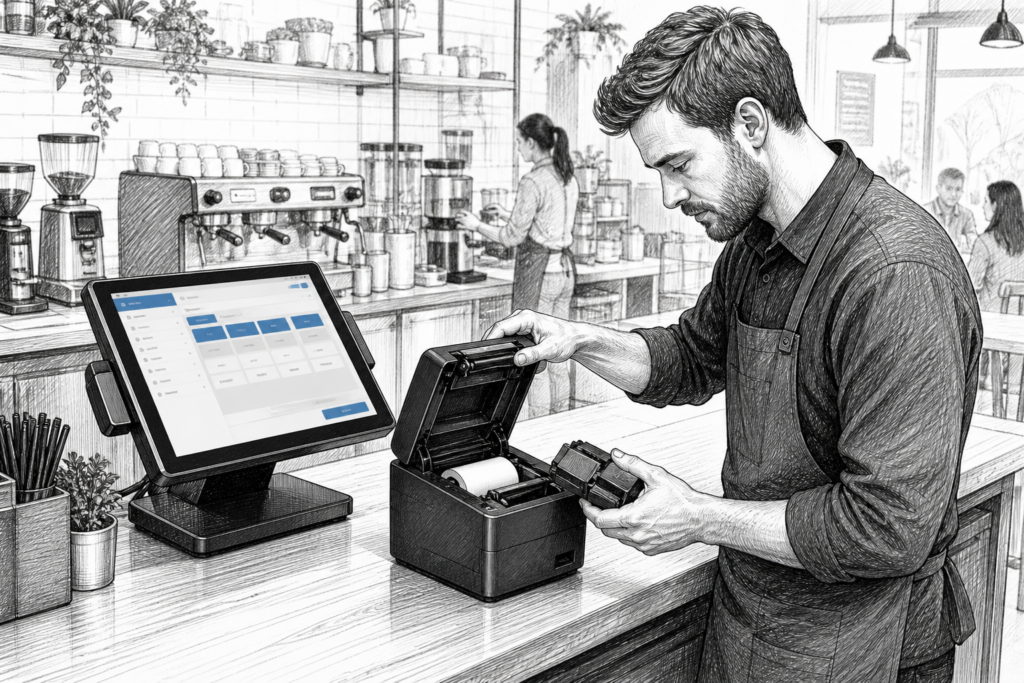
Receipt printers are one of the hardest-working parts of any EPOS setup, but they are also among the easiest to overlook during planning. In retail, hospitality and takeaway environments, the printer is often the final link between the till, the customer and the operational workflow. If it slows down, jams or fails, the effect is immediate. Orders back up, queues grow and staff lose time trying to get the system moving again.
That is why serviceability matters. A printer that is designed with maintenance in mind can help businesses keep trading, while also making life easier for EPOS resellers, installers and support teams. YCR Distribution works with UK businesses and channel partners who need practical point-of-sale hardware that can be installed, maintained and supported in the real world, not just specified on paper.
What serviceability means in a receipt printer
Serviceable POS hardware is equipment that can be maintained without unnecessary disruption. For receipt printers, this usually means easy access to the paper path, practical replacement of wear parts, and a design that supports routine cleaning and troubleshooting. In busy environments, this can make a significant difference to uptime.
When evaluating a thermal receipt printer, it is worth thinking beyond the basic print function. A useful printer should be straightforward to load, easy to open for paper changes, and simple for staff to understand at a glance. If a problem does occur, a service-friendly design can reduce the time spent diagnosing faults and may avoid a full replacement when a component-level repair would be enough.
Why this matters in retail and hospitality
In a retail checkout, a printer failure can hold up sales, interrupt card payment workflows and create a poor customer experience. In hospitality, the impact can be even more immediate. A front-of-house printer that stops working during lunch service or evening trade can affect order accuracy, kitchen communication and table turnaround.
For cafés, pubs, quick-service restaurants and takeaway counters, printers are often asked to do more than one job. They may handle receipts, order tickets or customer copies depending on how the EPOS system is configured. In those settings, reliability is important, but so is maintainability. A printer that is easy to clear, replace or service can help staff recover faster when trade is at its busiest.
What installers and resellers should look for
EPOS professionals often judge printer hardware on the basis of fit, connectivity and print performance, but serviceability should be part of the conversation as well. When planning a new installation or upgrading an older one, these are useful questions to consider:
- How easy is the printer to load and clear if paper jams?
- Are common wear parts available as individual components where appropriate?
- Can routine cleaning be carried out without dismantling the whole unit?
- Will the printer fit the counter layout and cable management plan?
- Is the model suitable for the level of use expected in the business?
If a reseller plans for maintenance at the point of sale, they can often reduce call-outs and improve the long-term value of the installation. That is particularly relevant for multi-site operators, where small savings in support time can add up across a larger estate.
Replacing parts instead of replacing the whole printer
One of the clearest benefits of a serviceable printer is the option to replace specific components rather than the complete device, where the product design and parts availability allow it. This approach can be especially useful for dealers and repair teams supporting installed equipment across multiple customer sites.
Examples of service-related parts in receipt printers can include internal mechanisms, cutter assemblies or print-related components. The exact parts and service options vary by model, so compatibility should always be checked carefully before ordering or fitting anything. The main point is that component-level support can extend the working life of equipment and reduce unnecessary disruption for the end user.
For businesses, this can mean fewer interruptions and a more predictable maintenance plan. For installers, it creates a more practical support model, especially when they are responsible for systems that must remain operational throughout the trading day.
Choosing the right printer for the job
Not every business needs the same kind of receipt printer. A small boutique may only need a simple counter printer, while a busy hospitality venue may need a model that can cope with constant use and fast ticket turnover. The key is to match the printer to the workload rather than choosing on appearance alone.
Useful factors to consider include print speed, connectivity, paper handling and how easily staff can carry out everyday tasks. For many businesses, the most practical printer is the one that stays out of the way when it is doing its job, but can be maintained quickly when needed.
If you are planning a wider EPOS refresh, it also makes sense to consider how the printer sits alongside the rest of the installation. A printer that works well with the counter layout, the terminal positioning and the workflow of the business will usually create fewer issues later on. YCR Distribution supplies POS and EPOS hardware to resellers, installers and businesses throughout the UK, helping them choose equipment that suits the job and the support model behind it.
Why UK support makes a difference
When printer problems do arise, local knowledge can matter just as much as hardware choice. UK-based distribution and reseller support can help businesses and installers identify suitable replacement equipment, source relevant parts and keep service conversations straightforward. That matters when a venue is busy and downtime cannot be left until next week.
For EPOS partners in particular, having access to a distributor who understands the practical side of point-of-sale installations can make it easier to specify hardware confidently and support customers after go-live. It is one reason many channel businesses prefer to work with a specialist POS distributor rather than a general-purpose hardware supplier.
For more information about point-of-sale hardware and EPOS solutions, contact YCR Distribution on 01924 438238 or visit www.ycr.co.uk.