- +44 1924 438238
- sales@ycr.co.uk
- Mon - Fri: 8:30 - 16:30

Benefits of Mobile POS for UK Hospitality Venues
Struggling with long queues or slow order processing during busy evenings is a familiar challenge for many UK restaurant and café owners. The need for faster service and better guest satisfaction makes emerging solutions worth exploring. With mobile POS technology transforming customer interactions and operational efficiency in hospitality, this guide breaks down how these smart systems work, highlights the main types, and offers practical insights for independent venues seeking a modern advantage.
Table of Contents
- Mobile POS Systems In Hospitality Explained
- Key Mobile POS Types And Configurations
- Essential Features And How Mobile POS Works
- Real-World Applications In Restaurants And Cafés
- Cost, Security, And Practical Implications
- Common Pitfalls And Mistakes To Avoid
Key Takeaways
| Point | Details |
|---|---|
| Mobile POS Systems Enhance Efficiency | Mobile POS systems offer comprehensive solutions that streamline operations and improve service speed in hospitality venues. |
| Integration is Crucial | Choosing a mobile POS system with seamless integration capabilities is essential to minimise disruption in operations. |
| Various Configurations for Different Needs | Understanding different configurations like tablet and hybrid systems helps in selecting the right POS that aligns with specific venue requirements. |
| Prioritise Security and Training | Implementing robust cybersecurity measures and staff training is critical to protecting data and ensuring operational success. |
Mobile POS Systems in Hospitality Explained
Mobile Point of Sale (POS) systems have transformed how restaurants, cafés, and hospitality venues manage transactions and customer interactions. These advanced digital platforms go far beyond traditional cash registers, offering comprehensive solutions that streamline operations and enhance guest experiences.
At their core, mobile POS systems integrate multiple operational functions, including order management, inventory tracking, and financial reporting. Mobile technology in hospitality operations enables staff to perform transactions anywhere on the property, dramatically improving service speed and flexibility.
Key features of modern mobile POS systems include:
- Real-time transaction processing
- Instant inventory updates
- Seamless payment integrations
- Comprehensive sales reporting
- Customer relationship management capabilities
The technological evolution means hospitality venues can now access powerful cloud-based operational insights, allowing managers to make data-driven decisions quickly. These systems not only process payments but provide strategic business intelligence that can significantly improve operational efficiency.
Mobile POS platforms are particularly beneficial for UK hospitality venues, offering unprecedented flexibility. Staff can take orders tableside, process payments instantly, and maintain accurate records without being tethered to a traditional checkout point.
Pro tip: When selecting a mobile POS system, prioritise solutions that offer seamless integration with your existing restaurant management software to minimise disruption.
Key Mobile POS Types and Configurations
The hospitality technology landscape offers multiple mobile POS configurations designed to meet diverse operational needs. Diverse mobile POS system varieties have emerged to provide flexibility and efficiency for restaurants, cafés, and other food service establishments across the United Kingdom.
These mobile POS systems typically fall into four primary categories:
- Tablet-based systems: Utilising devices like iPads with integrated peripherals
- Smartphone-based solutions: Featuring detachable card readers for maximum mobility
- Terminal-based devices: Compact, all-in-one units for floor transactions
- Self-service kiosks: Enabling customer-driven ordering and payment processes
Hybrid mobile POS configurations represent an innovative approach, combining the strengths of tabletop and mobile devices. These systems allow staff to seamlessly transition between docked and mobile states, providing unprecedented operational flexibility for busy hospitality environments.

Tablet POS systems offer particularly robust features for UK venues, including comprehensive management capabilities such as inventory tracking, customer data management, and real-time reporting. Smartphone-based systems prioritise portability, making them ideal for venues with dynamic service models like food trucks, pop-up restaurants, and outdoor catering events.
By understanding these different mobile POS configurations, hospitality managers can select systems that align precisely with their specific operational requirements and service styles.
To better understand which mobile POS type suits different venues, see the comparison below:
| POS Configuration | Best for Venue Type | Key Advantage |
|---|---|---|
| Tablet-based | Full-service restaurants | Rich management features |
| Smartphone-based | Food trucks & pop-ups | Maximum portability |
| Terminal devices | Busy cafés & bars | All-in-one compact use |
| Self-service kiosks | Quick-service locations | Customer-driven ordering |
| Hybrid systems | Shift-based venues | Flexible workflow |
Pro tip: Evaluate your specific venue’s workflow before selecting a mobile POS system to ensure maximum compatibility and operational efficiency.
Essential Features and How Mobile POS Works
Mobile Point of Sale (POS) systems transform smartphones and tablets into powerful transaction management tools for hospitality venues. Mobile POS technology revolutionises service delivery by enabling staff to process orders and payments from anywhere within a restaurant or café.
The core functionality of mobile POS systems revolves around several critical features:
- Wireless connectivity for seamless communication
- Integrated payment processing
- Real-time inventory tracking
- Comprehensive customer management
- Scalable device deployment
These systems operate through sophisticated software applications connected to peripheral devices like card readers and receipt printers. The software acts as a central hub, synchronising transaction data, managing inventory, and providing detailed sales analytics in real-time.
For UK hospitality businesses, mobile POS technology offers unprecedented flexibility. Staff can now take orders directly at tables, process payments instantly, and update inventory simultaneously, dramatically reducing service times and improving overall customer experience. The ability to add or reduce devices as needed provides remarkable operational adaptability for venues of all sizes.
Modern mobile POS solutions go beyond simple payment processing, functioning as comprehensive business management tools that integrate multiple operational aspects into a single, user-friendly platform.
Pro tip: Ensure your mobile POS system offers seamless integration with your existing restaurant management software to maximise operational efficiency.
Real-World Applications in Restaurants and Cafés
Mobile Point of Sale (POS) technologies have transformed operational strategies for UK hospitality venues, offering unprecedented flexibility and efficiency. Case studies demonstrate significant operational improvements across various restaurant and café environments.
Specific real-world applications include:
- Quick-service restaurants: Streamlining order taking and payment processes
- Fine dining establishments: Enabling tableside ordering and payment
- Café chains: Managing multi-location inventory and sales tracking
- Food trucks: Processing transactions in dynamic, mobile environments
- Pop-up restaurants: Providing instant, flexible payment solutions
These mobile POS solutions enable hospitality businesses to overcome traditional operational limitations. Staff can now take orders directly at tables, process payments instantly, and update inventory in real-time, dramatically reducing service times and minimising human error.
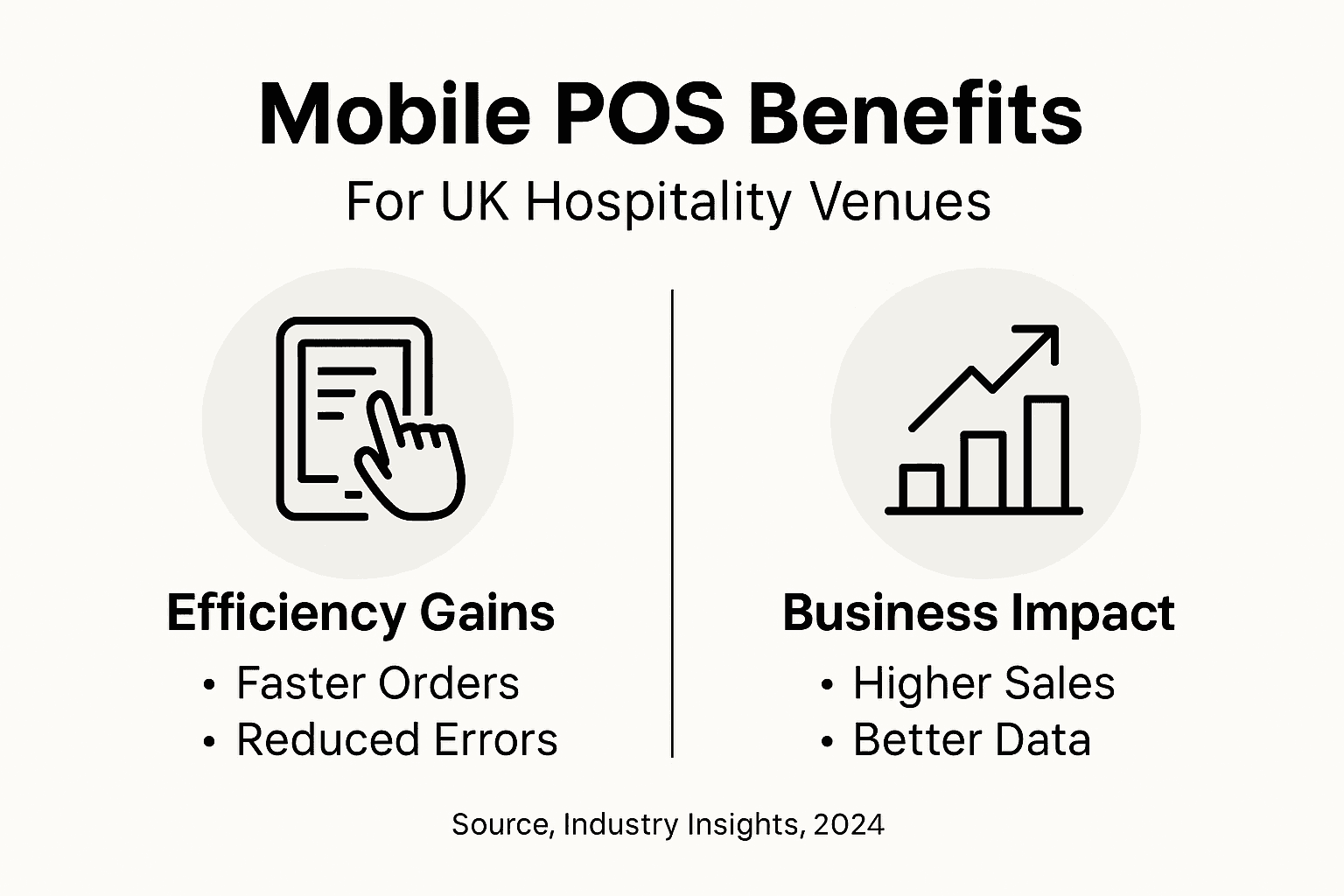
The technology proves particularly valuable for smaller independent venues and expanding restaurant groups. By integrating comprehensive management tools with flexible transaction capabilities, mobile POS systems help businesses adapt quickly to changing customer expectations and operational challenges.
Pro tip: Select a mobile POS system that offers robust offline functionality to ensure uninterrupted service during potential internet connectivity issues.
Cost, Security, and Practical Implications
Mobile Point of Sale (POS) technologies present a complex landscape of financial considerations and technological challenges for UK hospitality venues. Mobile payment system security requires comprehensive strategies to protect against potential cybersecurity vulnerabilities.
Key cost and security considerations include:
- Initial hardware investment
- Ongoing software subscription fees
- Cybersecurity protection measures
- Staff training requirements
- Data compliance and protection
The financial implications of mobile POS systems extend beyond simple transaction processing. While initial setup costs can be significant, long-term operational efficiencies typically offset these expenses through reduced labour costs, minimised human error, and enhanced transaction speed.
Cybersecurity remains a critical concern for mobile POS implementations. Hospitality businesses must implement robust protection mechanisms, including encrypted communication channels, regular software updates, and comprehensive staff training on digital security protocols. The potential risks of data breaches and transaction vulnerabilities necessitate a proactive and strategic approach to technological security.
The table below summarises the main cost and security factors when deploying mobile POS systems:
| Consideration | Business Impact | Importance for UK Venues |
|---|---|---|
| Hardware investment | Initial budget needs | May affect scalability decisions |
| Software subscriptions | Ongoing expenditure | Impacts cash flow planning |
| Cybersecurity measures | Risk reduction | Essential for data protection laws |
| Staff training | Higher adoption rate | Minimises operational errors |
| Data compliance | Legal responsibility | Critical for GDPR adherence |
Pro tip: Conduct regular security audits and invest in comprehensive staff training to mitigate potential cybersecurity risks in your mobile POS system.
Common Pitfalls and Mistakes to Avoid
Implementing mobile Point of Sale (POS) systems in hospitality venues requires careful strategic planning and awareness of potential implementation challenges. Understanding potential technology deployment risks is crucial for successful digital transformation in restaurant and café environments.
Common mistakes hospitality businesses often encounter include:
- Inadequate staff training
- Poor system integration
- Neglecting cybersecurity protocols
- Insufficient hardware compatibility
- Overlooking data migration challenges
- Underestimating ongoing maintenance requirements
Many restaurant owners rush into mobile POS adoption without thoroughly understanding their specific operational needs. This can lead to selecting inappropriate systems that create more complications than solutions. Businesses must conduct comprehensive assessments of their current workflows, considering factors like menu complexity, transaction volumes, and existing technological infrastructure.
Technology implementation failures frequently stem from a lack of comprehensive planning and insufficient change management strategies. Successful mobile POS adoption requires not just technological investment, but a holistic approach that encompasses staff education, gradual implementation, and continuous performance monitoring.
Pro tip: Conduct a detailed operational audit and pilot test your mobile POS system with a small team before full-scale implementation to identify and address potential integration challenges.
Unlock Seamless Hospitality Operations with YCR Distribution
The article highlights how mobile POS systems transform UK hospitality venues by enhancing order management, payment processing, and inventory tracking. If you are seeking to overcome challenges such as slow service times, poor system integration, or limited operational flexibility mobile POS solutions tailored to your needs are essential. With YCR Distribution’s extensive range of hardware and bespoke software solutions like SAMTOUCH and EZEEPOS your venue can achieve real-time data insights, improved customer experience, and robust security protections.
Key benefits with YCR include:
- Trusted POS hardware from major brands such as SAM4S and iMin
- Fully integrated software designed specifically for restaurants, cafés, and takeaways
- Next-day delivery and same-day dispatch ensuring minimal downtime
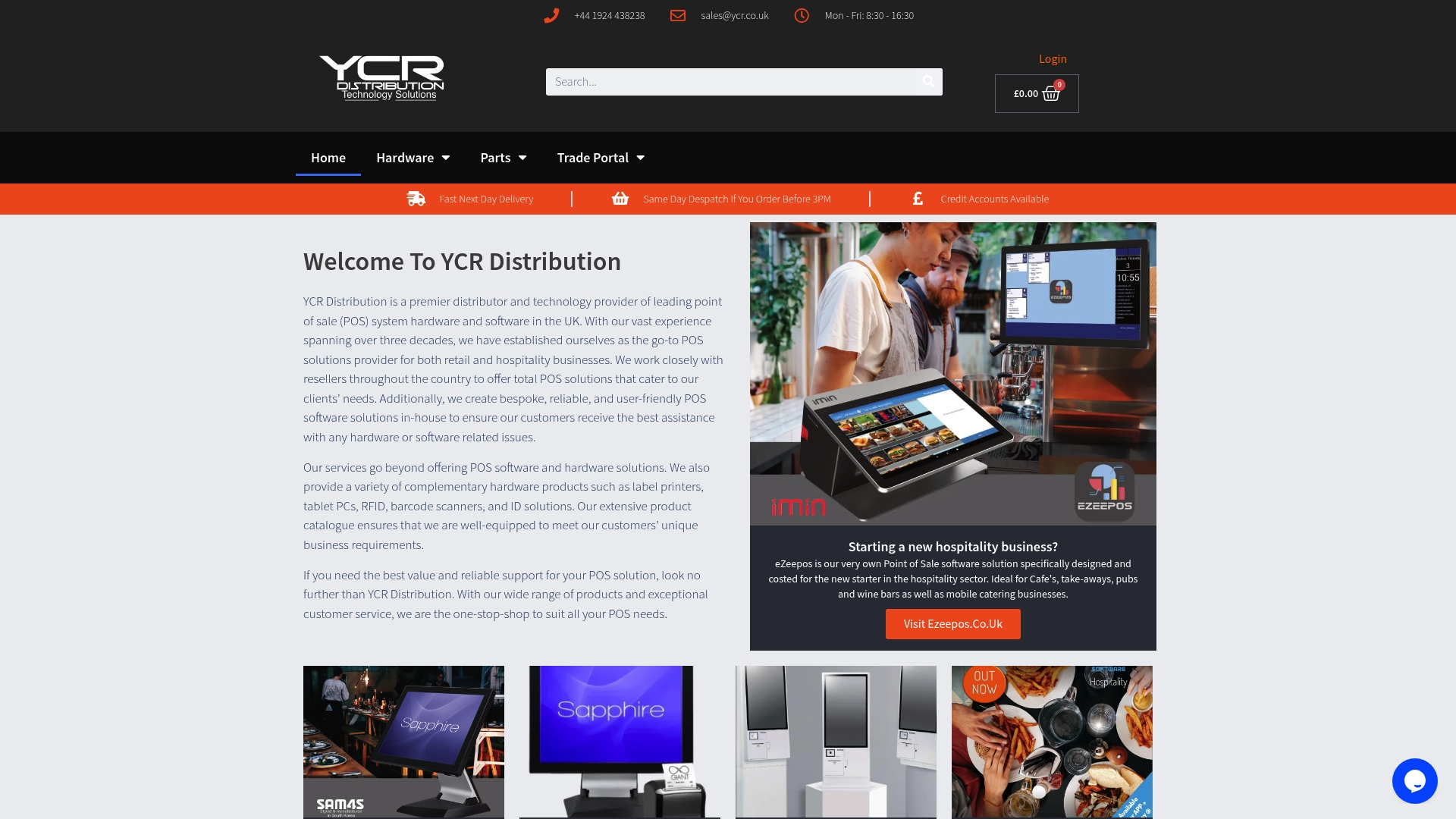
Explore how YCR’s comprehensive POS solutions can streamline your hospitality operations today. Visit YCR Distribution to unlock advanced mobile POS capabilities, or discover more about our bespoke POS software solutions designed to enhance efficiency and compliance in your venue. Take the next step now to elevate your guest satisfaction and operational control with experts who understand the complexities of UK hospitality.
Frequently Asked Questions
What are the main benefits of using a mobile POS system in hospitality?
Mobile POS systems enhance service speed and flexibility, streamline operations by integrating order management, inventory tracking, and financial reporting, and provide real-time transaction processing and customer relationship management.
How do mobile POS systems improve customer experience in restaurants?
By enabling staff to take orders and process payments directly at tables, mobile POS systems reduce wait times and improve overall service efficiency, leading to a better customer experience.
What key features should I look for in a mobile POS system?
Look for systems with real-time inventory updates, integrated payment processing, comprehensive sales reporting, customer management capabilities, and robust security measures.
How do mobile POS systems handle inventory tracking?
Mobile POS systems offer real-time inventory tracking, allowing staff to monitor stock levels and accurately update inventory as transactions occur, which helps prevent stockouts and overselling.