
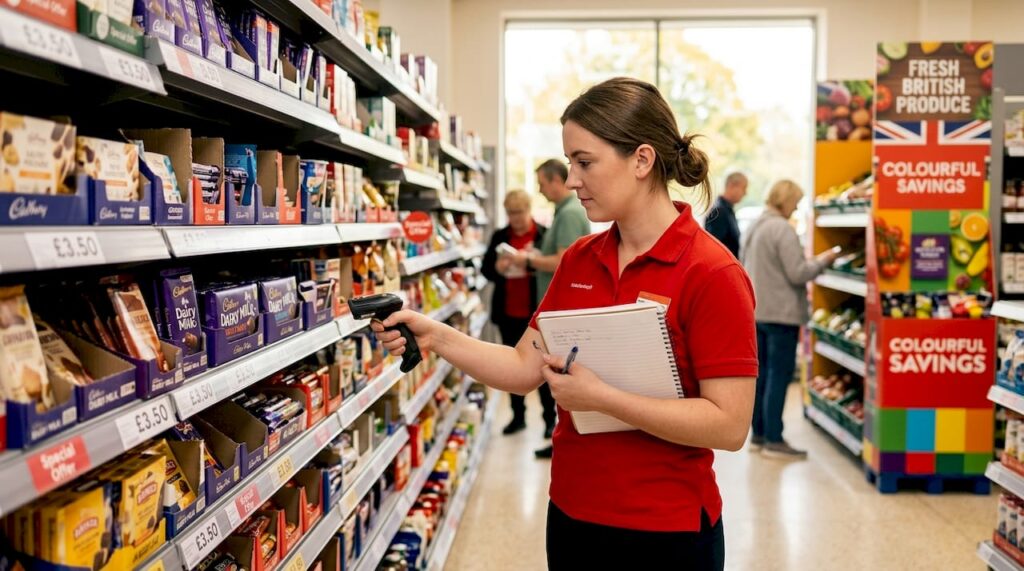
Benefits of barcode scanners for retail and hospitality
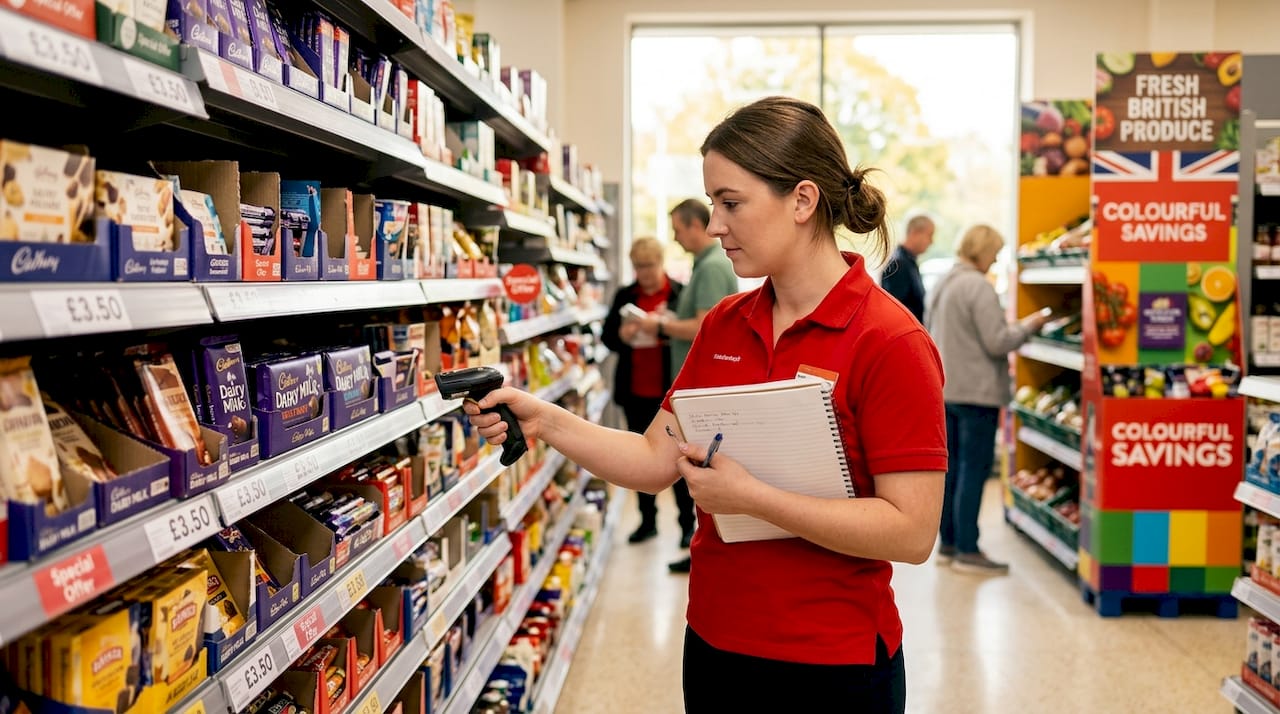
TL;DR:
- Barcode scanners significantly improve inventory accuracy from 63% to 99.9% and reduce manual errors to near zero. They also boost checkout speed by over 60%, lower labor costs, and enhance supply chain traceability when integrated with management systems. Effective implementation depends on selecting suitable hardware, maintaining barcode quality, and aligning workflows with software connectivity.
Slow checkouts, stock discrepancies, and manual data entry mistakes are not minor inconveniences. They cost you money every single day. The benefits of barcode scanners extend far beyond simply reading a product code. They touch everything from how accurately your stock is counted to how quickly a customer gets served and leaves satisfied. If you manage a retail shop, a restaurant, or a hospitality venue and you are still relying on manual processes, this article will show you precisely what you stand to gain and what questions to ask before you invest.
Table of Contents
- Key takeaways
- 1. The core benefits of barcode scanners for stock accuracy
- 2. Faster checkout and a better customer experience
- 3. Cost savings through labour efficiency and error reduction
- 4. Enhanced product traceability and compliance
- 5. Real-time data visibility across your operation
- 6. Scalability without proportional cost increases
- 7. Key considerations when selecting and implementing barcode scanners
- My honest take on the real value of barcode scanners
- Find the right barcode scanners for your business with Ycr
- FAQ
Key takeaways
| Point | Details |
|---|---|
| Accuracy improves dramatically | Barcode scanning raises inventory accuracy from around 63% to 99.9%, cutting costly stock errors. |
| Checkout speed increases sharply | Transaction times can fall by over 60%, reducing queues and improving customer satisfaction. |
| Labour savings are measurable | Mid-size operations report over 1,000% ROI on scanner investment within the first year. |
| Compliance protects your business | Proper barcode quality and GS1 standards prevent chargebacks, delays, and compliance failures. |
| Integration unlocks the real value | Pairing scanners with your POS or warehouse management system delivers the greatest operational gains. |
1. The core benefits of barcode scanners for stock accuracy
This is where barcode technology makes its most convincing argument. Manual stock counts are notoriously unreliable. Inventory accuracy sits at around 63% with manual methods. Switch to barcode scanning and that figure climbs to 99.9%. The same process that once took a team member 30 minutes to complete at the goods-in bay can be done in under three minutes.
Why does this matter in practice? A retail shop carrying inaccurate stock data will over-order some lines and run out of others. A hospitality venue working from unreliable ingredient counts risks waste on one side and stockouts on the other. Both scenarios cost money and frustrate staff.
Error rates with manual data entry typically sit between 1% and 3%. That sounds small until you consider hundreds of transactions per day. Barcode scanning reduces entry errors to near zero, which means cleaner sales data, more reliable reorder points, and fewer emergency purchasing decisions.
Pro Tip: Run weekly spot checks on barcode print quality for your top-selling and discounted products. Faded or damaged codes are a silent cause of scanning failures and the resulting data inaccuracies in retail.
2. Faster checkout and a better customer experience
Speed at the point of sale is not just a convenience. It directly affects whether a customer returns. Pre-scanning workflows can improve checkout speed by up to 20%, while median transaction times in advanced scanning environments drop from 139 seconds to just 53 seconds. That is a reduction of over 60%.

For a busy lunch-hour café or a high-footfall convenience store, that difference is the gap between a satisfied customer and one who walks out.
One factor that is often overlooked in this context is barcode quality at the self-checkout. 15% of self-checkout transactions require staff intervention, and 42% of those failures trace back to unreadable barcodes. Investing in a reliable scanner is only half the equation. The codes themselves need to meet print quality standards or you will spend more time on manual overrides than you save on scanning.
- Scanning eliminates manual price entry, which removes a common source of checkout errors
- Clear, well-printed barcodes reduce the frequency of staff interventions at self-service terminals
- Faster throughput during peak periods protects revenue and reduces customer walkouts
3. Cost savings through labour efficiency and error reduction
Let the numbers speak plainly here. A mid-size warehouse scanning 2,000 items daily can achieve £26,000 in annual labour savings on a scanner investment of around £2,000. That represents a 1,200% return in the first year alone.
Even at a smaller scale, the logic holds. Every hour a staff member spends manually entering stock data is an hour not spent on customer service, preparation, or higher-value tasks. Barcode scanning handles data capture in seconds, freeing your team to focus where they create the most value.
Picking and shipping errors are another significant cost centre. A wrong item dispatched means a return, a reship, a damaged supplier relationship, and sometimes a lost customer. Scanning enforces accuracy at every touch point in the fulfilment process.
Pro Tip: Choose omnidirectional scanners for busy counter environments. They read codes from multiple angles, reducing the number of failed scans and the time staff spend re-presenting items.
- Fewer physical stocktakes needed, reducing the disruption and overtime typically associated with manual counts
- Fewer picking errors mean fewer returns, reducing operational costs across the supply chain
- Productivity increases without requiring a proportional increase in headcount
4. Enhanced product traceability and compliance
GS1 UPC barcodes are scanned over 10 billion times daily across global retail and supply chains. They are not optional infrastructure for serious businesses. They are the mechanism by which products are identified, tracked, recalled, and verified at every point in the supply chain.
For hospitality operators, batch tracking and expiry date management are critical. A barcode system that links to your stock management software can flag items approaching their use-by date automatically. For retailers, the same principle applies to dated goods and seasonal stock.
Non-compliant barcodes carry real financial consequences. A failed scan due to poor quiet zones or degraded print quality adds 10 to 30 seconds per transaction. Multiply that across hundreds of daily transactions and the cumulative delay is significant. Worse, suppliers facing repeated scan failures risk chargebacks, shipment holds, and removal from shelves.
The industry is also moving forward. 82% of retailers and 92% of brand owners support the transition to 2D barcodes by 2031. These next-generation codes carry richer product data, support online connectivity, and improve traceability far beyond what traditional 1D barcodes allow.
| Barcode type | Data capacity | Use case |
|---|---|---|
| 1D UPC/EAN | Basic product ID | Retail checkout, inventory |
| 2D QR/Data Matrix | Rich product data, URLs, batch info | Traceability, recalls, consumer engagement |
5. Real-time data visibility across your operation
One of the less-discussed advantages of barcode scanning is what it does to your data. Every scan is a data point. When your scanner is connected to a POS or stock management system, those data points accumulate into a real-time picture of your operation.
You can see which products move fastest at which times of day. You can spot when stock levels drop below reorder thresholds without waiting for a manual count. You can identify discrepancies between expected and actual stock levels within hours rather than weeks.
For retail managers running multiple sites, this visibility is transformative. You can compare performance across locations, identify slow-moving stock before it becomes dead stock, and make purchasing decisions based on actual sales patterns rather than gut instinct.
The benefits of using barcodes at this level go well beyond hardware. They require your scanning solution to talk to your software. When that connection is solid, the data becomes genuinely useful for decision-making.
6. Scalability without proportional cost increases
One of the most practical advantages of barcode scanning is that it scales. Adding more products, more locations, or more staff does not require you to reinvent your stock management process. The same scanning workflow that handles 500 SKUs handles 5,000.
Barcode scanning prevents transposition errors that manual entry is prone to, which is particularly valuable as operations grow. When you add new product lines or take on a new supplier, each product gets a unique identifier that your system reads consistently every time.
For growing hospitality groups or multi-site retailers, this consistency matters enormously. Training new staff to use a barcode scanner takes minutes. Training them to manually manage stock accurately takes weeks. Scanning removes human variability from a process where variability is expensive.
7. Key considerations when selecting and implementing barcode scanners
Knowing the advantages of barcode scanning is one thing. Getting the implementation right is another. Several factors determine whether your investment delivers or disappoints.
Scanner type and environment
1D scanners read standard linear barcodes and suit most retail checkout scenarios. 2D scanners read QR codes and Data Matrix codes, making them necessary if you handle traceability-heavy stock or plan to adopt next-generation barcode formats. Wired scanners suit fixed counter positions. Wireless models suit stock rooms, hospitality floors, and warehouse environments where mobility matters.
Environmental conditions also affect performance. Lighting spectrum, barcode orientation, and surface reflectivity all influence scan reliability. Using native camera controls and manual focus locking reduces scan failures by up to 73% in variable-light environments.
Integration with your POS or management system
Hardware alone cannot solve your inventory problems. Most costly stock errors stem from disconnected workflows, not from poor scanning hardware. A scanner that feeds data into an integrated POS or warehouse management system creates enforced, accurate workflows. A scanner that feeds data into a spreadsheet leaves too much room for error downstream.
- Match scanner connectivity (USB, Bluetooth, Wi-Fi) to your existing setup before purchasing
- Confirm software compatibility with your POS provider before committing to hardware
- Test in your actual environment, not just at a desk, before rolling out across a site
Pro Tip: Request a demo unit from your supplier and test it in your specific environment. Scan products at different angles, distances, and lighting conditions to assess real-world performance before you buy.
My honest take on the real value of barcode scanners
I have seen businesses spend money on good scanning hardware and still struggle with the same inventory problems they had before. The scanner was not the problem. The workflow around it was.
In my experience, the businesses that extract the most value from barcode technology are those that treat it as infrastructure rather than equipment. They enforce scan-based processes at every touch point, from goods-in to checkout to stock adjustment. They invest time in configuring their POS and stock systems to reflect actual scanning workflows. And they check barcode print quality regularly, because a faded label on a discounted product will cause more frustration than the discount was worth.
The common misconception is that buying a better scanner will fix accuracy problems. It rarely does if the underlying process is broken. What I would tell any retail or hospitality manager evaluating this technology is this: map your workflow first. Identify exactly where data enters your system and where errors creep in. Then position scanning at those specific points and connect it tightly to your software. That is where the real impact of barcode technology lives, not in the scanner itself, but in the disciplined system built around it.
— John
Find the right barcode scanners for your business with Ycr
Ycr has been supplying POS hardware to UK retail and hospitality businesses for over three decades. Whether you need a fixed scanner for a busy checkout counter, a wireless unit for stockroom use, or a 2D scanner to support traceability workflows, Ycr carries a range suited to real operational environments. Browse the full selection of barcode scanners for retail to find hardware that fits your setup, or explore the complete POS hardware catalogue to see how scanners integrate with terminals, printers, and software. If you are unsure where to start, the POS hardware terminology guide is a practical resource for understanding your options. Ycr also offers next-day delivery and same-day dispatch, so you are not waiting weeks to get your operation sorted.
FAQ
How much do barcode scanners improve stock accuracy?
Barcode scanning raises inventory accuracy from approximately 63% to 99.9%, according to data on scan-based receiving processes. It also reduces manual data entry error rates from 1 to 3% down to near zero.
Why use barcode scanners instead of manual data entry?
Barcode scanners eliminate transposition and keying errors that manual entry is prone to, whilst capturing data far faster. A task that takes 30 minutes manually can be completed in under three minutes with scanning.
What types of barcode scanner suit retail and hospitality?
1D scanners handle standard checkout and stock management. 2D scanners read QR codes and are better suited for traceability, expiry tracking, and next-generation barcode formats being adopted across retail by 2031.
How does barcode quality affect scanning performance?
Poor print quality causes 42% of self-checkout scanning errors and adds 10 to 30 seconds per failed transaction. Regular checks on barcode print standards, particularly for high-volume and discounted products, are critical to maintaining performance.
Do barcode scanners need to connect to POS software to work properly?
A scanner used in isolation captures data but does not prevent downstream errors. Connecting your scanner to a POS or stock management system enforces accurate, scan-based workflows and delivers the full operational and financial benefits.