- +44 1924 438238
- sales@ycr.co.uk
- Mon - Fri: 8:30 - 16:30

Benefits of POS Hardware: Transforming UK Businesses
Running a successful restaurant or retail shop in the United Kingdom means every transaction, stock count, and customer interaction needs to work without a hitch. Choosing reliable POS hardware is more than just a box to tick—it is the foundation of a business that wants to stay competitive and meet modern demands. With technology now doing far more than taking payments, understanding the value of POS hardware technology can shape better decisions, smoother operations, and real growth.
Table of Contents
- What Is POS Hardware and Why It Matters
- Types of POS Hardware for Retail and Hospitality
- Key Features Enhancing Business Productivity
- Real-World Benefits for UK Operations
- Cost Efficiencies and Mistakes to Avoid
Key Takeaways
| Point | Details |
|---|---|
| Importance of POS Hardware | POS hardware is essential in revolutionising transaction processes, inventory management, and customer interactions in retail and hospitality businesses. |
| Types of POS Systems | Businesses should choose appropriate POS systems tailored to their needs, with options like mobile devices for restaurants and stationary terminals for retail. |
| Productivity Features | Modern POS hardware enhances productivity through real-time inventory management, advanced reporting capabilities, and integrated customer management. |
| Cost Considerations | Strategic financial planning is crucial to avoid common pitfalls such as underestimating implementation costs and neglecting long-term maintenance requirements. |
What Is POS Hardware and Why It Matters
Point of Sale (POS) hardware represents the technological backbone of modern retail and hospitality businesses in the United Kingdom. These specialised computer systems and devices transform how businesses process transactions, manage inventory, and interact with customers. POS hardware technology impacts UK businesses across multiple operational dimensions, serving as more than just a cash register.
At its core, POS hardware consists of interconnected digital components designed to streamline commercial interactions. These typically include:
- Touch screen terminals for customer and staff interactions
- Barcode scanners for rapid product identification
- Receipt printers for transaction documentation
- Cash drawers for secure money management
- Card payment terminals for digital transaction processing
Modern POS hardware goes far beyond simple transaction processing. These systems now integrate sophisticated software capabilities that provide real-time business intelligence, enabling restaurant and retail owners to track sales performance, manage inventory, and understand customer purchasing patterns with unprecedented precision.
Businesses across the UK are rapidly adopting advanced POS hardware because it offers significant operational advantages. By centralising transaction data, inventory management, and customer information, these systems help reduce manual errors, improve efficiency, and provide actionable insights that can drive strategic decision-making.
Pro tip: When selecting POS hardware, prioritise systems that offer seamless software integration and scalability to support your business’s future growth.
Types of POS Hardware for Retail and Hospitality
Retail and hospitality businesses in the UK rely on diverse POS hardware systems that go beyond traditional cash registers. When selecting hardware for business operations, managers must carefully consider the specific technological requirements of their unique commercial environment. These systems are not one-size-fits-all solutions but rather sophisticated technological ecosystems designed to meet specific operational needs.
The primary types of POS hardware for UK businesses include:
- Stationary POS Terminals
- Desktop computer-style systems
- Large touchscreen interfaces
- Integrated payment processing
- Mobile POS Devices
- Tablet and smartphone-based systems
- Lightweight and portable
- Perfect for tableside ordering in restaurants
- Compact Countertop Terminals
- Smaller footprint for tight spaces
- Quick transaction processing
- Integrated card reader functionality
Restaurant and retail environments often require different hardware configurations. Restaurants might prioritise mobile devices for tableside service, while retail stores typically need more robust, stationary systems with comprehensive inventory tracking capabilities. Examples of retail POS hardware configurations demonstrate the versatility of modern point-of-sale technologies.
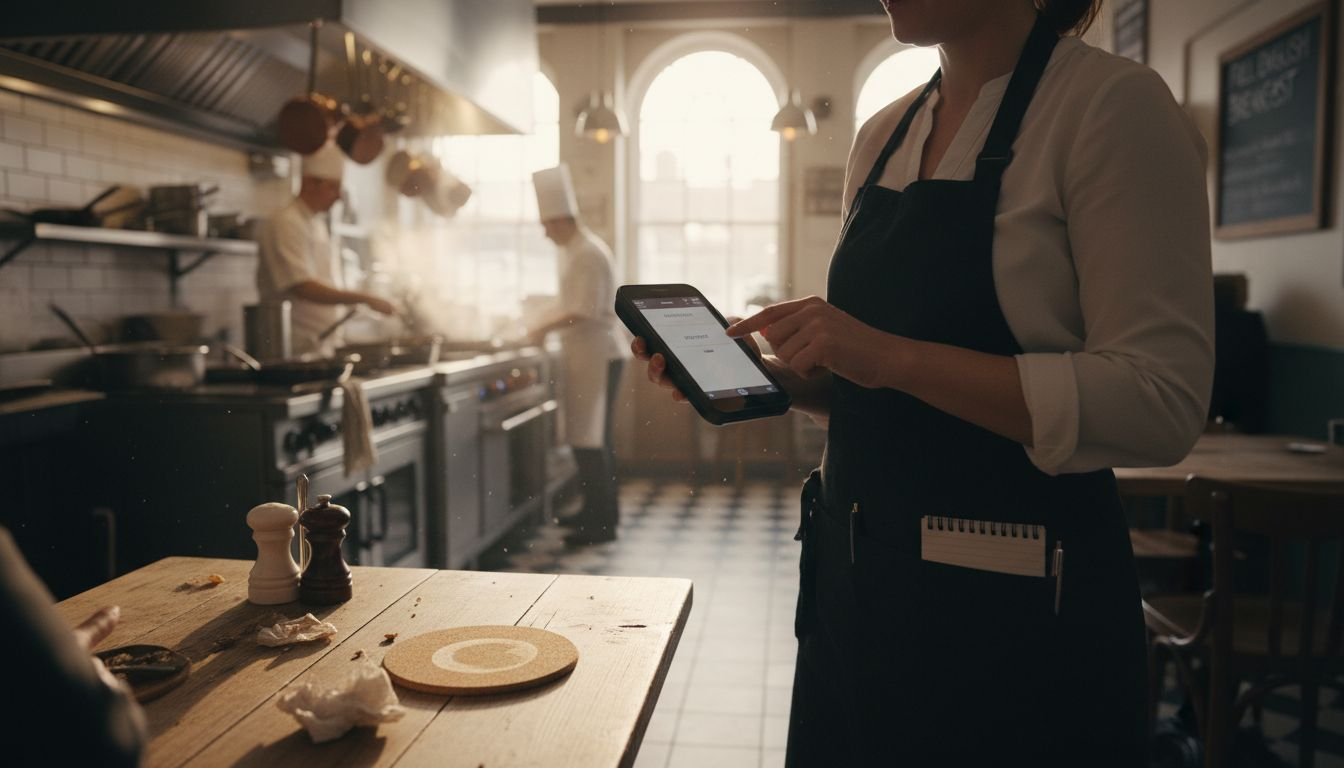
Here’s a comparison of typical POS hardware configurations and their suitability for restaurant versus retail environments:
| Hardware Type | Best for Restaurants | Best for Retail Stores | Key Advantage |
|---|---|---|---|
| Mobile POS Devices | Tableside ordering | Temporary pop-up checkouts | Maximum flexibility |
| Stationary POS Terminals | Kitchen and bar management | Main checkout counters | Advanced inventory tracking |
| Compact Countertop Terminals | Drink stations | Small retail spaces | Space-saving design |
Advanced POS hardware isn’t just about processing payments – it’s about creating seamless, intelligent business ecosystems that drive efficiency and customer satisfaction.
Businesses must also consider peripheral hardware components that complement core POS systems. These include receipt printers, barcode scanners, cash drawers, customer-facing displays, and specialised payment terminals that support multiple transaction types including chip, contactless, and mobile payments.
Pro tip: Invest in modular POS hardware systems that can easily scale and integrate with your existing business software to future-proof your technology infrastructure.
Key Features Enhancing Business Productivity
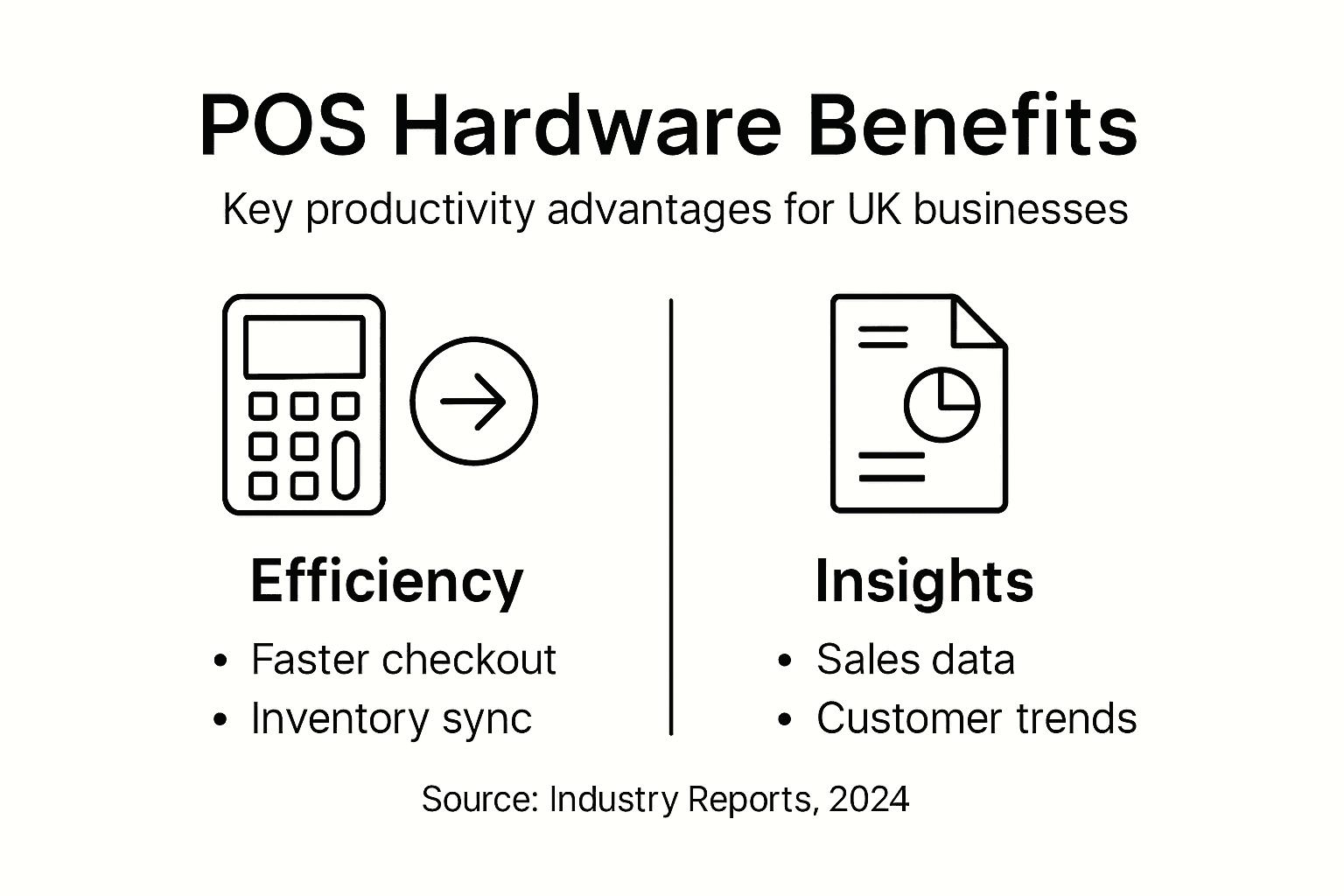
Modern POS hardware offers transformative features that significantly boost business productivity across retail and hospitality sectors. Business productivity relies on technological innovation, with integrated point-of-sale systems playing a crucial role in streamlining operational efficiency. These advanced systems go beyond simple transaction processing, providing comprehensive tools that help businesses work smarter and more effectively.
Key productivity-enhancing features include:
- Real-time Inventory Management
- Automatic stock tracking
- Instant low-stock alerts
- Precise inventory valuation
- Advanced Reporting Capabilities
- Detailed sales analytics
- Performance trend identification
- Customisable reporting dashboards
- Integrated Customer Management
- Customer purchase history tracking
- Loyalty programme integration
- Personalised marketing insights
When selecting hardware for business operations, managers must consider processing speed, storage reliability, and seamless system integration. Businesses can dramatically reduce manual errors and transaction times by implementing sophisticated POS hardware that automates complex operational tasks.
Technological efficiency transforms productivity, turning routine transactions into strategic business intelligence.
The most advanced POS systems now offer cloud-based synchronisation, enabling real-time data access across multiple locations. This means restaurant managers can monitor sales, track inventory, and analyse performance metrics from anywhere, providing unprecedented operational flexibility and insights.
Pro tip: Choose POS hardware with modular design and scalable features to ensure your technology investment continues to support your business growth.
Real-World Benefits for UK Operations
Retail and hospitality businesses across the United Kingdom are experiencing transformative outcomes through advanced POS hardware implementations. Technology adoption drives business competitiveness, enabling organisations to adapt rapidly to changing market dynamics and customer expectations. Modern POS systems are no longer just transactional tools, but strategic platforms that drive operational excellence.
Key real-world benefits for UK businesses include:
- Operational Efficiency
- Reduced manual administrative tasks
- Streamlined inventory management
- Faster customer processing times
- Financial Performance
- Improved cash flow tracking
- Precise revenue reporting
- Enhanced budgeting capabilities
- Customer Experience
- Personalised service delivery
- Faster transaction processing
- Integrated loyalty programme management
Technological innovation transforms business operations by providing unprecedented insights into performance metrics, customer behaviours, and operational bottlenecks. Sophisticated POS hardware enables businesses to make data-driven decisions, identifying opportunities for improvement and strategic growth with remarkable precision.
The following table summarises how advanced POS hardware can create measurable benefits for UK retail and hospitality businesses:
| Benefit Area | Real-World Outcome | Strategic Value |
|---|---|---|
| Operational Efficiency | Faster service delivery | Reduced staffing costs |
| Financial Performance | More accurate revenue analysis | Improved budgeting decisions |
| Customer Experience | Personalised loyalty programmes | Enhanced repeat business rates |
Technology is not just a tool, but a strategic partner in business transformation.
Restaurants, retail stores, and hospitality venues are discovering that intelligent POS systems provide a competitive edge by offering real-time analytics, seamless payment integrations, and comprehensive management tools. These systems help businesses navigate complex operational challenges while maintaining agility in a rapidly evolving commercial landscape.
Pro tip: Regularly analyse your POS system’s performance metrics to continuously identify opportunities for operational improvement and strategic investment.
Cost Efficiencies and Mistakes to Avoid
Implementing point-of-sale hardware requires strategic financial planning and careful consideration of potential pitfalls. Cost estimating techniques are critical for UK businesses seeking to maximise their technology investments while minimising unnecessary expenditure. Understanding the nuanced financial landscape of POS hardware deployment can mean the difference between a transformative investment and a costly mistake.
Common cost-related mistakes businesses must avoid include:
- Underestimating Implementation Expenses
- Hidden software integration costs
- Staff training expenditures
- Potential workflow disruption expenses
- Neglecting Long-term Maintenance
- Ongoing software update costs
- Hardware replacement cycles
- Technical support subscriptions
- Overlooking Scalability Requirements
- Future expansion limitations
- Inflexible system architectures
- Restricted customisation options
Successful POS hardware investment demands a comprehensive approach that considers both immediate and future financial implications. Businesses must conduct thorough cost-benefit analyses, accounting for not just hardware expenses, but also potential productivity gains, operational efficiency improvements, and long-term strategic advantages.
Financial prudence in technology investment means looking beyond initial price tags to understand true value creation.
Restaurants, retailers, and hospitality venues should prioritise modular POS systems that offer flexible pricing models, allowing gradual upgrades and minimising upfront capital expenditure. By selecting adaptable solutions, businesses can spread technology investments strategically, reducing financial strain and maintaining technological competitiveness.
Pro tip: Request comprehensive total cost of ownership projections from POS hardware providers, including potential hidden expenses and future upgrade pathways.
Unlock the Full Potential of POS Hardware for Your UK Business
The article highlights the critical challenges UK retail and hospitality businesses face such as managing complex inventory, reducing manual errors, and enhancing customer experience through advanced POS hardware. Key pain points include the need for scalable, integrated systems that provide real-time insights and operational efficiency while avoiding costly mistakes like hidden expenses and poor scalability. If you want to transform your business operations with reliable, modular, and future-proof POS hardware and software, there is a comprehensive solution waiting for you.
Discover how YCR Distribution specialises in delivering high-quality POS terminals, barcode scanners, printers, and bespoke software like SAMTOUCH and EZEEPOS that address these exact needs. Their vast expertise ensures you get tailored systems that foster faster transactions, seamless integration, and real-time management—all designed to help you grow and adapt with confidence.
Explore their complete range of POS hardware and integrated solutions crafted for restaurants, retail stores, and hospitality venues.
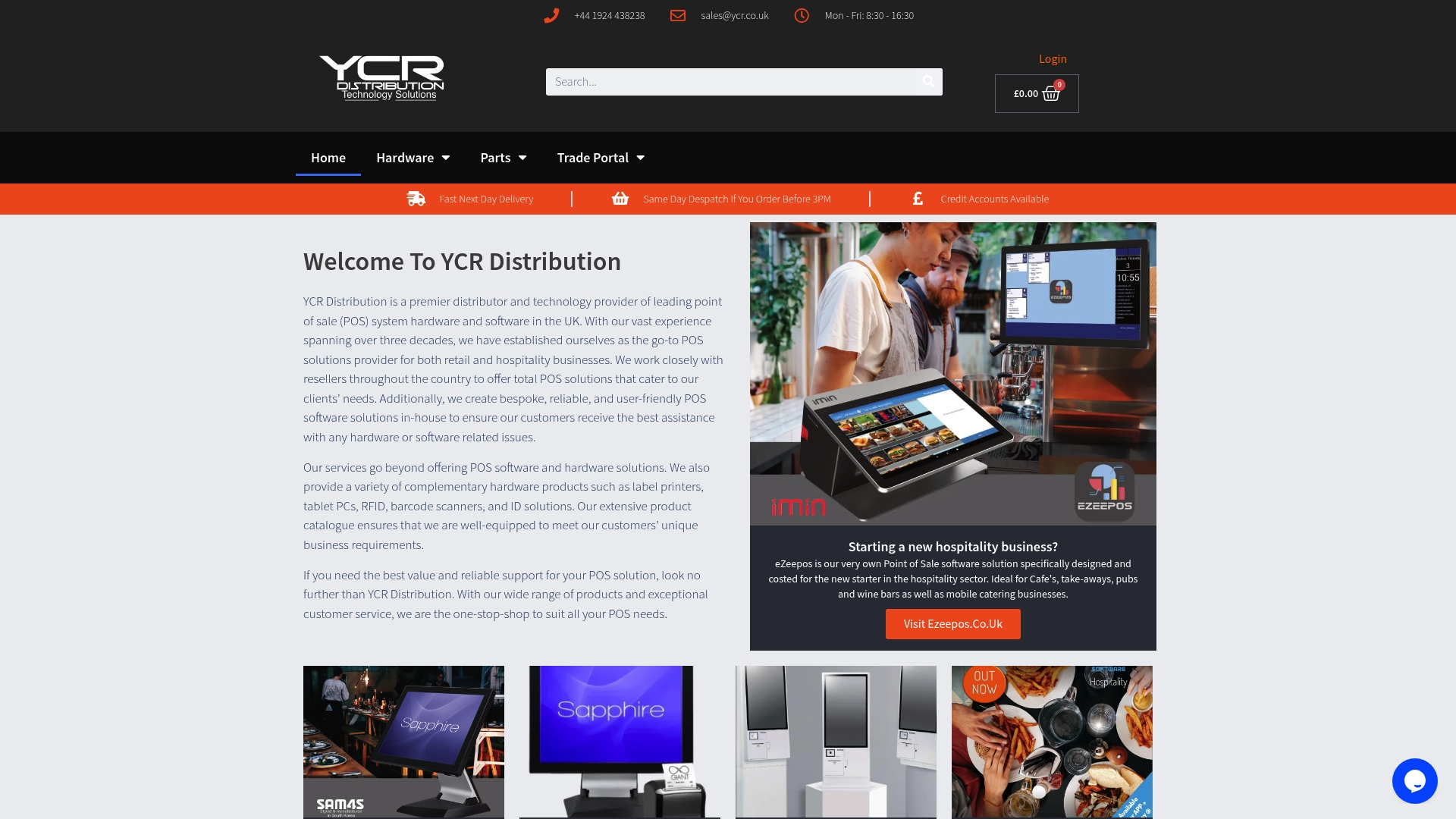
Ready to boost your operational efficiency and customer satisfaction with trusted POS technology? Visit YCR Distribution today to find the perfect hardware and software combination tailored for your UK business. Act now to take advantage of their next-day delivery and credit account options and start transforming your business with cutting-edge POS solutions.
Frequently Asked Questions
What are the main advantages of using POS hardware for businesses?
Using POS hardware improves operational efficiency by reducing manual tasks, streamlining inventory management, and enabling faster customer processing, which enhances overall business performance.
How does POS hardware enhance customer experience?
POS hardware facilitates personalised service delivery through features like loyalty programme integration and faster transaction processing, contributing to an improved customer experience and increased repeat business rates.
What types of POS hardware systems are available for retail and hospitality businesses?
There are several types of POS hardware systems, including stationary POS terminals, mobile POS devices, and compact countertop terminals, each designed for specific operational needs in retail and hospitality environments.
What should businesses consider when selecting POS hardware?
Businesses should consider factors such as processing speed, storage reliability, seamless system integration, and the potential for future scalability to ensure that the POS hardware meets their evolving operational requirements.