- +44 1924 438238
- sales@ycr.co.uk
- Mon - Fri: 8:30 - 16:30

Bespoke POS Software: Transforming UK Hospitality
Juggling the needs of a British café or restaurant often means wrestling with software that simply does not fit your operation. Many hospitality owners find that off-the-shelf POS systems force awkward workarounds and slow down their team. That is why more venues are turning to bespoke POS software, which combines order management, inventory tracking, financial reporting, and customer engagement in one customised, integrated system. This introduction helps you understand how tailored POS solutions address your unique challenges and support the way your business actually runs.
Table of Contents
- Defining Bespoke POS Software For Hospitality
- Types And Key Features Of Bespoke POS Solutions
- How Custom POS Software Supports Hospitality Operations
- Compliance, Security, And Legal Considerations In The UK
- Costs, Risks, And Comparing Bespoke Alternatives
Key Takeaways
| Point | Details |
|---|---|
| Customisation Matters | Bespoke POS software is tailored to the unique workflows of hospitality businesses, enhancing efficiency and service delivery. |
| Integration is Key | Choose a POS system that integrates seamlessly with existing tools to minimise manual data entry and errors. |
| Compliance is Essential | Ensure your POS system adheres to UK regulations such as PCI DSS and GDPR to protect customer data. |
| Long-Term Savings | While bespoke systems have a higher initial cost, they often lead to greater long-term savings through increased operational efficiency. |
Defining Bespoke POS Software for Hospitality
Bespoke POS software represents something quite different from the off-the-shelf systems you might find on a shelf. Rather than installing generic software designed to work for any business, you get a custom-developed solution built specifically around how your hospitality operation actually runs. Whether you operate a busy restaurant, a cosy café, or a takeaway, the system adapts to your workflows rather than forcing you to adapt to the software.
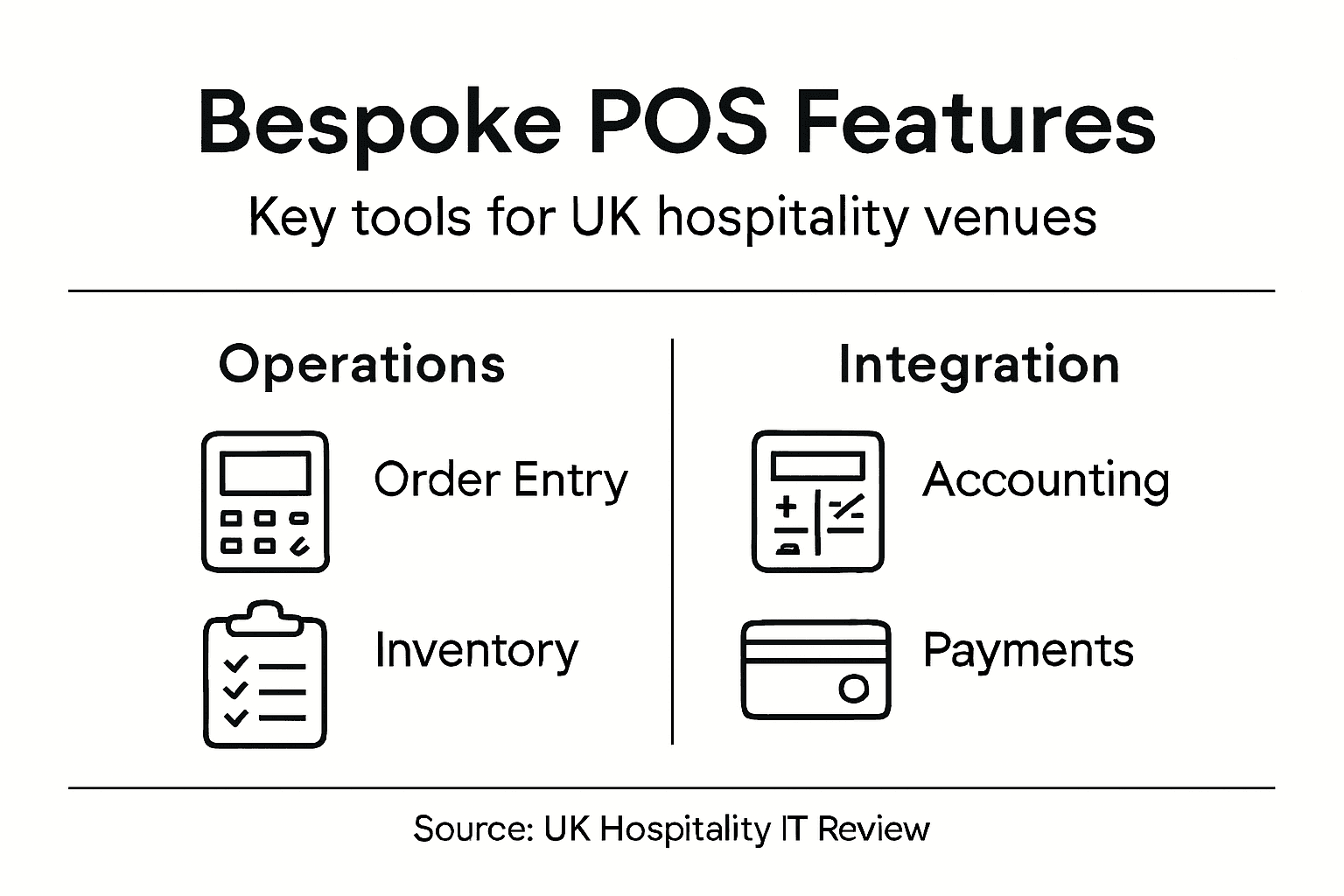
At its core, bespoke POS software integrates key functions like order management, inventory tracking, financial reporting, and customer engagement into one interconnected system. Think of it as the nervous system of your business. Your front-of-house staff use it to take orders and process payments. Your kitchen team receives orders in real-time with no printed tickets going missing. Your managers access live sales data and inventory levels without waiting for end-of-day reports. Your accountant receives accurate financial information automatically, eliminating manual spreadsheet work.
The distinction matters because hospitality operations have unique demands that generic systems simply cannot address effectively. A café needs different functionality than a fine-dining restaurant. A quick-service takeaway requires different workflows than a gastropub serving both walk-ins and reservations. Custom POS systems handle order taking, bill settlement, menu management, and integration with your accounting and inventory packages all within one tailored platform. This customised approach improves both profitability and service delivery because the technology works the way your business actually operates, not the other way around.
Key features of bespoke hospitality POS software typically include:
- Real-time data utilisation to monitor operations and make informed decisions
- Streamlined order management that reduces errors and speeds up service
- Integrated inventory tracking to prevent stockouts and manage costs
- Financial reporting that gives you visibility into profitability
- Customer engagement features that build loyalty and repeat business
The practical advantage here is that every function works together seamlessly. Your kitchen staff see orders immediately on their screens rather than printing tickets that get misplaced. Your managers track inventory without manual counting, knowing exactly what stock levels need attention. Your accountant gets accurate financial data automatically rather than trying to reconcile different systems. This interconnected approach eliminates the tedious data entry and manual reconciliation that wastes hours each week in many hospitality venues using fragmented systems.
Pro tip: When evaluating bespoke POS options, prioritise systems that integrate directly with your existing accounting software and suppliers, as this eliminates duplicate data entry and reduces errors significantly.
Types and Key Features of Bespoke POS Solutions
Bespoke POS solutions come in several distinct varieties, each tailored to different hospitality environments and operational needs. The architecture you choose depends on your specific business model, location requirements, and how your staff work on a day-to-day basis. Some venues thrive with fixed terminal setups at checkout points, whilst others need mobile devices allowing staff to take orders tableside or process payments anywhere in the venue. Understanding these variations helps you select a system that actually fits your operation rather than forcing your team to work around inflexible technology.
Cloud-based POS systems have become increasingly popular because they offer flexibility and accessibility. Your staff can access the system from anywhere with an internet connection, making them ideal for multi-location operators or venues with delivery services. Traditional legacy systems, by contrast, operate locally on installed hardware and may require more manual processes, though they offer stability in environments with unreliable internet connectivity. Mobile POS solutions blur the line between these approaches, allowing wait staff or counter teams to process transactions directly at the customer, reducing bottlenecks at traditional tills. Hospitality POS systems must provide secure transaction processing alongside real-time inventory management and order coordination.

Here’s a summary of how different bespoke POS system types suit various hospitality environments:
| POS System Type | Ideal Environments | Key Strengths |
|---|---|---|
| Fixed Terminal | Restaurants, pubs | Reliable, robust for high volume use |
| Mobile POS | Cafés, outdoor venues | Flexible, tableside service capability |
| Cloud-Based | Multi-site operations | Accessible remotely, scalable easily |
| Legacy On-Premises | Rural areas, large hotels | Stable if internet is unreliable |
Key features that distinguish bespoke solutions include:
- Real-time inventory tracking that shows stock levels instantly across your operation, preventing over-ordering and waste
- Order management systems that route customer requests to the correct kitchen station or service point automatically
- Customer relationship management (CRM) functionality that tracks purchasing patterns and enables targeted loyalty programmes
- Contactless payment integration allowing multiple payment methods from cards to mobile wallets
- User-friendly interfaces designed specifically for your business type, reducing staff training time significantly
- Integration capabilities that connect seamlessly with your accounting software, delivery platforms, and supplier systems
For hospitality venues specifically, custom POS systems enhance operational efficiency through intuitive transaction processing and personalised guest engagement tools. A restaurant system looks different from a hotel check-in system, which differs again from a café operation. The software adapts to your workflows rather than the reverse. Bespoke systems also prioritise adaptability, security, and speed because these elements directly impact both your bottom line and customer satisfaction. When payment processing is slow, customers become frustrated. When inventory data is inaccurate, you either run out of stock or waste money on excess supplies. When your CRM fails, you miss opportunities to build customer loyalty.
Pro tip: Request a demonstration using realistic scenarios from your own business (such as a busy service period or a complex multi-table order) to verify the system actually performs smoothly under your real-world conditions.
How Custom POS Software Supports Hospitality Operations
Custom POS software acts as the operational backbone of modern hospitality venues, connecting every function from taking orders to managing inventory and handling payments. Rather than juggling multiple disconnected systems, your team works within one unified platform where information flows seamlessly. When a customer orders a dish, that order instantly appears in the kitchen, updates your inventory count, logs the transaction for accounting purposes, and tracks customer preferences for future marketing. This interconnectedness is what transforms chaos into coordinated efficiency.
The real operational benefit comes from what happens behind the scenes. Custom POS software reduces manual errors and speeds up service delivery by automating routine tasks that typically waste staff time. Your front-of-house team no longer manually writes orders that the kitchen might misread or lose. Your managers no longer spend closing time manually reconciling registers and inventory sheets. Your accountant receives accurate financial data automatically rather than chasing down receipts and transaction records. This automation directly translates to faster service for customers, fewer mistakes, and staff spending their energy on meaningful work rather than data entry.
Consider the practical impact in daily operations. A busy Friday night brings rush periods where every second counts. With a properly configured custom POS system, your team processes orders faster, reduces queue times, and handles payment processing smoothly even during peaks. Personalised customer experiences improve profitability by automating data collection and enabling targeted marketing, meaning repeat customers feel recognised and valued when they return. Your staff can spot their favourite dish or drink in seconds rather than asking them what they ordered last time.
The operational advantages extend across multiple areas:
- Faster order processing reduces customer wait times and improves throughput during busy periods
- Accurate inventory control prevents stockouts of popular items and reduces waste from spoilage
- Real-time analytics let managers spot trends instantly (such as which menu items drive profit) and adjust strategies quickly
- Seamless payment handling with multiple payment methods reduces bottlenecks at checkout
- Integrated accounting eliminates manual reconciliation and provides instant visibility into profitability
- Staff scheduling integration matches staffing levels to predicted demand patterns
When these functions work together cohesively, something remarkable happens. Your business runs more smoothly with less friction, staff stress decreases because systems support rather than hinder them, and customers experience genuinely faster service because nothing falls through the cracks.
Pro tip: During implementation, invest time in staff training on the system’s reporting features, as managers who understand the data available to them make sharper decisions about inventory, staffing, and menu pricing.
Compliance, Security, and Legal Considerations in the UK
Running a hospitality business in the UK means operating within a framework of strict regulations designed to protect customer data and payment security. These aren’t optional suggestions or nice-to-have features. They’re legal requirements that carry real penalties if you get them wrong. The financial impact of a data breach or compliance failure extends far beyond the immediate incident, damaging your reputation and potentially shutting down operations entirely. Understanding these requirements isn’t glamorous, but it’s absolutely non-negotiable.
The three major compliance frameworks you must address are Payment Card Industry Data Security Standard (PCI DSS), General Data Protection Regulation (GDPR), and ISO 27001 information security standards. PCI DSS applies whenever you accept card payments, requiring you to handle card data securely and encrypt sensitive information. This means your POS system must not store full card details on your premises. Effective hospitality compliance involves minimising data retention and applying network segmentation and tokenisation to protect payment information. Tokenisation replaces actual card numbers with unique tokens, so even if someone breaches your system, they cannot access useable card data.
GDPR protections apply to any customer personal data your POS system collects and stores. When you capture customer email addresses for loyalty programmes, track purchase history, or record phone numbers for reservations, GDPR rules apply. You must be transparent about what data you collect and why, obtain explicit consent before processing personal information, and delete data when customers request it. Your bespoke POS system should have built-in privacy controls and audit trails showing who accessed customer information and when. Many smaller hospitality operators struggle with this because they lack dedicated IT expertise, but a properly configured POS system handles much of this automatically.
Implementing security across your operation requires practical steps beyond just technology:
- Strong authentication using passwords that cannot be easily guessed and multi-factor authentication where possible
- Staff training ensuring all team members understand data protection and recognise security threats like phishing attempts
- Incident response planning with clear procedures for what happens if a security breach occurs
- Regular system updates to patch security vulnerabilities before criminals exploit them
- Network segmentation keeping payment systems isolated from general WiFi networks used by staff and customers
- Regular security audits reviewing your systems and processes to identify weaknesses
Your POS software provider plays a crucial role here. They should handle compliance burden by managing encryption, maintaining security certifications, and providing regular security updates. A bespoke system tailored for UK hospitality should come with compliance built in rather than added afterwards. Before selecting a provider, ask specifically about their PCI DSS certification status, their data protection policies, and how they handle security incidents. Don’t accept vague answers about security.
Pro tip: Request your POS provider’s latest security audit or compliance certificate before signing any agreement, and include specific security and compliance requirements in your contract so you have recourse if they fail to meet standards.
Costs, Risks, and Comparing Bespoke Alternatives
Let’s address the question that sits at the back of every hospitality business owner’s mind: how much does this actually cost, and is it worth the investment? The answer isn’t simple because it depends entirely on your specific needs, but understanding the landscape helps you make an informed decision. Custom POS software development costs vary from £11,000 for basic systems to over £110,000 for enterprise-level solutions, influenced by complexity, features, and deployment requirements. A small café might need only order taking and payment processing, whilst a multi-location restaurant group requires inventory synchronisation across locations, advanced reporting, and integration with suppliers. This is why comparing bespoke options against off-the-shelf alternatives requires looking beyond the initial price tag.
Off-the-shelf POS systems often appear cheaper initially, sometimes costing just a few thousand pounds or available as monthly subscriptions. But this calculation misses the hidden costs. You pay licensing fees whether you use all the features or not. You cannot remove features that don’t fit your workflow. When the system doesn’t integrate with your existing accounting software, you hire someone to manually enter data weekly. When the system cannot track your specific menu items or service style, your staff workaround it inefficiently. When updates arrive that break your customisations, you’re stuck with unwanted changes. These hidden inefficiencies accumulate, sometimes costing more than a bespoke system over five years.
Bespoke solutions eliminate these inefficiencies because they’re built specifically for how you operate. The system doesn’t force you to adapt. Your workflows adapt naturally to the software because the software was designed around your processes. This reduces staff frustration, speeds up training for new team members, and prevents the daily workarounds that drain productivity. The upfront investment is higher, but the long-term return comes from operational efficiency, reduced staff time on manual tasks, and better decision-making through accurate data.
Below is a comparison of bespoke and off-the-shelf POS solutions focussing on long-term value:
| Aspect | Bespoke POS | Off-the-Shelf POS |
|---|---|---|
| Workflow Fit | Tailored to business | Generic, needs adaptation |
| Upfront Cost | Higher initial investment | Lower, subscription possible |
| Integration Ease | Connects to existing tools | Limited, may require workarounds |
| Long-term Efficiency | Reduces manual effort | Manual input often required |
| Upgrade Flexibility | Customisable to your needs | Dependent on vendor updates |
Key risk mitigation strategies when choosing a bespoke system include:
- Thorough requirements analysis documenting exactly what you need before development starts, preventing expensive mid-project changes
- Phased implementation rolling out the system gradually rather than switching everything at once, reducing disruption
- Comprehensive testing ensuring the system works properly before your team relies on it for daily operations
- Clear contracts specifying what’s included, timelines, support, and what happens if things go wrong
- Ongoing support agreements ensuring the provider maintains and updates the system after launch
When comparing alternatives, ask yourself these questions. Does the system fit how I work, or do I need to change how I work? Will it integrate with my accountant’s software and my supplier systems, or will I pay for manual reconciliation indefinitely? Can the system grow with my business, or will I outgrow it in two years? What happens if the provider goes out of business or stops supporting the software? Will I own the software, or merely rent it? These questions separate genuine value from cheap solutions that cost more in the long run.
Pro tip: Request detailed quotes that break down development, implementation, testing, training, and ongoing support costs separately, then calculate your total cost of ownership over five years including staff time savings and error reduction to compare fairly against off-the-shelf alternatives.
Unlock Efficiency with Bespoke Hospitality POS Solutions Tailored for Your UK Business
The challenges of running a hospitality venue in the UK demand a POS system that understands your unique workflows and compliance needs. From seamless order management and real-time inventory tracking to secure payment processing and integrated accounting, bespoke POS software transforms operational chaos into smooth, efficient service. If you want to eliminate manual errors, reduce staff stress, and enhance customer satisfaction, a tailored solution is essential. YCR Distribution offers expert support with proven hospitality POS solutions like SAMTOUCH and EZEEPOS that adapt to your business—not the other way around.
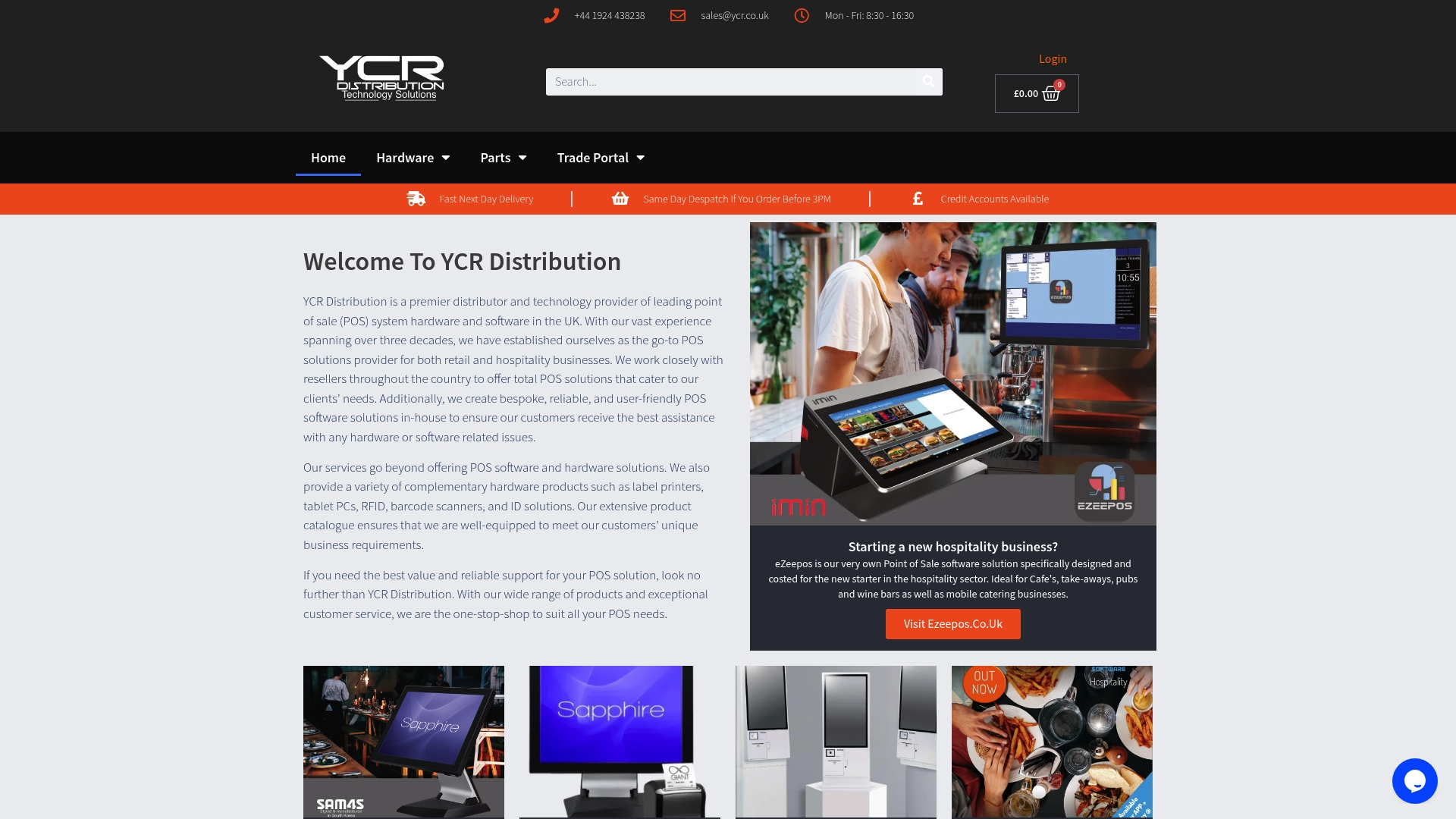
Empower your team with hardware and software perfectly matched to your venue’s needs. Discover how quick, reliable deliveries combined with trusted brands such as SAM4S and iMin can elevate your hospitality operation today. Visit YCR Distribution to explore bespoke POS systems designed specifically for UK restaurants, cafés, and takeaways. Don’t wait to streamline your business—act now and see how integrated solutions can boost your profitability and service quality starting immediately.
Frequently Asked Questions
What is bespoke POS software for hospitality?
Bespoke POS software is a custom-developed system designed specifically for the unique workflows and operational needs of hospitality venues, such as restaurants and cafés, integrating key functions like order management, inventory tracking, and customer engagement.
How does bespoke POS software improve operational efficiency?
Bespoke POS software streamlines operations by automating routine tasks, reducing manual errors, and facilitating real-time data sharing, which enhances service speed and accuracy during busy periods.
What are the key features to look for in a bespoke POS system?
Key features to consider include real-time inventory tracking, order management systems, CRM capabilities, contactless payment integration, user-friendly interfaces, and seamless integration with existing accounting and supplier systems.
How does bespoke POS software ensure compliance and security?
Bespoke POS systems address compliance by adhering to regulations such as PCI DSS and GDPR. They implement strong data protection measures, including encryption, tokenisation, and regular security audits, to ensure customer data remains secure and compliant with legal standards.