- +44 1924 438238
- sales@ycr.co.uk
- Mon - Fri: 8:30 - 16:30

Examples of retail POS solutions to streamline your business
Selecting the right POS system for your retail or hospitality business can feel overwhelming with so many options on the market. Each solution offers different features, pricing structures, and capabilities that impact daily operations and long-term growth. This article examines notable UK retail POS solutions including Square, SumUp, Epos Now, and Shopify POS, providing clear comparisons of their strengths and limitations. You’ll learn how to evaluate key features and match the right system to your business size, transaction volume, and operational requirements.
Table of Contents
- Key takeaways
- Criteria for choosing the right retail POS solution
- Square and SumUp: low-cost solutions for small retailers and pop-ups
- Epos Now and Shopify POS: powerful options for growing retail and hospitality businesses
- Comparing the options: which retail POS suits your business?
- Discover UK retail POS hardware and software from YCR
- FAQ
Key Takeaways
| Point | Details |
|---|---|
| Low cost entry options | Square and SumUp offer free software with low transaction fees, making them practical for small retailers and pop ups. |
| Epos Now offline setup | Epos Now is praised for its customisation options and reliable offline functionality for both retail and hospitality. |
| Shopify online to offline | Shopify POS enables seamless inventory and order management across online and physical stores. |
| Choose by business size | Ultimately the right system depends on business size, transaction volume and operational needs. |
Criteria for choosing the right retail POS solution
Before comparing specific platforms, you need a clear framework for evaluation. The right POS system depends on your business model, transaction patterns, and growth plans. Start by examining total costs, including hardware purchases, monthly software fees, and transaction charges that affect your profit margins. A system with no monthly fee but 2% transaction costs might seem attractive initially, but high-volume businesses lose significant revenue over time.
Essential features vary by sector but typically include inventory management, employee scheduling tools, and offline functionality. Your POS must track stock levels accurately, manage staff permissions, and continue processing sales during internet outages. Integration capabilities matter enormously for businesses operating both physical and online stores. Your system should synchronise inventory, orders, and customer data across all channels without manual intervention.
Ease of use directly impacts staff productivity and training costs. A complicated interface slows down service and frustrates employees, whilst intuitive systems reduce onboarding time. Reliable customer support becomes critical when technical issues arise during peak trading hours. Choosing POS systems UK requires evaluating response times, support channels, and whether assistance is available outside standard business hours.
Scalability determines whether your investment remains viable as you grow. A system perfect for a single location might collapse under the demands of multiple sites or increased transaction volumes. Consider future needs now to avoid costly migrations later.
Pro Tip: Create a weighted scorecard listing your top five requirements, then score each POS option from 1 to 10. This removes emotional decision-making and highlights which system genuinely matches your priorities.
Square and SumUp: low-cost solutions for small retailers and pop-ups
For businesses prioritising minimal upfront investment, Square and SumUp dominate the entry-level market. Square is a leading POS solution for UK retail, offering free software with 1.75% transaction fees, advanced inventory management, employee tools, and seamless omnichannel integration. You can start accepting payments immediately without monthly commitments, making it ideal for testing new retail concepts or seasonal operations.
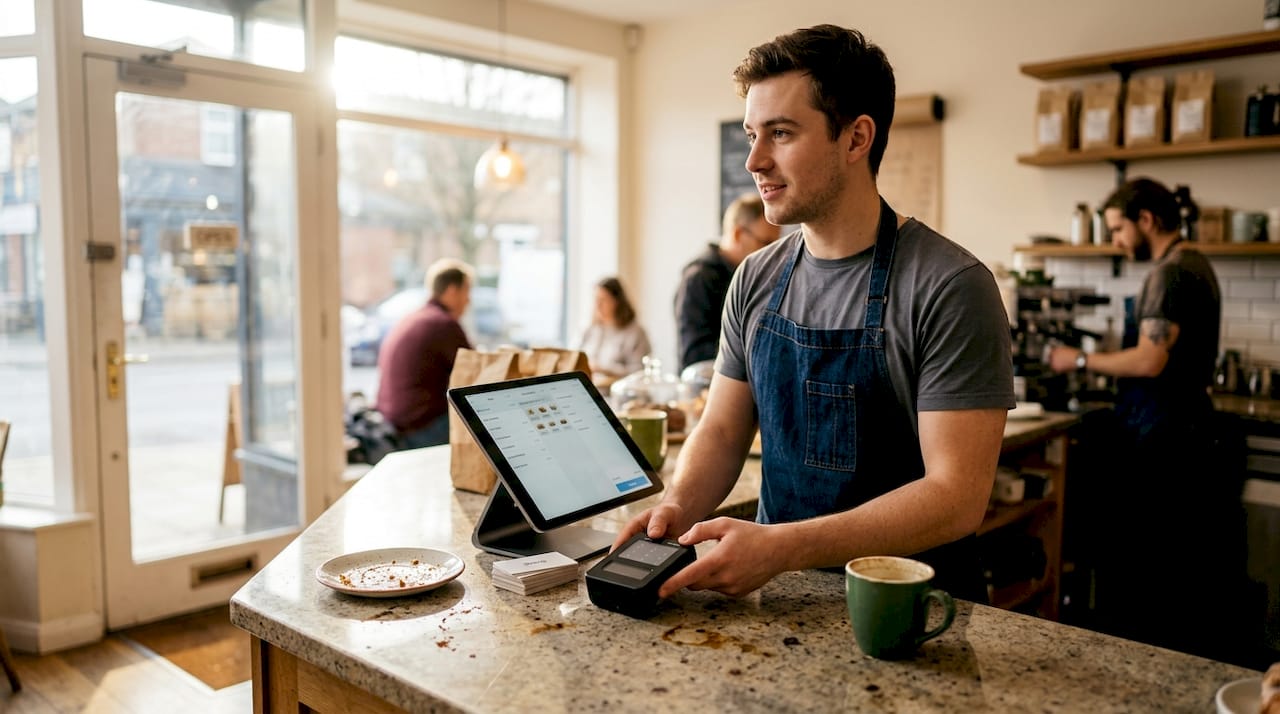
Square provides surprisingly robust features for a free platform. The inventory system tracks stock across multiple locations, sends low-stock alerts, and generates detailed sales reports. Employee management tools let you set individual permissions, track hours, and monitor performance by staff member. The mobile app transforms any tablet into a complete POS terminal, perfect for market stalls or pop-up shops.
SumUp offers low-cost entry with insights, free software, 0.99-1.69% fees, suitable for small retail/pop-ups. Its lower transaction rates benefit businesses processing frequent small purchases, though feature depth doesn’t match Square’s offering. SumUp excels in simplicity, with minimal setup requirements and straightforward reporting.
Both platforms suit specific scenarios brilliantly but carry limitations. Higher per-transaction fees accumulate quickly for busy retailers. A shop processing £50,000 monthly pays £875 in Square fees versus potentially £450 with a subscription-based competitor charging 0.9%. The break-even point typically occurs around £15,000 to £20,000 in monthly card sales.
“Start-ups benefit from zero monthly fees, but established retailers with consistent volume should calculate when subscription models become more economical.”
Pro Tip: Use Square or SumUp to validate your business concept for the first six months, then reassess once you understand your average transaction values and monthly volumes. The flexibility to switch without contract penalties makes them excellent testing grounds.
Epos Now and Shopify POS: powerful options for growing retail and hospitality businesses
Established businesses requiring advanced functionality and customisation find better value in subscription-based platforms. Epos Now provides customisable POS with AppStore integrations, strong offline mode, inventory tracking, and suits retail/hospitality; monthly from £25+ with 1.5% fees. The platform’s AppStore ecosystem lets you add specific features as needed, from advanced accounting integration to customer loyalty programmes.
Epos Now’s offline functionality stands out for businesses in areas with unreliable internet. The system continues processing transactions, updating inventory, and recording sales data locally, then synchronises automatically when connectivity returns. This reliability proves essential for hospitality venues where service interruptions damage customer experience. Monthly costs start at £25 but increase with additional terminals and features, whilst the 1.5% transaction fee remains competitive for moderate volumes.
Shopify POS excels in omnichannel for in-store/online sync, inventory/orders/customers; free with Shopify store or £89/month. If you already operate a Shopify online store, adding physical retail becomes seamless. Inventory updates in real-time across all channels, preventing overselling and stock discrepancies. Customer profiles merge online and offline purchase history, enabling personalised service and targeted marketing.
Shopify POS particularly benefits fashion retailers, gift shops, and lifestyle brands where customers research online before buying in-store or vice versa. The unified system tracks customer journeys across touchpoints, providing insights impossible with separate platforms. Pricing depends on your existing Shopify subscription, with the POS functionality included free on most plans or available standalone at £89 monthly.
| Feature | Epos Now | Shopify POS |
|---|---|---|
| Monthly cost | From £25 | Free with Shopify or £89 |
| Transaction fee | 1.5% | Varies by plan |
| Offline mode | Excellent | Limited |
| Omnichannel | Via integrations | Native |
| Customisation | Extensive AppStore | Moderate |
Pro Tip: Request extended trials from both platforms and process real transactions for at least two weeks. POS technology checklist workflows vary significantly, and what seems intuitive in a demo might frustrate staff during busy periods.
Comparing the options: which retail POS suits your business?
Your ideal POS system depends primarily on transaction volume and business complexity. Free/low monthly like Square/SumUp ideal for small retail starters, but higher fees erode margins at volume; prefer low-fee like Clover/POSApt for busy hospitality. Calculate your break-even point by comparing total monthly costs including transaction fees across different platforms.
| System | Best for | Monthly cost | Transaction fee | Key strength |
|---|---|---|---|---|
| Square | Startups, markets | £0 | 1.75% | Zero commitment |
| SumUp | Pop-ups, low volume | £0 | 0.99-1.69% | Lowest fees |
| Epos Now | Multi-site retail | £25+ | 1.5% | Offline reliability |
| Shopify POS | Omnichannel brands | £0-£89 | Varies | Online integration |
Beyond pricing, consider operational factors that impact daily efficiency. Ease of use affects staff training time and service speed during peak hours. A system requiring ten steps to process a return frustrates customers and employees alike. Support quality becomes critical when technical issues threaten sales, so research response times and available channels carefully.
Offline functionality matters more than many retailers initially recognise. Internet outages, even brief ones, can halt sales completely with cloud-dependent systems. Evaluate how each platform handles connectivity loss and whether it meets your risk tolerance. Hospitality venues particularly need robust offline capabilities given the service expectations in that sector.
Key decision factors include:
- Average monthly transaction volume and typical sale values
- Number of locations and terminals required now and within two years
- Integration needs with existing accounting, inventory, or e-commerce platforms
- Staff technical proficiency and training time available
- Offline operation requirements based on internet reliability
Pro Tip: Run a three-month cost projection using your actual sales data for each shortlisted system. Include hardware purchases, monthly fees, transaction costs, and integration expenses. The cheapest option on paper often proves more expensive in practice once you account for limitations requiring workarounds. Why retail needs POS systems extends beyond payment processing to encompass inventory control, customer insights, and operational efficiency.
Discover UK retail POS hardware and software from YCR
Selecting the right POS software represents only half the equation. Reliable hardware ensures your system performs consistently during demanding trading periods. YCR Distribution provides comprehensive retail point of sale hardware tailored for UK businesses, from terminals and tablets to barcode scanners and receipt printers.
Our POS software solutions include SAMTOUCH and EZEEPOS, designed specifically for hospitality and retail operations. These platforms integrate seamlessly with our hardware range, providing tested combinations that eliminate compatibility issues. Whether you operate a single shop or manage multiple locations, our specialists help match systems to your workflow requirements.
Understanding technical specifications matters when comparing options. Our POS hardware terminology explained guide demystifies industry jargon, helping you make informed decisions about processors, connectivity options, and peripheral compatibility. With over three decades serving UK retailers and hospitality businesses, we provide expert advice backed by practical experience across diverse sectors.
FAQ
What is the best POS solution for a small UK retail business?
Low-cost POS solutions like Square and SumUp are ideal for small retailers starting out, offering free software and pay-as-you-go transaction fees. However, higher fees may apply with these systems, so consider your monthly transaction volume when choosing. Businesses processing over £15,000 monthly often find subscription-based platforms more economical despite upfront costs.
How do POS transaction fees affect my business profits?
Transaction fees are deducted from each sale and can significantly reduce profit if your sales volume is high. A 1.75% fee on £50,000 monthly sales costs £875, whilst a 0.9% fee costs only £450, representing £5,100 annual savings. Choosing low-fee systems benefits businesses with larger transaction numbers, making the break-even calculation essential before committing to any platform.
Can I use a single POS system for both online and physical stores?
Yes, omnichannel POS solutions integrate online and physical store operations, synchronising inventory, orders, and customer data across all channels. Shopify POS is a popular choice for seamless syncing, particularly for retailers already operating Shopify online stores. This unified approach prevents overselling, provides complete customer purchase histories, and simplifies reporting across your entire business.
What support should I expect from a UK POS provider?
Good support reduces downtime and operational risk, particularly during peak trading periods when technical issues directly impact revenue. UK owners praise ease/support (Epos Now 4.5/5 Trustpilot), but note technical glitches; test demos for your workflow. Evaluate response times, available support channels, and whether assistance is provided outside standard business hours before committing to any provider.