- +44 1924 438238
- sales@ycr.co.uk
- Mon - Fri: 8:30 - 16:30

POS hardware checklist for UK retail and hospitality 2026
Choosing the right POS hardware can transform your UK retail or hospitality business, yet many operators struggle with slow, incompatible systems that frustrate staff and customers alike. This essential checklist walks you through the core hardware components, sector-specific devices, and trusted brands to help you build a reliable, scalable POS setup that boosts efficiency and supports compliance in 2026.
Table of Contents
- Selection Criteria For POS Hardware In Retail And Hospitality
- Core POS Hardware Components
- Sector-Specific Hardware Needs: Retail Vs Hospitality
- Popular POS Hardware Brands And Models In The UK
- Integration, Compliance And Future-Proofing Your POS Hardware
- Summary Comparison And Situational Recommendations
- Explore YCR’s POS Hardware Solutions Tailored For UK Businesses
- Frequently Asked Questions
Key takeaways
| Point | Details |
|---|---|
| Compatibility is crucial | Select POS hardware that integrates seamlessly with your existing software to avoid costly integration issues and operational delays. |
| Core components vary by sector | Retail requires barcode scanners and label printers, whilst hospitality demands kitchen printers and order displays for efficient service. |
| Leading UK brands offer different strengths | Square suits small businesses with affordable hardware, Lightspeed serves multi-location retailers, and SumUp fits mobile sellers. |
| Integrated systems ensure compliance | Unified POS hardware supports UK tipping laws and reduces errors, protecting your business from regulatory risks. |
| Plan for future growth | Choose scalable hardware that accommodates additional locations, increased transaction volumes, and evolving technology requirements. |
Selection criteria for POS hardware in retail and hospitality
Having understood what POS hardware means, we now examine the key criteria to select the right hardware for your specific operations in retail or hospitality. Making the wrong choice can lock you into expensive replacements or crippling inefficiencies.
Compatibility with your POS software sits at the top of the list. Your hardware must communicate flawlessly with your inventory, payment, and reporting systems. Check that terminals, scanners, and printers support the same protocols and connectors your software requires. Mismatched systems create data gaps and slow transactions.
Durability matters enormously in busy UK environments. Retail counters and hospitality kitchens expose hardware to spills, heat, and constant use. Look for devices with IP ratings for moisture and dust resistance, reinforced casings, and manufacturer warranties covering commercial use. Cheap consumer-grade hardware fails quickly under pressure.
Connectivity options determine flexibility. Modern POS hardware should offer USB-C, Bluetooth, and Wi-Fi connections so you can adapt layouts without rewiring. Wireless devices free up counter space and enable mobile payment processing, crucial for table service or pop-up shops.
Scalability supports future growth. Choose hardware that handles increased transaction volumes and additional locations without requiring a complete overhaul. Cloud-connected devices make adding new terminals straightforward, whilst legacy systems often force expensive upgrades.
Balance upfront costs against long-term value. Budget hardware may seem attractive, but frequent repairs, limited features, and early replacement erode savings. Calculate total cost of ownership over three to five years, including maintenance, consumables like receipt paper, and potential downtime.
Pro Tip: Request trial periods or demos before committing to hardware purchases, allowing your staff to test devices in real conditions and identify any workflow issues early.
Core POS hardware components
To meet the criteria just outlined, let’s explore the core POS hardware components vital for any UK retail or hospitality setup. Understanding these essentials helps you build a complete, functional system.
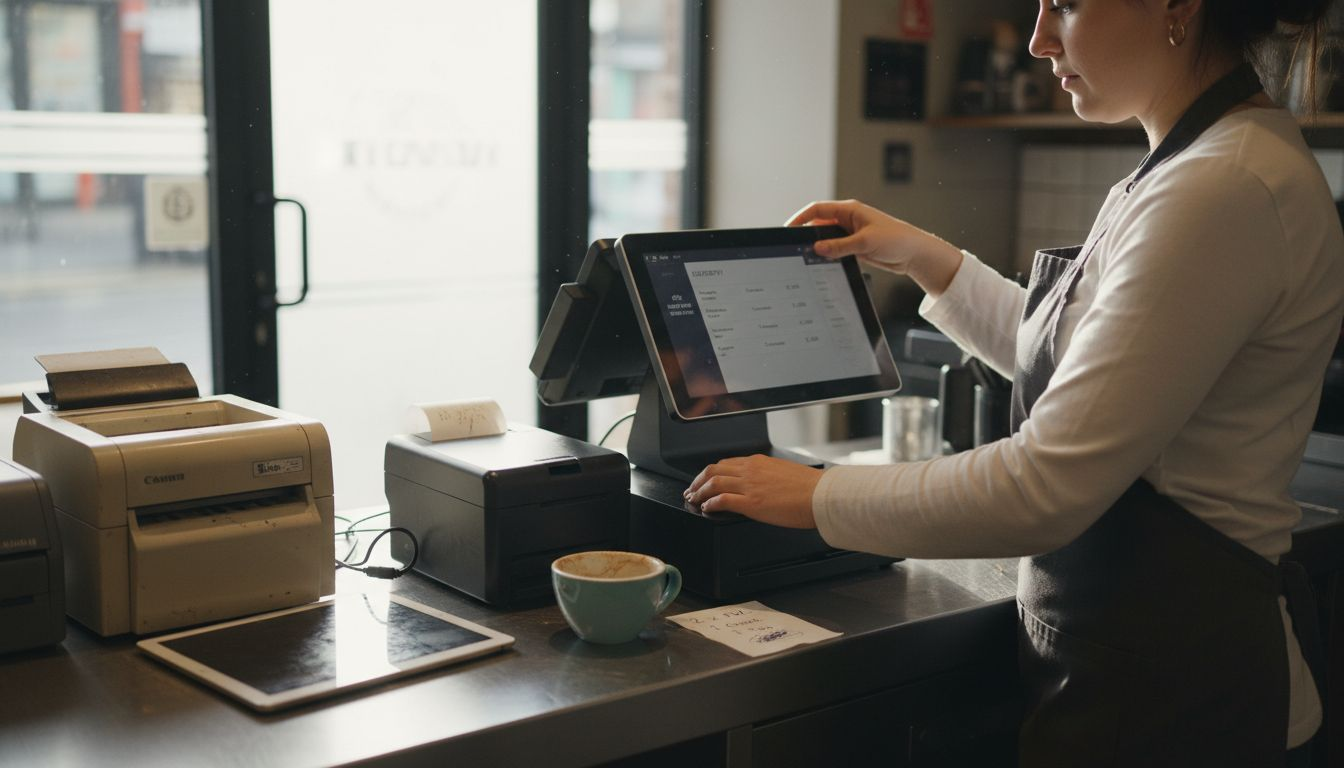
Processing devices form the brain of your POS system. You can choose smartphones, tablets, or dedicated terminals depending on your needs. Smartphones offer portability and low cost but limited screen size. Tablets provide better visibility for complex orders whilst remaining mobile. Dedicated terminals deliver superior durability, larger displays, and integrated peripherals, making them ideal for high-volume environments.
Barcode scanners speed up checkout and inventory management. UK businesses need scanners compatible with EAN-13 codes used throughout Europe. Handheld models suit retail counters, whilst fixed scanners work better for self-service kiosks. Wireless scanners enable stock takes away from the till, improving accuracy and saving time.
Receipt printers complete every transaction. Thermal printers dominate because they’re fast, quiet, and require no ink cartridges. Look for models with USB-C and Bluetooth connectivity to match modern processing devices. Auto-cutters reduce staff handling time, whilst splash-proof designs survive kitchen environments.
Cash drawers provide secure cash handling despite the rise of digital payments. Many UK customers still prefer cash for small purchases. Choose drawers with lockable compartments, multiple note and coin sections, and electronic opening triggered by your POS software. Under-counter models save valuable workspace.
Sector-specific hardware needs: retail vs hospitality
Building on core hardware, this section highlights how retail and hospitality sectors use specialised POS devices to meet their distinct operational requirements. Your sector determines which peripherals become essential rather than optional.
Hospitality businesses need kitchen printers and order displays to streamline service. Kitchen printers receive orders directly from front-of-house terminals, eliminating verbal communication errors and speeding up preparation. Order displays mounted in cooking areas show live order queues, helping chefs prioritise dishes. Bump bars enable kitchen staff to mark orders complete with a simple press, updating front-of-house systems instantly.
Retail operations require barcode label printers and weighing scales. Label printers create price stickers, shelf labels, and product tags on demand, essential for stores selling varied goods or frequently changing prices. Weighing scales integrated with POS software automatically calculate prices for items sold by weight, common in food retail, delis, and markets.
Customer-facing devices enhance experience differently across sectors. Retail benefits from signature pads for card payments and customer displays showing itemised totals, building trust and reducing disputes. Hospitality venues often deploy tableside payment terminals, allowing staff to process payments without customers leaving their seats.
Compliance hardware includes receipt printers meeting UK legal requirements and till locks preventing unauthorised access. POS hardware supporting UK retail operations ensures you meet data protection and financial record-keeping standards whilst delivering efficient service.
Popular POS hardware brands and models in the UK
After understanding sector-specific needs, this section details popular UK POS hardware brands and models to match various business requirements. Knowing which providers excel in different contexts saves research time and costly mistakes.
Square for Retail offers a free basic plan with 1.75% transaction fees and unlimited inventory, making it the best all-round retail POS suited for small UK businesses in 2026. Their hardware starts at £19 for card readers, with terminals around £99. Square excels at simplicity and transparent pricing, though advanced features require paid tiers.
Lightspeed Retail is ideal for multi-location or specialist UK retailers needing advanced inventory analytics and centralised reporting, with plans from £75/month. Their hardware ecosystem includes robust terminals and integrated peripherals designed for high-volume environments. The higher investment suits growing businesses requiring sophisticated stock management.
SumUp POS system is best suited for low-volume, mobile-first sellers due to its simplicity, no monthly fees, and pay-as-you-go transaction rates starting at 1.69%. Hardware begins at £19 for basic card readers, with portable terminals available. SumUp works brilliantly for market traders, pop-ups, and small cafes with limited daily transactions.
Reliable printer brands include Star Micronics and Brother, both offering UK-specific models with excellent support. Star Micronics specialises in hospitality-grade thermal printers with spill resistance, whilst Brother provides versatile label and receipt printers suited to retail environments.
| Brand | Best For | Starting Price | Key Feature |
|---|---|---|---|
| Square | Small retail | £19 hardware | Free basic plan |
| Lightspeed | Multi-location | £75/month | Advanced analytics |
| SumUp | Mobile sellers | £19 hardware | No monthly fees |
| Star Micronics | Hospitality printing | £150+ | Spill-resistant |
Pro Tip: Match your barcode scanner to your product types; wireless models suit large retail floors, whilst fixed scanners excel at checkout counters with consistent item flow.
Integration, compliance and future-proofing your POS hardware
Finally, let’s cover how integrating your POS hardware into a unified system ensures compliance and prepares your business for future growth. Fragmented hardware creates inefficiencies that compound over time.
Unified POS hardware improves operational workflows by connecting sales, inventory, and payment functions in real time. When your scanner, terminal, and printer communicate through one system, stock levels update automatically, receipts print without delay, and reporting becomes accurate. This reduces human error and saves staff time previously spent on manual reconciliation.
Integrated POS systems that unify sales, inventory, and payment functions reduce errors, improve efficiency, and support UK tipping laws compliance effective from October 2024. Your hardware setup must capture and allocate tips correctly to avoid legal issues and maintain staff trust.
Seamless integration between hardware and software eliminates compatibility headaches. Choose hardware certified for your POS software platform, ensuring drivers, firmware updates, and technical support align. Cloud-based systems make adding new terminals straightforward, syncing configurations across all devices instantly.
Planning hardware upgrades supports business growth without disruption. Modular systems let you add peripherals as needs evolve, perhaps starting with basic terminals and later incorporating customer displays, secondary printers, or kitchen video systems. Review your hardware capabilities annually, budgeting for replacements before devices fail.
Future-proofing considerations include:
- Choosing hardware with long manufacturer support cycles
- Selecting devices compatible with emerging payment methods like digital wallets
- Ensuring firmware can be updated remotely to add features
- Investing in repairable hardware rather than disposable models
Understanding integrated POS definitions helps you evaluate whether your current hardware ecosystem truly works as one system or merely coexists.
Summary comparison and situational recommendations
To conclude the checklist, this section consolidates the insights into an easy reference table and tailored recommendations for your business type and scale. Use these guidelines to shortcut your decision-making process.
| Component | Small Retail | Large Retail | Small Hospitality | Large Hospitality |
|---|---|---|---|---|
| Processing device | Tablet | Dedicated terminal | Tablet | Multiple terminals |
| Barcode scanner | Handheld wireless | Fixed + handheld | Not essential | Not essential |
| Receipt printer | USB thermal | Network thermal | USB thermal | Kitchen + receipt printers |
| Cash drawer | Basic electronic | Multi-compartment | Basic electronic | Multi-compartment |
| Specialised | Label printer | Weighing scales | Kitchen printer | Order displays + bump bars |
Small UK retail businesses with one location should prioritise affordability and simplicity. A tablet-based system with a wireless scanner, thermal printer, and basic cash drawer covers essentials. Add a label printer if you stock varied products requiring individual pricing.
Medium to large retail operations need dedicated terminals for durability and speed. Invest in network-connected printers allowing multiple terminals to share devices, plus weighing scales if selling by weight. Consider customer-facing displays to build transparency.
Small hospitality venues benefit from portable tablets for tableside ordering paired with kitchen printers sending orders directly to preparation areas. A single receipt printer at the counter handles billing. This setup minimises equipment costs whilst improving service speed.
Large hospitality businesses require multiple terminals across different service areas, dedicated kitchen printers for each preparation station, and order display systems coordinating complex workflows. Bump bars help kitchen staff manage order flow during peak periods.
Multi-location enterprises should standardise hardware across sites, simplifying training, support, and inventory management. Cloud-based systems make deploying consistent configurations effortless. Review examples of POS hardware for retail success to see proven setups in action.
Explore YCR’s POS hardware solutions tailored for UK businesses
With a firm grasp of POS hardware essentials, explore how YCR’s solutions can support your business with expert advice and industry-leading products. Choosing the right hardware partner matters as much as selecting the devices themselves.
YCR Distribution brings over three decades of experience helping UK retail and hospitality businesses build reliable POS systems. Our extensive hardware catalogue covers everything from processing terminals and barcode scanners to specialised hospitality peripherals, all selected for compatibility and durability in demanding commercial environments.
We provide tailored guidance matching your specific sector requirements, whether you’re setting up a single retail shop or equipping a multi-location restaurant chain. Our team understands the nuances of POS hardware terminology, translating technical specifications into practical business benefits so you make informed choices.
Explore our retail point of sale solutions to discover complete hardware packages designed for UK businesses, with next-day delivery and ongoing support ensuring your operations never skip a beat.
Frequently asked questions
What are the most important criteria when choosing POS hardware?
Prioritise software compatibility to ensure seamless integration with your existing systems and avoid data gaps. Durability matters in busy retail and hospitality environments where hardware faces constant use and potential spills. Consider connectivity options like USB-C, Bluetooth, and Wi-Fi for operational flexibility, and choose scalable devices that accommodate business growth without requiring complete replacement.
Can I use smartphones or tablets as POS processing devices?
Smartphones and tablets work well as processing devices, particularly for small businesses or mobile setups requiring portability and low initial investment. They offer sufficient functionality for basic transactions, inventory lookups, and customer service interactions. However, dedicated terminals provide better durability, larger screens for complex orders, and integrated peripherals, making them superior for high-volume businesses or demanding environments.
What sector-specific POS hardware is critical for hospitality?
Kitchen printers and order displays streamline order communication between front-of-house staff and kitchen teams, eliminating verbal errors and speeding up preparation times significantly. Bump bars enable kitchen staff to mark orders complete with simple presses, updating systems instantly and improving workflow coordination. Tableside payment terminals enhance customer experience by allowing payments without leaving seats, particularly valuable in full-service restaurants.
How does integrated POS hardware support UK legal compliance?
Unified POS systems ensure accurate transaction records required for tax reporting and financial audits, whilst properly capturing and allocating tips to comply with UK tipping laws effective from October 2024. Integrated hardware reduces manual data entry errors that could lead to regulatory issues or disputes. The systems maintain comprehensive audit trails, protecting your business during inspections and simplifying year-end accounting processes.