
Restaurant efficiency improvement process: 2026 guide
A restaurant efficiency improvement process is a structured method for identifying waste, fixing broken workflows, and building consistent standards across every shift. Most managers know their operation has inefficiencies. Few have a repeatable system for finding and fixing them. Lean Six Sigma principles, applied to hospitality, give you exactly that: a framework for reducing food and labour costs by standardising both front and back of house processes. This guide gives you the tools, the sequence, and the metrics to make that happen.
What are the essential tools for the restaurant efficiency improvement process?
The right tools come before the right actions. Without them, improvement efforts rely on guesswork and memory rather than data and standards.
Every well-run operation starts with three foundations: documented standard operating procedures (SOPs), a digital data collection system, and a staff training framework. SOPs define what “correct” looks like for every task, from opening checks to plating standards. Without written SOPs, training is inconsistent and accountability is impossible.

| Tool category | Role in efficiency |
|---|---|
| Digital daily checklists | Turn SOPs into verifiable tasks with pass/fail criteria and timestamps |
| Kitchen display systems (KDS) | Route orders in real time, reduce verbal handoffs, and track ticket times |
| Inventory management software | Automate stock counts, flag variances, and generate reorder alerts |
| Labour scheduling tools | Match staffing levels to forecast demand and reduce overtime |
| Corrective action workflows | Assign owners to failures, set deadlines, and escalate overdue tasks |
Digital checklists with photo evidence enforce standards consistently across multiple locations and shifts. That matters because a standard only exists if it is verified daily, not just written in a manual.
Staff engagement is the third prerequisite most managers underestimate. Technology and SOPs fail without a team that understands the “why” behind each process. A short onboarding programme that explains how each role connects to the guest experience builds buy-in from day one.
Pro Tip: Before buying any new tool, audit your current SOPs. If they are not written down, document them first. Technology built on top of undocumented processes amplifies chaos, not efficiency.
How can workflow optimisation enhance restaurant operational efficiency?
Workflow optimisation is the practice of redesigning how tasks flow through your kitchen and front of house to cut waste, remove bottlenecks, and improve speed without sacrificing quality.
The most common mistake is running a push system: preparing food in advance based on assumptions about demand. Pull or just-in-time prep systems align production with real demand forecasts, reducing inventory days on hand and cutting waste on perishable products. A busy Friday night does not require the same prep volume as a Tuesday lunch. Matching production to data rather than habit is where significant savings appear.
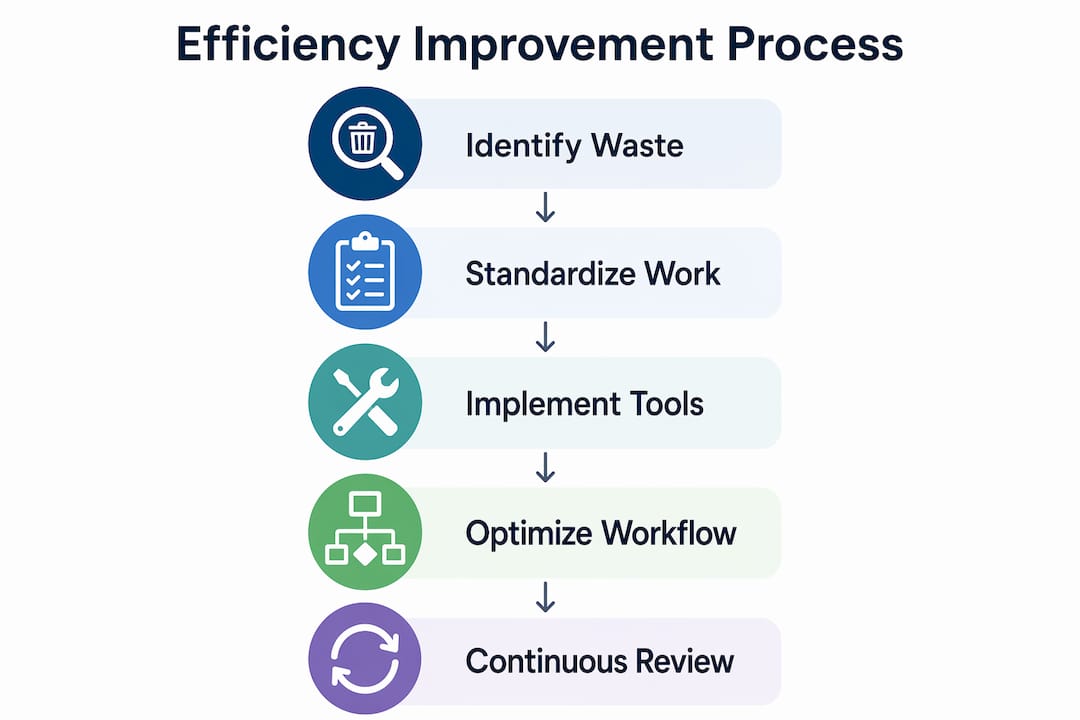
Kitchen layout is the physical expression of your workflow. Station routing and sequencing determine whether a dish travels two metres or ten from prep to pass. Mapping your kitchen as a process, drawing the path each dish takes from raw ingredient to plate, reveals unnecessary movement and handoff delays that are invisible during service.
Here is a practical sequence for restaurant workflow optimisation:
- Map every dish’s journey from raw ingredient to the pass, noting each handoff point.
- Record ticket times by station for a minimum of two weeks to build a reliable baseline.
- Identify your 90th percentile ticket time. That figure reveals your worst-case bottleneck, not your average.
- Redesign station layouts to reduce unnecessary movement between the most frequently linked stations.
- Introduce sequencing rules so that dishes with longer cook times are triggered first, regardless of order entry sequence.
- Review the data again after four weeks to measure the impact of each change.
Objective ticket-time data allows precise bottleneck identification rather than relying on anecdotal feedback from chefs under pressure. That distinction matters. A chef who says “the grill is the problem” may be right, or may simply be the loudest voice in the kitchen.
Pro Tip: Use your 90th percentile ticket time, not your average, as your primary benchmark. Averages hide your worst moments. Guests remember their worst experience, not your statistical mean.
What role does technology play in streamlining restaurant operations?
Technology does not create efficiency on its own. It amplifies the processes you already have. The goal is to reduce manual data handling, enforce standards automatically, and give managers real-time visibility without adding administrative burden.
Inventory automation reduces food waste by 15–25% and cuts labour costs by 4–7 percentage points without reducing headcount. That is a material impact on margins, and it comes from removing the manual stock-count cycle that most restaurants still run on spreadsheets or paper.
Scheduling automation is equally powerful. Automated schedules based on sales data reduce manager hours spent on rota planning by over 4.5 hours per week and cut overtime costs by up to 22%. That time goes back into floor management and team development.
| Technology category | Operational benefit |
|---|---|
| Kitchen display systems | Real-time order routing, reduced verbal errors, faster ticket times |
| Inventory management software | Automated reordering, waste tracking, variance alerts |
| Labour scheduling tools | Demand-matched rotas, reduced overtime, improved staff morale |
| Digital checklist platforms | Verified SOP compliance, photo evidence, corrective action tracking |
| Integrated POS systems | Centralised sales, stock, and labour data in one reporting view |
KDS platforms support station logic and timing controls that are critical for flow optimisation. When a KDS routes a complex dish to the correct station and flags it for the expeditor at the right moment, ticket times drop without any change to staffing levels.
The risk with technology adoption is siloed implementation. A scheduling tool that does not connect to your POS produces data that lives in two separate systems. Managers then spend time reconciling reports rather than acting on them. Integrated systems that share a single data layer remove that friction entirely.
Pro Tip: Before adding any new technology, ask one question: does this connect to my existing POS data? If the answer is no, the tool creates a new reporting silo. Prioritise integrated POS solutions that share data across scheduling, inventory, and sales.
How to implement continuous improvement and maintain operational consistency?
Efficiency gains disappear without a system for maintaining them. The most common failure point is a strong launch followed by gradual drift back to old habits.
Consistent daily execution, verified through digital checklists, is the foundation of operational consistency. A checklist completed at the start of every shift confirms that the kitchen is set up correctly before the first ticket arrives. That single habit prevents the majority of service failures that managers attribute to “bad nights.”
Key performance indicators (KPIs) give you the signal that standards are holding or slipping. The most useful metrics for restaurant managers are:
- Checklist completion rate by shift and location
- Average and 90th percentile ticket times by station
- Corrective action close rate within 24 hours
- Food waste as a percentage of revenue
- Labour cost as a percentage of sales
Digital corrective action loops assign owners to failures, require photo evidence, and escalate overdue tasks automatically. That closes the accountability gap that paper-based systems leave open. When a temperature check fails, the system assigns a named person to resolve it by a specific time, not “someone” at some point.
Regular training updates prevent standards from decaying over time. A quarterly review of your SOPs, cross-referenced with your corrective action data, shows you exactly where the gaps are. The workforce flexibility strategies used in high-performing hospitality operations treat training as an ongoing cycle, not a one-time event.
Pro Tip: Track your corrective action close rate weekly. If more than 20% of actions remain open after 24 hours, your accountability structure needs attention before your processes do.
What common mistakes should be avoided during restaurant efficiency improvement?
The most damaging mistake is chasing speed at the expense of consistency. A kitchen that fires dishes in eight minutes on average but swings between four and fifteen minutes delivers a poor guest experience despite its average performance. Consistency is the goal. Speed is a by-product of consistent execution.
Ignoring staff feedback is the second major error. The people closest to the process see inefficiencies that managers miss from the office. A line cook who handles a particular station every shift knows exactly where the bottleneck is. Excluding that input from your improvement process means solving the wrong problems.
Common errors and their corrections:
- Chasing speed over consistency. Measure variance in ticket times, not just averages. Reduce the range before reducing the mean.
- Ignoring employee feedback. Run a monthly five-minute standup where each station reports one friction point. Act on at least one per month.
- Siloed technology. Audit your current tools for data connectivity before purchasing anything new.
- Analysis paralysis. Implement one change at a time and measure it for four weeks before adding another variable.
- Over-automating without clear goals. Define the specific metric each tool is meant to improve before deployment.
Staged improvements across six operational pillars, including onboarding, training, and cost control, reduce the risk of overwhelming your team with simultaneous changes. One pillar at a time, measured and verified, compounds into significant operational gains over a quarter.
Pro Tip: Run a self-audit before starting any improvement programme. Score your operation across staffing, training, kitchen flow, technology, cost control, and guest experience. The lowest score tells you where to start.
Key takeaways
A restaurant efficiency improvement process delivers lasting results only when consistent daily execution, objective data, and integrated technology work together across every shift.
| Point | Details |
|---|---|
| Start with SOPs and tools | Document every critical workflow before introducing technology or making process changes. |
| Use objective data | Track 90th percentile ticket times and corrective action rates, not anecdotal feedback. |
| Adopt pull-based prep | Align production to demand forecasts to cut food waste and reduce inventory holding costs. |
| Integrate technology | Choose tools that connect to your POS data to avoid reporting silos and manual reconciliation. |
| Sustain through verification | Use digital checklists and corrective action loops daily to prevent standards from drifting. |
What I have learned about making efficiency gains stick
The restaurants I have seen make the most progress are not the ones that invested the most in technology. They are the ones that fixed their processes first and then used technology to verify and scale what was already working.
The uncomfortable truth about restaurant efficiency is that most of the gains are not hidden in software. They are hidden in the gap between what the SOP says and what actually happens on a Tuesday night when the sous chef is off. That gap is a leadership problem before it is a process problem. Managers who walk the floor during service, ask specific questions about ticket times, and close corrective actions the same day they are raised create a culture where standards hold without constant supervision.
Data is the tool that makes this objective. When you pull up your 90th percentile ticket time for the grill station on a Friday and compare it to the previous four weeks, the conversation with your team changes. It is no longer about feelings or blame. It is about a specific number and a specific cause.
The balance between technology and human factors is where most improvement programmes go wrong. Automation handles the repetitive and the measurable. Your team handles the variable and the relational. The best restaurant POS systems give managers real-time data without replacing the judgement calls that only experienced operators can make. Use technology to free up that judgement, not to substitute for it.
Small, consistent improvements compound faster than sweeping changes. Fix one bottleneck, verify the result, then move to the next. That approach builds confidence in the process and keeps your team engaged rather than fatigued by constant change.
— John
Ycr’s POS solutions for restaurant efficiency
Running a tighter operation requires the right technology at the point of transaction and in the kitchen. Ycr supplies SAMTOUCH POS software with hardware built specifically for hospitality environments, giving managers real-time sales data, integrated stock visibility, and faster order processing in a single system.
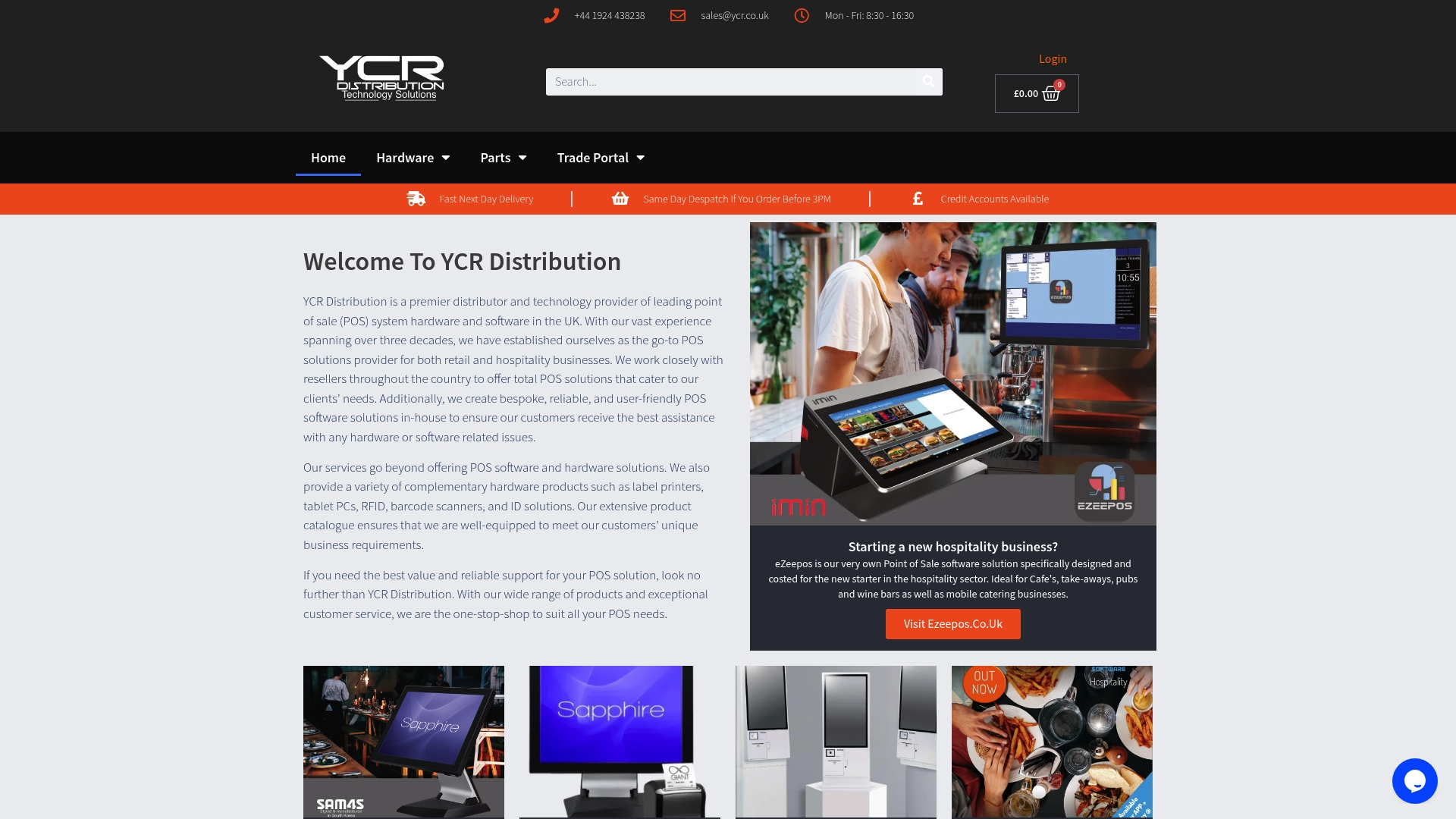
For restaurants that already have hardware in place, SAMTOUCH without hardware delivers the same data integration and workflow support without the additional capital cost. Ycr also offers EZEEPOS, designed for takeaways and cafés, alongside a full range of hospitality POS hardware including kitchen display systems, barcode scanners, and digital signage. With over three decades of experience and next-day delivery across the UK, Ycr gives restaurant managers the tools to build a measurable, repeatable efficiency process from day one.
FAQ
What is a restaurant efficiency improvement process?
A restaurant efficiency improvement process is a structured method for identifying operational waste, standardising workflows, and measuring performance to deliver consistent service. It draws on frameworks such as Lean Six Sigma to reduce food and labour costs across both front and back of house.
How does Lean Six Sigma apply to restaurants?
Lean Six Sigma helps restaurants identify root causes of inefficiency, standardise processes, and shift from push to pull preparation systems. The result is reduced food waste, lower labour costs, and more consistent service delivery.
What KPIs should restaurant managers track for efficiency?
The most useful KPIs are checklist completion rate, 90th percentile ticket time by station, corrective action close rate within 24 hours, food waste as a percentage of revenue, and labour cost as a percentage of sales.
How do kitchen display systems improve service speed?
KDS platforms route orders in real time, support station logic and timing controls, and give expeditors clear visibility across the pass. That reduces verbal handoffs, cuts errors, and lowers ticket times without adding staff.
How quickly can automation reduce restaurant costs?
Inventory automation can reduce food waste by 15–25% and cut labour costs by 4–7 percentage points. Scheduling automation alone reduces manager rota-planning time by over 4.5 hours per week.