
TL;DR:
- Integrated POS systems unify sales, inventory, and analytics, reducing errors and saving time.
- Mobile POS enhances customer service, speeds up transactions, and increases sales opportunities.
- Proper planning and agility are more important than perfect integration for retail success.
Running a retail or hospitality business in the UK means juggling sales, stock, staff, and customer expectations all at once. The right point of sale system can transform that daily chaos into a smooth, data-driven operation. Yet with so many options available, from cloud-based terminals to mobile tablets and bespoke software, choosing the correct solution feels overwhelming. This article walks you through the real benefits of retail POS systems, the hard numbers behind inventory savings and sales growth, the risks you must plan for, and a practical framework to help you make a confident, informed decision for your business.
Table of Contents
- How retail POS systems unify operations and reduce errors
- Driving sales and improving customer experience with mobile POS
- Inventory control and loss prevention: how POS systems save millions
- Weighing the risks and costs: drawbacks of retail POS solutions
- Our experience: choosing POS for UK retail really comes down to agility
- Explore leading POS solutions for UK business
- Frequently asked questions
Key Takeaways
| Point | Details |
|---|---|
| Unified operations | Integrated POS systems centralise sales, inventory, and payments for fewer errors and better decisions. |
| Mobile sales boost | Mobile POS can increase retail sales and customer satisfaction, especially during peak hours. |
| Inventory savings | Advanced POS inventory management prevents loss and saves millions for UK businesses. |
| Risk awareness | Understanding POS system risks helps businesses make smarter investments and maintain resilience. |
How retail POS systems unify operations and reduce errors
Fragmented operations are one of the biggest silent killers in UK retail. When your sales data lives in one place, your stock records in another, and your payment reports in a third, errors multiply fast. Staff spend hours reconciling figures that should match automatically. Customers wait longer. Managers make decisions based on stale information.
An integrated POS approach solves this by pulling everything into a single platform. Integrated POS systems unify sales, inventory, payments, and analytics, reducing errors and duplicate data entry across your entire operation. That means one source of truth for every transaction, every stock movement, and every end-of-day report.
The practical impact is significant. When a cashier processes a sale, the system automatically updates stock levels, logs the payment method, and feeds the data into your analytics dashboard. No manual entry. No spreadsheet errors. No discrepancies between the till and the stockroom.
Businesses that switch from fragmented systems to integrated POS consistently report fewer reconciliation errors and faster end-of-day processes, freeing staff to focus on customers rather than paperwork.
For UK retailers seeking POS efficiency for UK businesses, understanding what integration actually means in practice is essential. The definition of integrated POS goes beyond simply connecting a card reader to a till. It encompasses real-time inventory sync, customer loyalty tracking, staff performance reporting, and supplier management, all accessible from one interface.
Here is what a well-integrated retail POS system typically delivers:
- Real-time stock updates across every sales channel and location
- Automated reorder alerts when stock falls below set thresholds
- Unified sales reporting across tills, online, and mobile channels
- Staff accountability tools including individual sales tracking and clock-in records
- Customer purchase history to support loyalty programmes and personalised service
- End-of-day reconciliation completed in minutes rather than hours
The shift from fragmented to integrated is not just an operational upgrade. It changes how you manage your business entirely, giving you visibility and control that simply was not possible before.
Driving sales and improving customer experience with mobile POS
Once your internal operations are unified, the next frontier is the customer-facing side of your business. Mobile POS technology has changed what is possible on the shop floor and in the dining room, and the results are striking.
Mobile POS sales increased 135% for Dunelm, a major UK retailer, after implementing a mobile-first POS strategy. That figure is not a rounding error. It reflects what happens when your team can serve customers anywhere in the store, process payments tableside, and eliminate the friction of queuing at a fixed till.
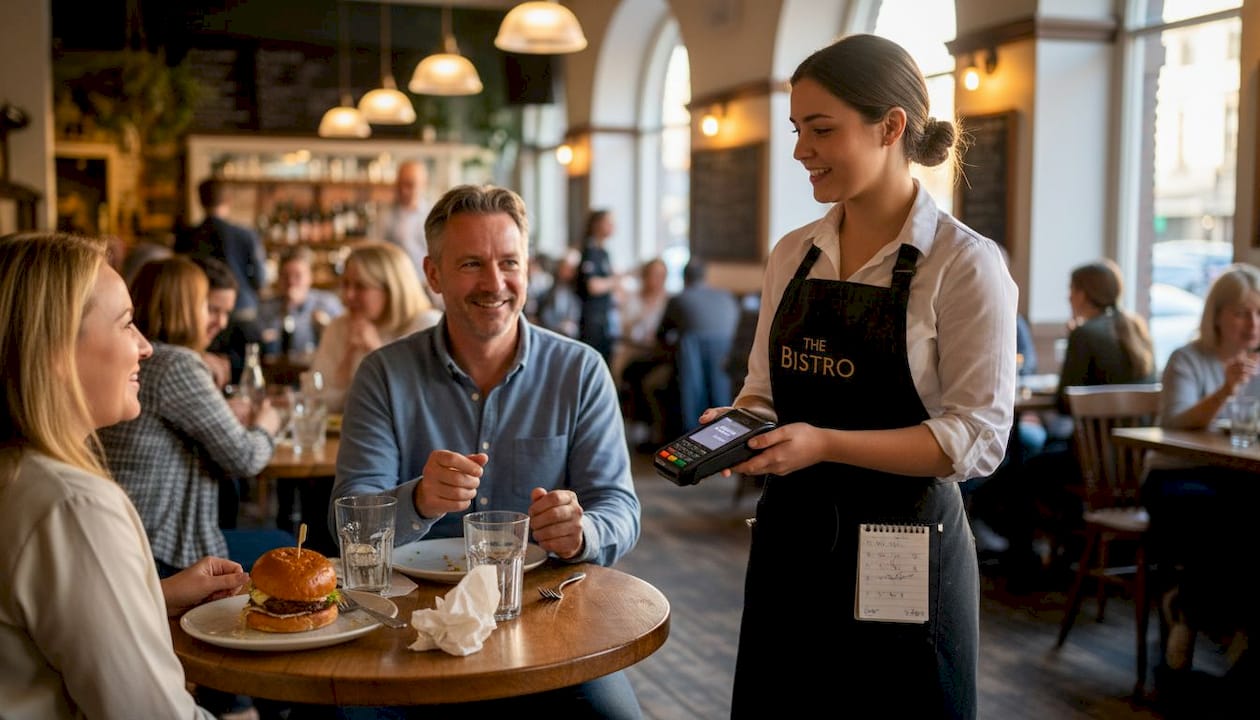
For hospitality businesses, mobile POS is particularly powerful. A server who can take an order and process payment at the table turns tables faster and reduces the chance of order errors. For retail, a floor assistant with a tablet can check stock, process a sale, and arrange delivery without the customer ever reaching a checkout desk.
Speed matters enormously during peak periods. AI-driven features within modern POS platforms can analyse historical sales data to predict your busiest hours and suggest optimal staffing levels. That means you are never caught short on a Saturday afternoon or during a bank holiday rush.
To get the most from modern POS payment optimisation, follow these steps when implementing mobile POS:
- Audit your current bottlenecks, where do customers wait longest?
- Choose hardware suited to your environment, rugged tablets for hospitality, sleek handhelds for retail
- Train staff thoroughly before going live, confidence on the floor matters
- Integrate mobile POS with your existing stock and loyalty systems
- Review transaction data weekly to identify further improvements
Pro Tip: During your Saturday rush, assign one team member specifically to mobile POS for queue-busting. They roam the floor, process sales, and prevent the bottleneck at the main till. This single change can meaningfully reduce wait times and lift conversion rates.
The customer experience benefit extends beyond speed. When staff are equipped with mobile tools, they appear more professional and attentive. That perception directly influences repeat visits and word-of-mouth recommendations.
Inventory control and loss prevention: how POS systems save millions
Stock shrinkage is a persistent problem for UK retailers. Whether it is theft, supplier discrepancies, or simple administrative error, losses add up quickly. The good news is that integrated POS inventory management tackles this directly.
Custom inventory software saved £3.2M annually and reduced stock shrinkage by 29% for a UK retail chain. Those are not marginal gains. They represent a fundamental shift in how inventory is tracked, audited, and protected.
| Metric | Traditional inventory | POS-integrated inventory |
|---|---|---|
| Stock accuracy | 70 to 80% | 95 to 99% |
| Shrinkage rate | 3 to 5% of turnover | 1 to 2% of turnover |
| Audit time | Several days | Hours |
| Reorder errors | Frequent | Rare |
| Supplier discrepancy detection | Manual and slow | Automated and instant |
The table above illustrates why so many UK businesses are investing in POS-integrated inventory. The accuracy improvements alone justify the cost for most mid-sized retailers.
Key inventory benefits you can expect from a modern POS system include:
- Automated stock counts that update with every sale and return
- Supplier order matching to flag discrepancies on delivery
- Shrinkage alerts when stock levels drop unexpectedly between audits
- Multi-location visibility for businesses operating more than one site
- Expiry date tracking for food, drink, and perishable goods
For more examples of retail technology that support these outcomes, the range of tools available to UK businesses has never been broader. The POS benefits for UK hospitality are equally compelling, particularly for venues managing both food stock and retail merchandise.
Pro Tip: Schedule a monthly POS analytics review specifically focused on stock variance. Compare what the system expected to sell against what was actually sold, and investigate any gaps immediately. This habit alone can catch shrinkage patterns before they become serious losses.
Weighing the risks and costs: drawbacks of retail POS solutions
No technology is without its challenges, and POS systems are no exception. Before committing to a solution, you need a clear-eyed view of the potential downsides.
POS drawbacks include downtime risks, high upfront costs, and dependency on internet connectivity for cloud-based systems. Each of these deserves careful consideration relative to your specific business environment.
| Factor | Cloud POS | Local (on-premise) POS |
|---|---|---|
| Upfront cost | Lower | Higher |
| Ongoing fees | Monthly subscription | Minimal after setup |
| Internet dependency | High | Low |
| Automatic updates | Yes | Manual |
| Data security control | Provider-managed | Business-managed |
| Offline capability | Limited | Full |
Understanding the POS system risks UK retail businesses face helps you choose the right architecture from the start. The role of POS in retail is too central to leave resilience planning as an afterthought.
Here is how to mitigate the most common POS risks:
- Choose a system with offline mode so sales can continue during internet outages
- Negotiate a clear SLA with your provider covering uptime guarantees and support response times
- Budget for total cost of ownership, not just the initial hardware price
- Plan staff training as a recurring investment, not a one-off event
- Back up your data daily and test restoration procedures quarterly
- Start with a pilot at one location before rolling out across your estate
The cost concern is real but manageable. Spreading hardware costs through a credit account arrangement, like those available through specialist POS distributors, can ease the initial financial pressure without compromising on quality.
Our experience: choosing POS for UK retail really comes down to agility
Conventional wisdom says the most integrated system always wins. In our experience working with UK retailers and hospitality operators across three decades, that is only partly true.
Full integration is powerful, but the businesses that genuinely pull ahead are the ones that prioritise agility over perfection. A system that is 90% integrated but deploys in two weeks will outperform a theoretically perfect system that takes six months to implement and disrupts your team for a quarter.
Mobile and AI-driven POS features are where we see the sharpest competitive advantage emerging right now. Businesses that embrace these tools, rather than waiting for a complete overhaul, are capturing sales and loyalty that their slower competitors are losing. Visit POS systems for business success to see how this plays out in practice.
Pro Tip: Do not let perfect be the enemy of usable. Start with the features that deliver immediate agility, mobile payments, real-time stock visibility, and queue management, then build from there.
Explore leading POS solutions for UK business
If you are ready to move beyond spreadsheets and fragmented systems, the right POS solution is closer than you think. At YCR Distribution, we have spent over 30 years helping UK retailers and hospitality businesses find hardware and software that genuinely fits their operation.
Whether you need robust POS software options like SAMTOUCH or EZEEPOS, reliable POS hardware solutions from trusted brands like SAM4S and iMin, or a complete retail POS selection tailored to your shop or venue, we can help you match the right tools to your specific needs. Get in touch with our team for a consultation or browse our full range online today.
Frequently asked questions
How does a retail POS system improve efficiency?
Integrated POS systems unify sales, inventory, payments, and analytics, cutting manual tasks and reducing errors so your team can focus on serving customers rather than reconciling data.
Can a POS system help reduce inventory losses?
Yes. Custom inventory software reduced stock shrinkage by 29% for a UK retail chain, showing that automated tracking and real-time alerts make a measurable difference to your bottom line.
What are the main drawbacks of POS systems?
POS drawbacks include downtime, high upfront costs, and reliance on internet connectivity for cloud solutions, all of which can be managed with the right planning and provider support.
Do mobile POS systems really improve sales?
Mobile POS boosted sales 135% for UK retailer Dunelm, confirming that reducing friction at the point of purchase has a direct and significant impact on revenue in high-traffic environments.