

Best squareup.com alternatives for UK retail and hospitality 2026

What are the best Square alternatives available in the UK right now?
The strongest squareup.com alternatives for UK retail and hospitality businesses in 2026 are Stripe, Lightspeed, Shopify POS, Clover, Toast, SpotOn, Helcim, SumUp, PayPal Zettle, IT Retail, KORONA POS, SensaPay, and YCR Distribution. Each addresses a specific gap that Square leaves open, whether that is granular inventory control, restaurant-specific workflows, or genuinely flexible payment processing without proprietary hardware lock-in.
Square’s appeal is real. It is simple, the free tier is generous, and setup takes minutes. But Square’s unified ecosystem is built for startups and early-stage businesses. Once you are running multiple locations, managing hundreds of SKUs, or needing deep integration with Xero or Sage, the cracks show fast.
| System | Best for | Pricing model | Hardware | UK support |
|---|---|---|---|---|
| Stripe | Developer-led businesses, online-first | Pay-as-you-go, no monthly fee | SoftPOS, third-party | Yes |
| Lightspeed | Multi-location retail | Monthly subscription | Proprietary and third-party | Yes |
| Shopify POS | Ecommerce-first, blended retail | Monthly (Shopify plan required) | Shopify hardware | Yes |
| Clover | Restaurants and cafés | Monthly + hardware cost | Proprietary Clover devices | Yes |
| Toast | Full-service restaurants | Monthly subscription | Toast-specific hardware | Limited UK |
| SpotOn | Hospitality, mid-market | Custom pricing | Flexible | Limited UK |
| Helcim | Low-volume, cost-conscious | Interchange-plus, no monthly fee | Card readers | Limited UK |
| SumUp | Sole traders, market stalls | Pay-as-you-go | SumUp card readers | Yes |
| PayPal Zettle | Mobile and pop-up retail | Pay-as-you-go | Zettle card reader | Yes |
| IT Retail | Grocery and convenience | Monthly subscription | Proprietary | Limited UK |
| KORONA POS | High-volume retail, ticketing | Monthly subscription | Flexible | Limited UK |
| SensaPay | Contactless and mobile payments | Pay-as-you-go | SoftPOS capable | Yes |
| YCR Distribution | UK retail and hospitality, all sizes | Hardware + software packages | SAM4S, iMin, bespoke | Yes, UK-based |
By business type, the strongest fits are:
- Retail with large catalogues: Lightspeed or IT Retail for advanced inventory management and multi-store workflows
- Full-service restaurants: Toast or Clover for table management, kitchen display systems, and covers-based reporting
- Ecommerce moving into physical retail: Shopify POS for unified online and in-person stock
- Mobile and pop-up traders: SumUp or PayPal Zettle for low-cost, no-contract card acceptance
- UK retail and hospitality seeking local support: YCR Distribution with SAMTOUCH or EZEEPOS software
Table of Contents
- How do these Square alternatives compare on pricing, features, and UK fit?
- How do you choose the right Square alternative for your business?
- How to switch from Square to a new POS system without disrupting your business
- Why UK businesses trust Ycr for POS hardware and software
- What UK businesses say about switching from Square
- Ycr gives you the hardware and software to move beyond Square
- Key takeaways
How do these Square alternatives compare on pricing, features, and UK fit?
Pricing is where the comparison gets interesting, because the headline rate rarely tells the whole story. Square charges a flat percentage per transaction with no monthly fee on its base plan, which looks attractive until you factor in the cost of its proprietary hardware and the features locked behind paid tiers.
Fees and contract terms
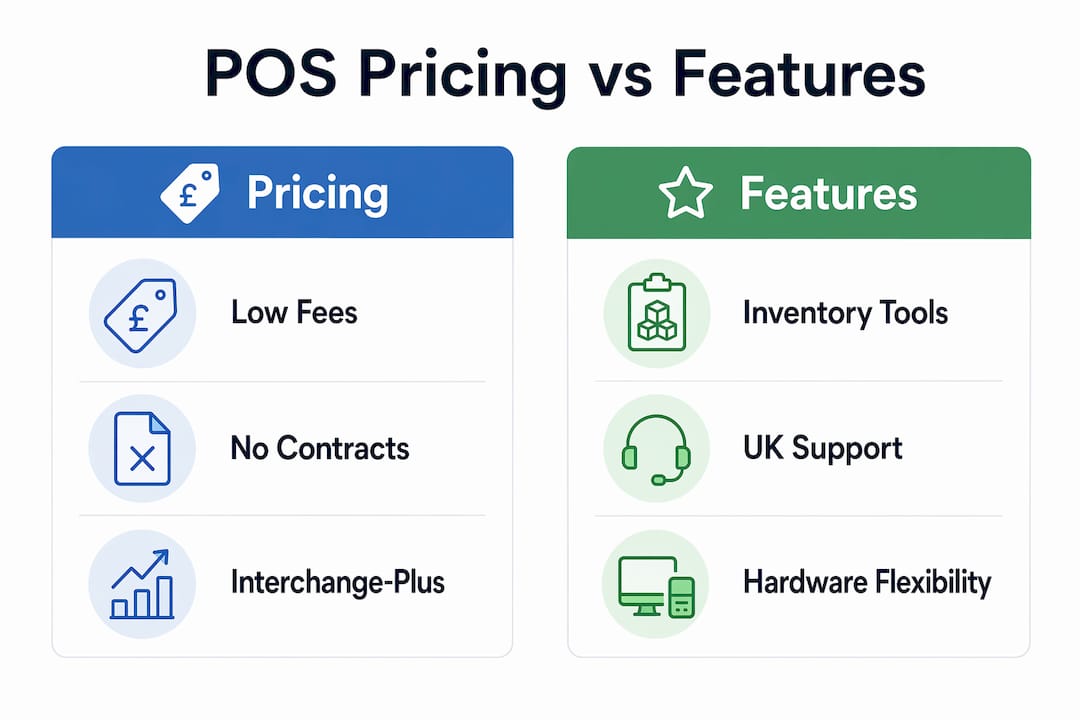
Helcim uses an interchange-plus model with no monthly fee, which tends to favour businesses processing lower volumes where the effective rate undercuts flat-percentage models. SumUp and PayPal Zettle both operate on pay-as-you-go terms with no monthly commitment, making them genuinely low-risk entry points for sole traders and market vendors. Lightspeed, KORONA POS, and Shopify POS all require monthly subscriptions, with Shopify’s cost depending on which Shopify plan you already hold. Toast and SpotOn use custom pricing, so you will need to request a quote directly.
SensaPay targets the growing softPOS market, where merchants accept contactless payments through a smartphone without additional hardware. That removes the upfront equipment cost entirely, which is a meaningful saving for a new hospitality operator or a pop-up retailer testing a new location.
Hardware and software features
Clover’s hardware is proprietary, which means you are buying into their ecosystem from day one. Toast is similar: the hardware is purpose-built for restaurants, with kitchen display screens and handheld ordering devices that integrate tightly with the software. Both work well within their intended context, but switching away later means replacing equipment.
Lightspeed and KORONA POS offer more flexibility on hardware sourcing, and both provide deep inventory tools. Businesses with large product catalogues consistently choose Lightspeed or IT Retail for their multi-store workflows and purchase order management. IT Retail is particularly strong for grocery and convenience formats, where weighted items, age-verification prompts, and loyalty programmes are standard requirements.
Stripe and SensaPay stand out on the developer side. Both offer APIs that let technical teams build custom payment flows, and Stripe’s softPOS capability means a smartphone can become a secure payment terminal accepting contactless EMV and digital wallet payments without extra hardware.
Integration with UK accounting and inventory software
Integration with Xero or Sage is not optional for most UK businesses. Shopify POS connects to both natively. Lightspeed has direct Xero integration. Clover and Toast both support third-party connectors, though the depth of the sync varies. SumUp and PayPal Zettle have more limited native accounting integrations, which is fine for a sole trader but becomes a friction point as transaction volumes grow.
| System | Xero integration | Sage integration | Inventory depth | Multi-location |
|---|---|---|---|---|
| Lightspeed | Native | Via connector | Advanced | Yes |
| Shopify POS | Native | Native | Moderate | Yes |
| Clover | Via connector | Via connector | Moderate | Yes |
| Toast | Via connector | Limited | Restaurant-specific | Yes |
| KORONA POS | Via connector | Via connector | Advanced | Yes |
| SumUp | Limited | Limited | Basic | No |
| PayPal Zettle | Limited | Limited | Basic | No |
| YCR (SAMTOUCH/EZEEPOS) | Via connector | Via connector | Advanced | Yes |
Ease of use and UK-based support
SumUp and PayPal Zettle win on simplicity. Setup takes under an hour, and the interfaces are designed for people who have never run a POS system before. Lightspeed and KORONA POS have steeper learning curves, but the payoff is a system that can handle a 5,000-SKU catalogue across three sites without breaking a sweat.

UK-based support is a genuine differentiator. Toast and SpotOn have limited UK presence, which matters when something goes wrong at 7pm on a Saturday. SumUp, PayPal Zettle, and Stripe all have UK customer service. YCR Distribution operates entirely from the UK, with phone and email support for the businesses it supplies.
Pro Tip: Before signing any contract, ask the vendor specifically whether their support team is UK-based and what their guaranteed response time is during trading hours. A system that goes down during a Friday dinner service with no one answering the phone is a serious operational risk.
How do you choose the right Square alternative for your business?
The right POS system depends on three things: your industry, your transaction volume, and how much you want to own versus rent your technology stack. Get those three right and the shortlist writes itself.
Matching the system to your sector
Restaurants need kitchen display integration, table mapping, and covers-based reporting. Toast and Clover both deliver this. Toast is the stronger choice for full-service restaurants with complex menus and split-bill requirements. Clover suits cafés and quick-service operators who want a polished interface without the full restaurant management overhead.
Ecommerce-led businesses moving into physical retail should look at Shopify POS first. The stock sync between the online store and the physical till is genuinely tight, and you avoid the reconciliation headaches that come from running two separate inventory systems. For a retailer who started online and is opening a first physical location, Shopify POS removes a significant operational burden.
Lightspeed suits established multi-location retailers who need purchase order management, supplier catalogues, and detailed margin reporting by product category. IT Retail is the specialist choice for grocery and convenience, where the feature set is built around the specific demands of that format rather than adapted from a generic retail platform.
For mobile traders, market vendors, and businesses just starting out, SumUp and PayPal Zettle are the practical answer. No monthly fee, no long-term contract, and a card reader that fits in a jacket pocket.
Evaluation criteria that matter
- Transaction fees: compare the effective rate at your actual monthly volume, not the headline percentage
- Hardware costs: proprietary hardware locks you in; third-party compatible systems give you more flexibility when upgrading
- Contract length: month-to-month is always preferable to a 12 or 24-month commitment until you have tested the system in live trading
- Integration depth: check whether the accounting sync is native or relies on a third-party connector, and whether it handles VAT correctly for UK submissions
- Support hours and location: UK-based support during trading hours is worth paying a small premium for
- Scalability: a system that works for one site should also handle three without requiring a platform change
Red flags to watch for
Customer support quality, contract transparency, and cancellation policy clarity are the three areas where POS vendors most often disappoint. Watch for contracts that auto-renew without clear notice, cancellation fees buried in the small print, and support that routes through overseas call centres with no UK escalation path. If a vendor cannot give you a straight answer about cancellation terms before you sign, that tells you something useful.
Hardware rental agreements deserve particular scrutiny. Some vendors bundle hardware into a monthly lease that continues even if you switch software, leaving you paying for equipment you are no longer using. Always confirm whether hardware is purchased outright or rented, and what happens to that agreement if you leave.
Pro Tip: Request a copy of the service-level agreement before committing. A reputable vendor will provide it without hesitation. Pay attention to the uptime guarantee and the defined response time for critical failures. Anything below 99.9% uptime or a four-hour critical response window is worth questioning.
How to switch from Square to a new POS system without disrupting your business
Switching POS systems mid-trading is one of the more stressful operational decisions a business owner can make. Done properly, it takes two to four weeks and causes minimal disruption. Done badly, it means lost transaction history, confused staff, and reconciliation errors that take months to untangle.
Careful planning is the foundation: export your data first, check hardware compatibility second, and train your team before go-live, not on the day.
Step-by-step migration process
- Set a go-live date that avoids your busiest trading period. January or February, after the post-Christmas rush, works well for most UK retailers. Restaurants should avoid Friday and Saturday launches.
- Export your Square data before you do anything else. Square allows you to download transaction history, customer records, and inventory data as CSV files from the Dashboard. Do this even if you plan to re-enter data manually in the new system.
- Audit your hardware. Check whether your existing card readers, receipt printers, barcode scanners, and cash drawers are compatible with the new platform. Many third-party peripherals work across multiple systems, but proprietary Square hardware will not.
- Set up the new system in parallel for at least one week before switching. Run test transactions, configure your product catalogue, and connect your accounting software integration before the old system goes offline.
- Train your staff with hands-on sessions on the new interface. A brief written guide covering the five most common daily tasks reduces errors in the first week of live trading.
- Migrate your inventory data. Most platforms accept CSV imports. Map your Square product fields to the new system’s fields carefully, paying particular attention to VAT rates, product categories, and stock quantities.
- Switch payment processing on the agreed go-live date. Notify your payment gateway provider in advance and confirm settlement timelines so there is no gap in funds reaching your bank account.
- Reconcile your first week’s transactions manually against your bank statements. This catches any integration errors before they compound.
Migration readiness checklist:
- Square data exported (transactions, customers, inventory)
- Hardware compatibility confirmed with new vendor
- Product catalogue imported and verified in new system
- Accounting software integration tested with a live transaction
- Staff training completed
- Go-live date communicated to all team members
- Payment gateway switch confirmed with provider
- First-week reconciliation scheduled
Why UK businesses trust Ycr for POS hardware and software
Ycr Distribution has been supplying POS hardware and software to UK retail and hospitality businesses for over three decades. That depth of experience shows up in the specificity of what they offer: not a generic platform adapted for the UK market, but solutions built around the actual operational demands of British restaurants, convenience stores, and retail chains.
The hardware range covers POS terminals, tablets, barcode scanners, receipt printers, and digital signage, sourced from manufacturers including SAM4S and iMin. Both brands are widely used across UK hospitality and retail, and their hardware is designed to work with multiple software platforms rather than locking operators into a single ecosystem. That matters when you are comparing modular POS solutions against proprietary systems: the ability to swap a component without replacing the entire setup saves money over a three to five year hardware lifecycle.
On the software side, SAMTOUCH is Ycr’s bespoke solution for retail and convenience, while EZEEPOS is built specifically for hospitality operators including restaurants, cafés, and takeaways. Both integrate with third-party accounting tools and support multi-site management, which puts them in the same functional tier as Lightspeed or KORONA POS but with UK-based development and support behind them.
Ycr’s key strengths for UK businesses:
- Over 30 years of UK POS supply experience across retail and hospitality
- Bespoke software: SAMTOUCH for retail, EZEEPOS for hospitality
- Hardware from SAM4S and iMin, compatible with multiple software platforms
- Credit accounts available for resellers and system integrators
- Next-day delivery and same-day dispatch from UK stock
- UK-based support team with sector-specific knowledge
- Full range of peripherals: barcode scanners, printers, digital signage, and accessories
The credit account facility is worth noting for resellers and integrators. Rather than paying upfront for hardware on every project, approved accounts can order on credit terms, which improves cash flow on larger installations. Combined with same-day dispatch from UK stock, this makes Ycr a practical choice for system integrators who need reliable supply on tight project timelines.
What UK businesses say about switching from Square
The experience of switching POS systems varies considerably depending on how well the new vendor supports the transition. Across verified reviews on Trustpilot and G2, a few consistent themes emerge from UK operators who have moved away from Square.
Businesses that switched to systems with stronger inventory tools consistently report that the move paid off within the first quarter. The ability to track stock at variant level, set reorder points automatically, and generate margin reports by category are features that Square’s base tier does not offer, and operators who needed them found the workarounds time-consuming. One retail operator noted on Trustpilot that the transition to a more capable system resolved persistent stock discrepancies that had been affecting their ordering decisions for months.
Hospitality operators who moved to restaurant-specific platforms reported the biggest gains in table management and kitchen communication. The shift from a generic POS to one built around covers, courses, and kitchen display systems reduced order errors and improved table turn times during peak service. A review on G2 from a retailer using Shopify POS highlighted the value of unified stock across online and in-store channels, specifically the elimination of overselling during busy periods.
The most common frustration in reviews relates to the transition period itself rather than the destination system. Operators who underestimated the time needed to migrate product data, train staff, and test integrations before go-live experienced disruption in the first week. Those who followed a structured migration plan, as outlined in the previous section, reported a much smoother experience. The pattern is consistent: the system rarely fails; the preparation does.
Payment processing reliability is another recurring theme. Businesses that moved from Square’s flat-rate model to interchange-plus pricing found that their effective processing cost dropped at higher monthly volumes, though the saving was less pronounced for businesses processing under a certain threshold. The right pricing model depends entirely on your volume and average transaction size, which is why comparing effective rates at your actual numbers matters more than comparing headline percentages.
Ycr gives you the hardware and software to move beyond Square
Most of the platforms covered in this guide are software subscriptions. You pay monthly, you use their hardware, and you work within their ecosystem. That works for many businesses. But if you want to own your setup outright, choose your hardware independently, and have a UK-based team you can actually call when something goes wrong, the calculation looks different.
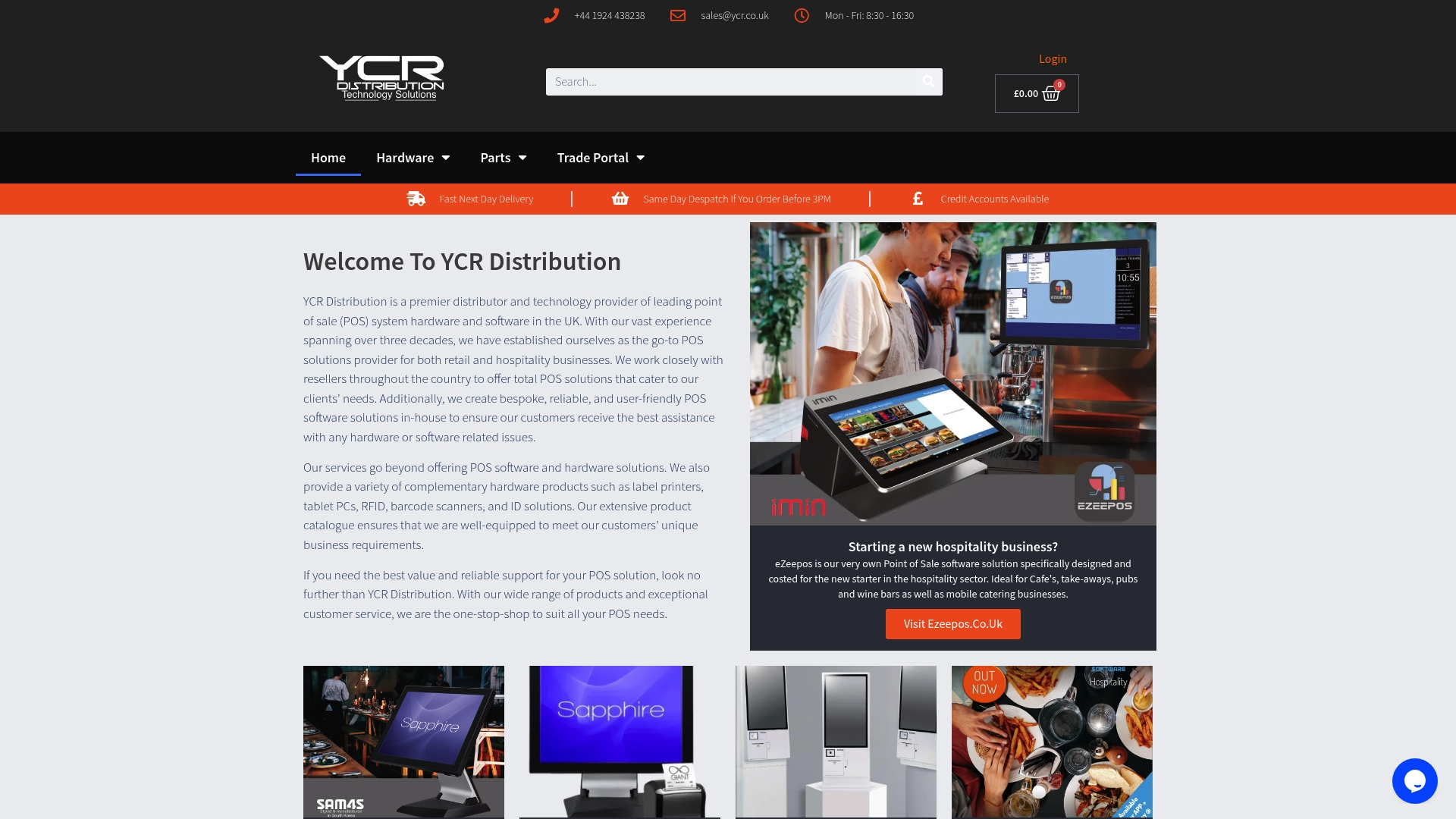
Ycr supplies the full stack: POS terminals, barcode scanners, receipt printers, and digital signage from SAM4S and iMin, paired with SAMTOUCH or EZEEPOS software built specifically for UK retail and hospitality. No overseas support queue, no proprietary hardware you cannot replace, and no monthly subscription that climbs every time you add a feature. The SAMTOUCH software with hardware bundle gives retail and convenience operators a complete, ready-to-deploy setup with UK support included. Hospitality businesses can explore EZEEPOS for takeaways or the café and bistro configuration, both designed around the specific workflows of UK food service.
Credit accounts are available for resellers and integrators, and same-day dispatch from UK stock means you are not waiting two weeks for hardware to arrive from a European warehouse. Get in touch with the Ycr team directly to discuss your requirements and get a quote matched to your business size and sector.
Key takeaways
The best Square alternative for a UK business depends on sector, volume, and whether you want to own or subscribe to your technology.
| Point | Details |
|---|---|
| Match system to sector | Lightspeed and IT Retail suit complex retail; Toast and Clover suit restaurants; Shopify POS suits ecommerce-first operators. |
| Check integration depth | Native Xero or Sage integration avoids reconciliation errors; always test the accounting sync before go-live. |
| Scrutinise contract terms | Auto-renewing contracts and hardware rental agreements are the most common sources of unexpected cost when switching. |
| Plan migration carefully | Export Square data, audit hardware compatibility, and train staff before go-live to avoid first-week disruption. |
| Ycr for UK-owned POS | Ycr supplies SAMTOUCH and EZEEPOS with SAM4S and iMin hardware, UK support, and same-day dispatch for retail and hospitality. |