
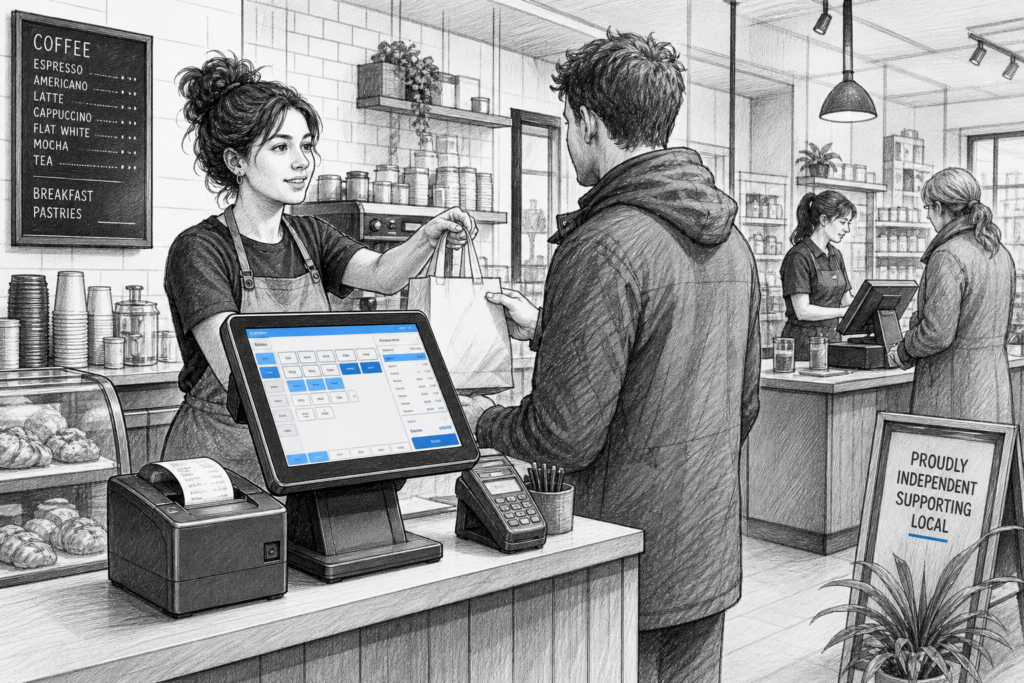
In a busy checkout or service area, a thermal receipt printer has one job: keep orders and receipts moving without slowing the rest of the EPOS system down. That sounds simple, but in retail and hospitality the printer often becomes one of the most relied-upon devices in the whole setup.
For UK businesses, the right printer is not just about producing a receipt. It affects queue flow, order accuracy, staff confidence and how well the point-of-sale area copes during busy periods. That is why resellers, installers and end users alike should think carefully about printer type, connectivity and day-to-day serviceability before choosing hardware.
Why receipt printers still matter in modern EPOS systems
Even where businesses use touchscreen POS terminals, cloud-based software or mobile ordering tools, a receipt printer often remains essential. Retailers may still need customer receipts, refund slips or order confirmations. Hospitality businesses may depend on printed tickets for bar, kitchen or collection workflows.
When a printer is slow, awkward to load or unreliable under pressure, the whole counter feels less efficient. By contrast, a well-chosen thermal receipt printer supports faster transactions and reduces interruptions for staff. For a café at the morning rush, a takeaway handling a constant stream of tickets, or a retailer processing a steady queue, that reliability is part of the customer experience.
What busy environments should prioritise
Not every printer is built for the same role. A small shop with occasional receipts has different needs from a restaurant with front-of-house orders and kitchen dockets running all day. When choosing a thermal receipt printer for POS systems UK businesses should look past the headline specification and think about practical operation.
Key points to consider
-
Print speed and consistency – a printer should keep up with demand without creating bottlenecks at peak times.
-
Connectivity – the printer needs to fit the installation, whether that is a direct terminal connection or a networked setup.
-
Paper handling – quick paper loading and straightforward cover access help staff stay focused on service.
-
Footprint – counter space is limited in many retail and hospitality environments, so compact hardware can be a real advantage.
-
Serviceability – printers that are straightforward to maintain are easier for EPOS dealers and support teams to manage over time.
These factors matter because receipt printing is rarely a standalone task. In most EPOS systems, the printer works alongside a terminal, scanner, payment device or kitchen workflow. If one component is awkward, the whole process becomes slower.
Retail and hospitality use cases are not the same
A good thermal printer in a fashion boutique may be chosen for tidy counter operation and clean customer receipts. In a garden centre or convenience store, a dependable printer might simply need to cope with regular transactions and keep the checkout moving. In hospitality, requirements are usually more demanding and more varied.
Cafés and restaurants may need printers at the front counter, at the bar or in the kitchen. Takeaways may need fast, clear order tickets that can support a high volume of items during busy service. Pubs and quick-service venues may use printing for both customer receipts and internal order communication. In these environments, the printer is part of service control, not just paperwork.
That is why it helps to match the printer to the workflow rather than treating all receipt printers as interchangeable.
Where YCR Distribution fits into the picture
YCR Distribution supplies point-of-sale hardware to resellers, installers and businesses across the UK, including receipt printers and related EPOS equipment. For dealers supporting multiple customers, the value is not just in sourcing a printer but in selecting hardware that suits the installation and can be supported properly over time.
That support-led approach matters when businesses need to standardise equipment, replace ageing hardware or plan a new rollout. A printer may look like a small part of the overall system, but if it is difficult to maintain or does not suit the environment, it can create avoidable support calls later.
YCR’s online store includes receipt printer options and related categories that can help resellers and installers build a more complete POS solution. For example, when planning a counter refresh, it is worth looking at the printer alongside the terminal, cash drawer and any customer-facing display rather than as a separate purchase.
Choosing a printer for long-term use
Hardware in retail and hospitality is often replaced because it becomes inconvenient rather than because it has completely failed. A printer that is hard to load, awkward to position or unsuitable for the current workflow can become a daily frustration. That is why choosing commercial POS hardware is about more than headline features.
Businesses should think about who will use the printer, how often it will be used and what kind of support will be needed if the installation grows. EPOS resellers and installers can add real value here by recommending hardware that fits the site rather than simply matching a generic spec.
In practice, the best receipt printer is usually the one that disappears into the background. It should print when needed, stay out of the way and support the pace of trading without requiring constant attention.
Planning ahead for support and replacement
Receipt printers are often installed as part of a wider POS estate, which means support and replacement planning are just as important as the initial selection. UK businesses that rely on EPOS hardware benefit from having access to a distributor who understands the practical side of deployment, maintenance and product choice.
That is particularly useful for installers and dealers managing several customer sites. Being able to source suitable hardware and related components through an experienced POS distributor UK wide can reduce disruption and make future upgrades easier to plan.
For more information about point-of-sale hardware and EPOS solutions, contact YCR Distribution on 01924 438238 or visit www.ycr.co.uk.