
TL;DR:
- Contactless payments now account for nearly 19 billion transactions in the UK, reflecting shifting consumer preferences.
- Choosing a payment solution should prioritize customer experience, security, integrations, contactless readiness, speed, and scalability.
- Effective retail and hospitality operations depend on integrated POS systems that unify payment processing with stock management and reporting for maximum efficiency.
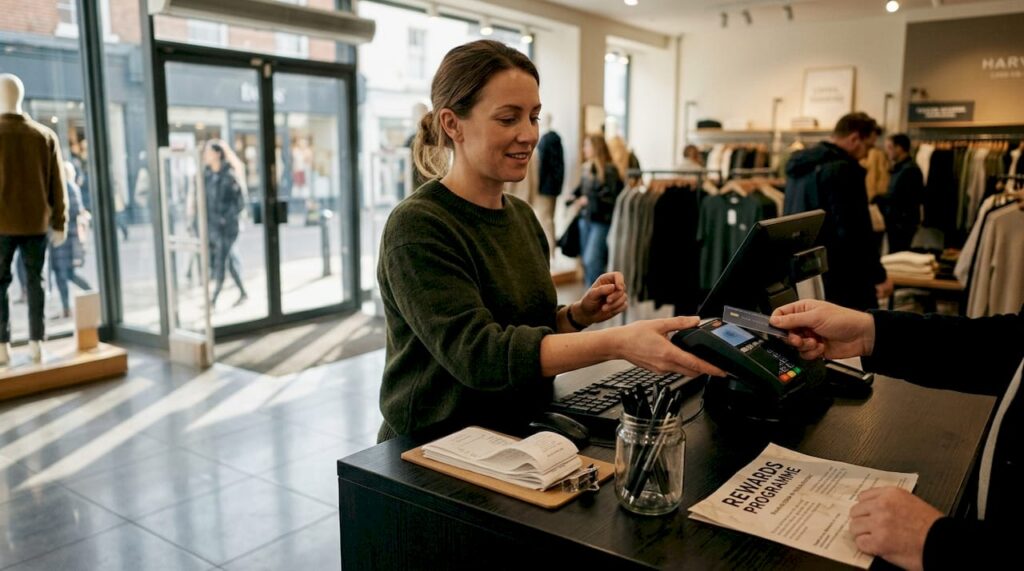
Selecting the right payment solution for your retail or hospitality business has never carried more weight. Customer expectations have shifted sharply, queues frustrate, and a clunky checkout can send a shopper straight to your competitor. Contactless payments in the UK rose to 18.9 billion in 2024, with almost four out of ten transactions now contactless. That figure signals a profound shift in how British consumers want to pay, and the businesses that keep pace will build loyalty while those that lag behind will feel it in their takings.
Table of Contents
- How to evaluate retail payment solutions in the UK
- Contactless card payments: Fast and frictionless
- Mobile wallet solutions: Apple Pay, Google Pay and more
- Integrated POS solutions: Streamlining retail and hospitality
- Alternative and future payment options
- Our take: What really accelerates retail payment efficiency
- Explore efficient POS solutions for UK retail and hospitality
- Frequently asked questions
Key Takeaways
| Point | Details |
|---|---|
| Contactless is essential | Nearly four in ten UK payments are contactless, making it a must-have for both retail and hospitality businesses. |
| Mobile wallets surge | About half of UK adults regularly use mobile payment options, so integrating wallets like Apple Pay and Google Pay is crucial. |
| Integrated POS boosts efficiency | Unified payment solutions streamline operations, improve accuracy, and speed up service in both retail and hospitality. |
| Innovation drives flexibility | Alternative payment options such as instalments and buy-now-pay-later schemes allow retailers to meet diverse customer needs. |
| Customer experience is central | Optimised payment flows reduce friction and encourage customer loyalty, so prioritising speed and contactless convenience is vital. |
How to evaluate retail payment solutions in the UK
Choosing a payment solution is not simply a matter of picking the most popular option. The right choice depends on how well a solution fits your customers’ habits, your existing technology stack, and your long-term operational goals. Starting with customer experience as your primary criterion is the most reliable filter.
A payment solution should feel invisible to the customer. Any friction, whether that is a slow terminal, a confusing interface, or a declined contactless attempt, damages the perception of your business. Speed and simplicity must sit at the top of your evaluation list.
Beyond customer experience, consider these core criteria when reviewing your options:
- Security and compliance. Your solution must meet PCI DSS (Payment Card Industry Data Security Standard) requirements, which govern how cardholder data is handled. Non-compliance carries significant financial penalties and reputational risk.
- Integration capability. A payment solution that talks seamlessly to your POS system, stock management, and reporting tools saves time and reduces errors every single trading day.
- Contactless and mobile readiness. With mobile payment users reaching around half of UK adults in 2024, any solution that cannot accept Apple Pay or Google Pay is already behind.
- Transaction speed. Particularly in high-volume hospitality environments, every second at the counter matters. Look for terminals that process payments in under two seconds.
- Scalability. Your solution should grow with your business, handling additional tills, additional sites, and seasonal peaks without needing a complete overhaul.
When it comes to optimising payment workflows, the businesses that invest time upfront in thorough evaluation consistently report fewer operational headaches down the line.
Pro Tip: Do not overlook the cost of lost sales due to payment failures. When evaluating solutions, ask providers for their uptime statistics and average transaction decline rates. A solution with a 99.9% uptime guarantee is worth paying slightly more for than a budget option that goes offline during your busiest Saturday afternoon.
A practical evaluation process should include a live trial in your actual environment, not just a vendor demonstration. Real trading conditions reveal issues that never surface in a showroom.
Contactless card payments: Fast and frictionless
Contactless card payments have moved from a novelty to an expectation. Customers reach for their card or phone before a cashier has even finished entering the total. For retail and hospitality operators, this means your terminals must be contactless-ready as a baseline requirement, not an optional upgrade.
The speed advantage is measurable. A contactless transaction typically completes in under a second once the card is presented. Compare that to a chip-and-PIN transaction, which involves inserting the card, waiting for authorisation, entering a PIN, and removing the card. In a busy café during lunchtime, that difference multiplies across dozens of transactions and directly affects how many customers you can serve.
Almost four out of ten UK payments in 2024 were contactless, a figure that has grown consistently year on year. For food-led hospitality businesses, the proportion is even higher, because customers are accustomed to quick turnaround.
The key benefits of contactless card acceptance include:
- Reduced queue times, particularly during peak hours in cafés, quick-service restaurants, and convenience stores
- Fewer errors, since customers do not enter PINs for smaller transactions, removing a common source of delay and embarrassment
- Improved hygiene, a benefit that gained considerable importance in recent years and remains valued by many customers
- Simpler staff training, because the process is straightforward and consistent
“The contactless limit increase to £100 in 2021 was a turning point. It made contactless the default for the vast majority of everyday retail purchases, not just small-value transactions.”
When reviewing POS trends for efficiency, contactless compatibility consistently appears as a baseline requirement for any modern terminal investment. The retail POS benefits of deploying contactless-ready hardware extend well beyond payment speed, feeding into broader operational improvements.
Pro Tip: Position your card terminal at a height and angle that allows customers to tap naturally without leaning over the counter. Small ergonomic adjustments like this visibly speed up the payment process and make customers feel comfortable.
Ensuring your terminals support the latest contactless protocols also matters. Terminals that support both EMV contactless (the chip-and-tap standard) and NFC (Near Field Communication, used by mobile wallets) give you maximum flexibility with minimal hardware investment.
Mobile wallet solutions: Apple Pay, Google Pay and more
Mobile wallets have graduated from early-adopter curiosity to everyday payment method for a substantial share of British consumers. Apple Pay, Google Pay, and Samsung Pay all operate on the same NFC technology that powers contactless card payments, meaning any terminal already set up for contactless is technically capable of accepting them.
Regular mobile payment users reached around half of UK adults in 2024, a remarkable penetration level that reflects how embedded smartphones have become in daily purchasing behaviour. Younger demographics skew even higher, meaning businesses targeting under-35 customers particularly need to take mobile wallets seriously.
The core advantages of mobile wallet acceptance are:
- Enhanced security. Mobile wallets use tokenisation, which means the actual card number is never transmitted during a transaction. Each payment generates a unique token, dramatically reducing fraud risk.
- Faster initiation. Customers with a phone already in hand can pay without reaching for their wallet, shaving valuable seconds from every transaction.
- Customer satisfaction. Consumers who prefer digital payments rate businesses higher when those preferences are accommodated.
- Loyalty integration. Apple Pay and Google Pay increasingly support loyalty card storage, allowing customers to earn points and pay in a single tap.
To integrate mobile POS trends into your operation, you need NFC-enabled terminals and a payment processor that has enabled wallet acceptance on your merchant account. Most modern processors do this by default, but it is worth confirming during your setup.
Here is a direct comparison of mobile wallets versus traditional contactless cards:
| Feature | Contactless card | Mobile wallet (Apple Pay / Google Pay) |
|---|---|---|
| Transaction speed | Under 1 second | Under 1 second |
| Fraud protection | Standard EMV | Tokenisation, biometric authentication |
| Customer convenience | Card required | Phone or smartwatch |
| Loyalty integration | Limited | Growing support |
| Setup complexity | Minimal | Minimal (NFC terminal required) |
| UK adoption (2024) | Very high | ~50% of UK adults |
Understanding how POS software benefits the mobile wallet experience is also important. Well-configured software ensures that wallet payments feed correctly into your sales data, avoiding reconciliation headaches at the end of the day.
Integrated POS solutions: Streamlining retail and hospitality
Payment acceptance is only one piece of the operational puzzle. The businesses that see the greatest efficiency gains are those that treat payment processing as part of a fully integrated system rather than a standalone function. An integrated POS solution connects payment processing, stock control, customer management, and reporting in a single platform.
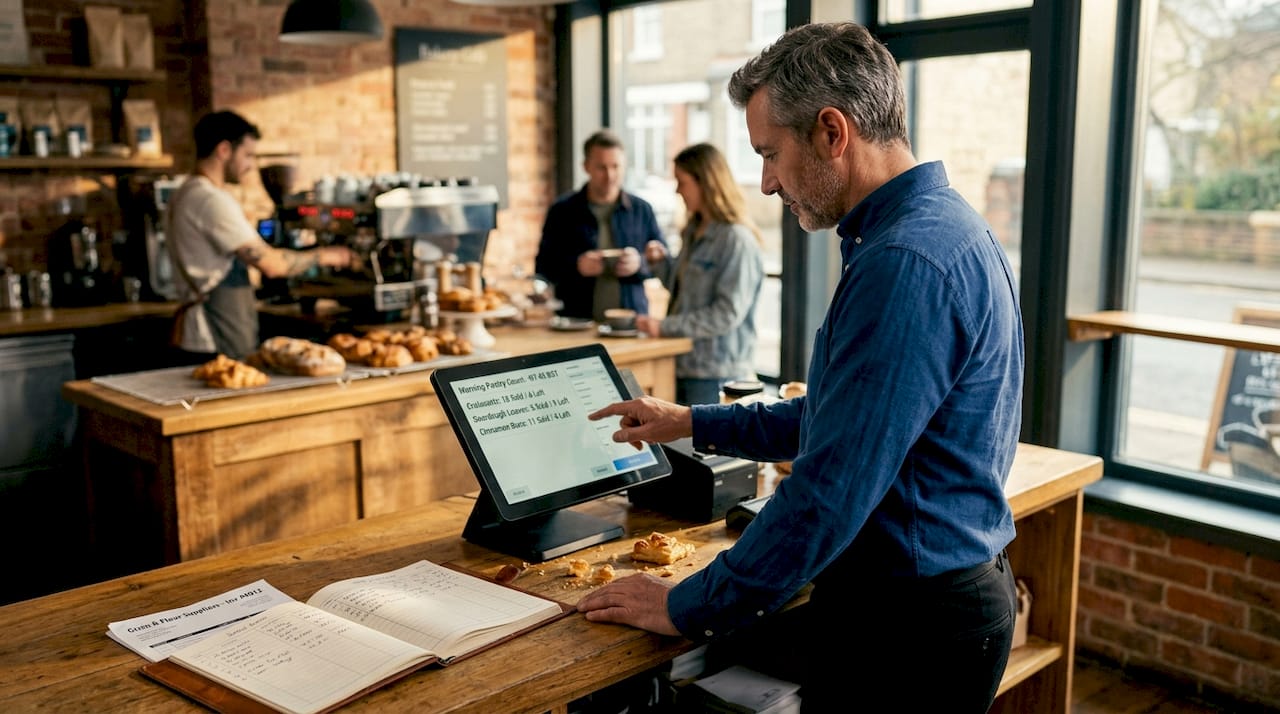
Retail payment flows that fail to optimise for contactless and fast wallet initiation risk creating friction that drives customers away. An integrated solution removes those friction points systematically, because every component is designed to work together.
The operational impact is tangible. Consider this:
| Business area | Without integration | With integrated POS |
|---|---|---|
| Stock management | Manual reconciliation | Real-time automatic updates |
| Payment errors | Frequent manual correction | Automated matching |
| Customer data | Fragmented across systems | Centralised and actionable |
| End-of-day reporting | Time-consuming and error-prone | Instant, accurate reports |
| Staff training time | High (multiple systems) | Lower (single interface) |
If you are ready to move to an integrated POS efficiency model, follow these steps to implement it effectively:
- Audit your current systems. List every tool you currently use for payments, stock, customer records, and reporting. Identify where data currently gets lost or requires manual re-entry.
- Define your integration requirements. Determine which systems must connect. At minimum, payment processing and stock management should link directly.
- Choose a solution that matches your sector. Hospitality businesses need table management and kitchen display integration. Retailers need barcode scanning and multi-channel stock visibility.
- Plan staff training before go-live. Integrated systems are only as good as the people using them. Build in proper training time before switching over.
- Run parallel systems briefly. During the first week, run your old and new systems side by side to catch any data discrepancies before they affect trading.
- Review reporting weekly. Use the integrated data to spot patterns in your payment flows, peak trading periods, and slow-moving stock.
For hospitality operators, exploring hospitality payment processing in depth provides a strong foundation for understanding how integration directly impacts the customer journey from order to payment.
Pro Tip: When evaluating integrated POS solutions, ask the provider whether their system supports split-bill payments and tipping natively. In hospitality, these features are used every service, and bolting them on as afterthoughts creates exactly the friction you are trying to eliminate.
Alternative and future payment options
Mainstream contactless and mobile payments dominate UK retail, but a growing range of alternative solutions are gaining traction and offering businesses new ways to increase conversion and serve customers with different financial preferences.
Buy-now-pay-later (BNPL) schemes have expanded rapidly in the UK retail market. Services that allow customers to pay in instalments, whether spreading a purchase over three months or making monthly payments over a longer period, can lift average order values and reduce basket abandonment at higher price points. For furniture retailers, independent clothing stores, and electronics specialists, offering secure instalment payments represents a genuine competitive advantage.
Contactless and mobile initiation are fast-growing trends in UK retail, and emerging options are building on that momentum. Digital-first payment methods that use QR codes, for example, allow customers to scan a code displayed on a screen and complete payment on their own device without any physical terminal interaction. This approach is already common in hospitality and is expanding into retail.
The emerging landscape of alternative payments includes:
- BNPL at point of sale, integrated directly into your checkout flow via software partnerships
- QR code payments, which reduce hardware dependency and work well for pop-up or mobile retail environments
- Cryptocurrency acceptance, still niche in UK retail but increasingly requested in certain sectors
- Biometric payments, where authentication via fingerprint or facial recognition speeds up the process further
- Open banking payments, which allow customers to pay directly from their bank account without a card intermediary
Understanding why POS systems have become the central hub for trialling these new payment methods helps clarify the investment case. A modern POS system designed with open architecture can integrate new payment types as they mature, without requiring a hardware replacement.
Pro Tip: Before committing to any alternative payment method, trial it with a small customer segment first. Collect data on uptake, transaction completion rates, and customer feedback over four to six weeks. Let real behaviour guide your decision, not marketing projections from the payment provider.
Our take: What really accelerates retail payment efficiency
Here is an opinion that might surprise you. Most businesses that struggle with payment efficiency are not suffering from the wrong payment method. They are suffering from the wrong integration approach. The payment method itself, whether contactless card, mobile wallet, or BNPL, rarely causes the operational problem. The disconnect between payment processing and the rest of the business is where efficiency bleeds away.
We have seen UK retailers invest in the latest terminals and still lose fifteen minutes every close of business reconciling payment totals against their accounts because nothing is connected. The payment solution looked modern. The operation behind it was still analogue.
The businesses consistently getting this right share one characteristic: they chose their payment solutions as part of a platform decision, not as an isolated purchase. They asked “how does this payment data flow through my entire operation?” before they asked “what are the transaction fees?”
Another uncomfortable reality is that staff confidence matters more than the technology itself. A brilliant integrated system operated by an undertrained team will underperform a simpler setup used by staff who understand it completely. The businesses thriving with restaurant POS efficiency are the ones that invested in their people alongside their hardware.
Our honest advice: do not chase every emerging payment innovation. Build a solid, integrated foundation first. Once your core payment flows are efficient, you have the operational headroom to trial new options without disrupting your business.
Explore efficient POS solutions for UK retail and hospitality
Navigating the range of available payment solutions is much simpler when you work with a provider who understands your sector from the ground up.
At YCR Distribution, we combine over three decades of UK retail and hospitality experience with a complete range of hardware and software tailored specifically for your environment. Whether you need POS software for retail that integrates payment flows with stock management, guidance on POS hardware types that support every contactless and mobile wallet standard, or a full retail point of sale solution built around your business, we have the expertise and the product range to match. Get in touch with our team to discuss a solution that fits your operation and your customers.
Frequently asked questions
Which retail payment solution is most popular in the UK right now?
Contactless card payments are the most popular, making up almost four out of ten UK payments and rising to 18.9 billion transactions in 2024.
How can my business start accepting mobile wallet payments?
You need a compatible NFC-enabled POS terminal and must confirm with your payment processor that Apple Pay and Google Pay are activated on your merchant account, which most modern processors handle by default.
Are integrated POS systems worth the investment for small retailers?
Integrated POS systems speed up operations, reduce reconciliation errors, and unify payment and stock management in one place, making the investment worthwhile even for single-site retailers trading at moderate volume.
What are alternative payment solutions for UK retail besides cards and wallets?
Options include instalment plans, buy-now-pay-later schemes, QR code payments, and open banking transfers, all of which give customers more flexibility and can boost conversion rates for higher-value purchases.
How can I optimise customer experience during payment?
Focus on frictionless, contactless-ready payment flows with properly trained staff and well-positioned terminals, as seamless payment experiences directly drive customer satisfaction and repeat visits.
Recommended
- Hospitality payment processing tutorial: boost customer experience
- Streamline your retail checkout workflow for faster sales
- Retail checkout setup guide 2026: optimise your POS system
- Optimise retail payment workflows: guide to modern POS
- International Payment Methods: Boosting Cross-Border Sales – ORNER