
Many UK catering businesses still view point of sale systems as optional extras rather than essential tools for operational success. This misconception costs caterers time, money, and compliance headaches. Modern POS technology transforms service speed, ensures accurate VAT handling, and protects customer data whilst scaling with your business. Understanding these benefits helps you make informed decisions that directly impact your bottom line and customer satisfaction.
Table of Contents
- How Pos Systems Improve Efficiency In Catering
- Ensuring Uk Regulatory Compliance And Avoiding Costly Vat Errors
- Protecting Customer Data And Scaling Your Catering Business With The Right Pos
- Choosing The Right Pos System For Your Catering Business
- Find Your Ideal Pos System With Ycr
- What Are The Key Features Of A Pos System For Catering?
- How Does Pos Software Help With Uk Vat Compliance?
- What Security Measures Should A Catering Business Look For In A Pos System?
- How Can Pos Systems Adapt As My Catering Business Grows?
Key takeaways
| Point | Details |
|---|---|
| Service speed | POS systems streamline operations by speeding up order taking, tracking sales, and managing stock in real time. |
| VAT compliance | Automated VAT application prevents costly hospitality mistakes by correctly handling dine-in versus takeaway rates. |
| Data security | PCI-compliant encryption and staff training protect customer payment information and build trust. |
| Scalable growth | Modular POS features with transparent pricing allow you to add capabilities without contract surprises. |
How POS systems improve efficiency in catering
Catering environments demand speed and precision. Long queues frustrate customers whilst manual order taking creates bottlenecks that slow service and reduce revenue. POS systems streamline operations by automating order processing, payment handling, and stock tracking simultaneously.
Real-time inventory management prevents the costly twin problems of over-ordering and waste. Your system tracks every ingredient used, alerting you when stock runs low and providing data for accurate forecasting. This visibility transforms purchasing decisions from guesswork into evidence-based planning.
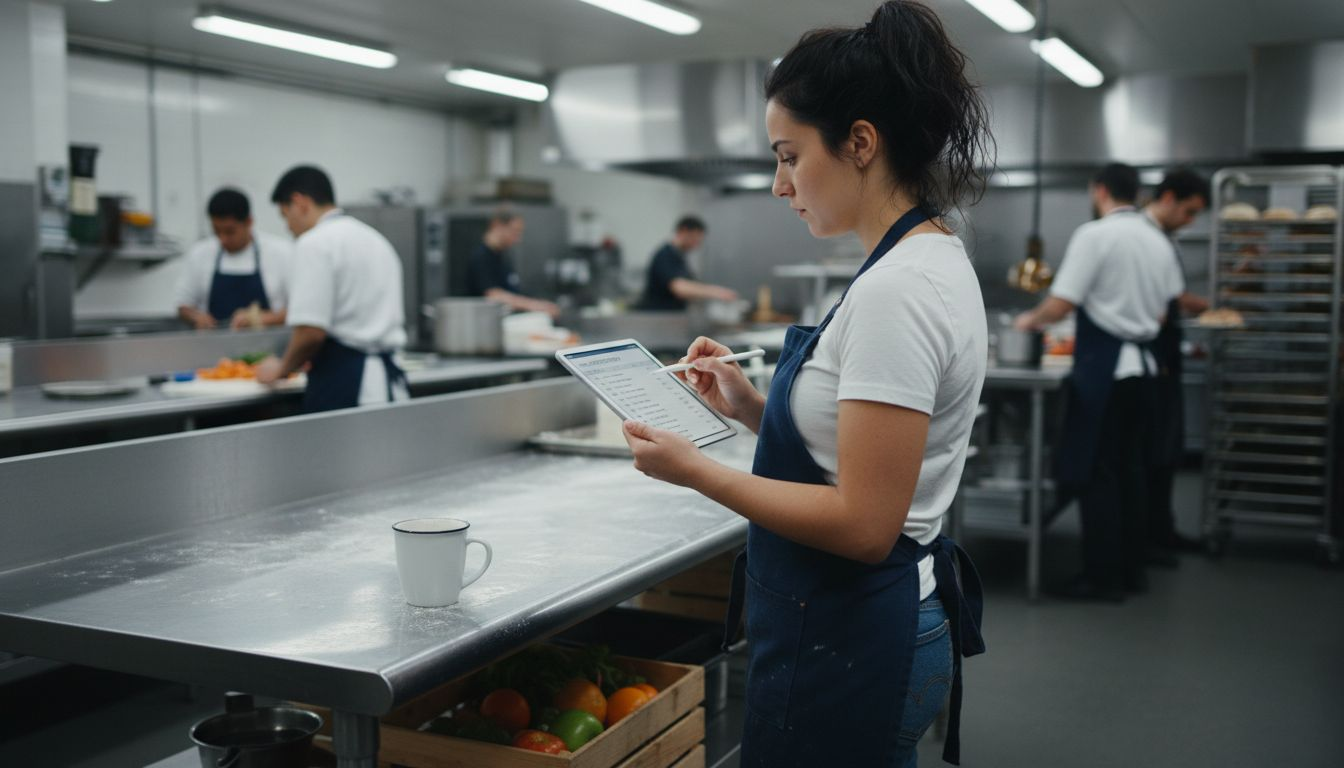
Sales tracking delivers detailed insights into peak hours, popular menu items, and revenue patterns. You can identify which dishes drive profits and which underperform, enabling menu optimisation based on actual customer behaviour rather than assumptions. Consider how Bang Restaurant achieved a 12.5% revenue increase using an integrated POS platform that combined these operational benefits.
Key operational improvements include:
- Faster transaction processing reducing customer wait times
- Automated stock alerts preventing menu item shortages
- Detailed sales reports identifying revenue opportunities
- Integration with kitchen display systems eliminating paper tickets
- Multi-location management for growing catering operations
Pro Tip: Select POS software offering catering-specific features like event management, deposit tracking, and customisable menu configurations that reflect your business model.
For comprehensive guidance on choosing systems that deliver these benefits, explore how restaurant POS systems boost UK efficiency and review our detailed POS selection framework.
Ensuring UK regulatory compliance and avoiding costly VAT errors
VAT compliance represents one of the most complex challenges facing UK caterers. The rules change dramatically based on where customers consume food, creating confusion that leads to expensive mistakes. Common VAT errors cost UK hospitality millions annually, making automation through POS systems essential rather than optional.
Takeaway food typically receives zero-rating, whilst food consumed on premises attracts the standard 20% rate. This distinction sounds simple but becomes complicated with mixed orders, partial consumption, and different service models. Manual calculation invites human error, particularly during busy service periods when staff face pressure to process transactions quickly.
POS systems eliminate guesswork by automatically applying correct rates based on order type. When a customer orders food for takeaway, the system applies zero-rating. If they change their mind and dine in, a single button press recalculates VAT correctly. This automation protects you from under-collecting tax (which creates cash flow problems) or over-collecting (which damages customer relationships and requires corrections).
Common VAT mistakes include:
- Applying standard rate to all food regardless of consumption location
- Failing to charge VAT on hot takeaway items that qualify
- Incorrectly zero-rating alcoholic beverages
- Missing VAT on service charges and delivery fees
Your POS enforces compliance through these steps:
- Configure VAT rules matching current HMRC guidance for your service model
- Assign correct tax codes to every menu item during setup
- Programme transaction types (dine-in, takeaway, delivery) with appropriate rates
- Generate detailed VAT reports separating standard, reduced, and zero-rated sales
- Update rates immediately when regulations change
“Common VAT mistakes by pubs and restaurants cost UK hospitality millions each year through incorrect applications and missed charges.”
Pro Tip: Schedule quarterly reviews of your POS VAT settings to ensure they reflect current regulations, particularly after Budget announcements that may alter rates or thresholds.
Discover how POS technology supports hospitality compliance and learn why proper software configuration matters for UK business operations.
Protecting customer data and scaling your catering business with the right POS
Data breaches destroy customer trust and trigger substantial fines under UK regulations. Payment Card Industry (PCI) compliance isn’t optional; it’s a legal requirement for any business processing card payments. Adopting PCI-compliant systems with encryption protects customer payment data from interception whilst demonstrating your commitment to security.
Encryption converts card details into unreadable code during transmission, preventing theft even if networks are compromised. Your POS should encrypt data at the point of entry, maintaining security throughout the entire payment journey. This technical protection works alongside staff training, which reduces risks from phishing attempts and social engineering attacks targeting your team.
Growing your catering business requires systems that evolve with changing needs. Fixed contract POS solutions often lock you into rigid feature sets with surprise costs when you need additional capabilities. Choosing systems with transparent pricing and modular features allows scalability without financial shocks that constrain growth.
| Feature | Scalable POS | Fixed Contract POS |
|---|---|---|
| Contract length | Monthly or flexible terms | Typically 3-5 year lock-in |
| Feature additions | Pay only for what you use | Often requires plan upgrade |
| Hardware ownership | Purchase or lease options | Usually lease only |
| Price transparency | Clear itemised costs | Hidden fees common |
| Multi-location support | Easy to add sites | Additional fees per location |
Essential features for catering POS systems:
- Event management tools for booking and deposit tracking
- Customer relationship management for repeat business
- Kitchen display integration eliminating paper tickets
- Mobile payment processing for outdoor events
- Cloud-based reporting accessible anywhere
- Third-party integrations (accounting, delivery platforms)
Pro Tip: Select modular POS solutions allowing feature upgrades as your business grows, avoiding costly system replacements when you expand services or add locations.
Explore our POS hardware checklist for equipment considerations and review POS software options tailored to UK hospitality operations.
Choosing the right POS system for your catering business
Selecting the right POS requires balancing compliance, usability, and growth potential. UK hospitality businesses rely on digital infrastructure that combines regulatory adherence with operational flexibility. Your evaluation should prioritise systems designed specifically for catering rather than generic retail solutions.
Start with a structured assessment covering these critical areas:
- Compliance capabilities: Automated VAT handling, detailed audit trails, HMRC-compatible reporting
- Scalability options: Modular features, multi-location support, cloud-based architecture
- Ease of use: Intuitive interface requiring minimal staff training time
- Integration potential: Compatibility with accounting software, delivery platforms, booking systems
- Vendor support: UK-based assistance, training resources, system updates
| Feature Category | Essential Elements | Business Benefit |
|---|---|---|
| Order management | Split bills, course timing, modifier options | Handles complex catering orders accurately |
| Stock control | Ingredient tracking, waste logging, supplier management | Reduces costs through precise inventory |
| Payment processing | Contactless, chip and PIN, mobile readers | Accommodates all customer preferences |
| Reporting | Sales analysis, staff performance, VAT summaries | Supports informed business decisions |
| Customer data | Purchase history, preferences, marketing tools | Builds loyalty and repeat business |
Flexibility for menu and VAT changes proves crucial in the dynamic catering environment. Seasonal menus, special event pricing, and regulatory updates all require quick system adjustments. Your POS should allow menu modifications without technical support, enabling you to respond rapidly to market opportunities.
Practical evaluation steps:
- Request demonstrations using your actual menu and service scenarios
- Test the system during a trial period with real transactions
- Verify integration with your existing accounting and booking software
- Confirm data migration support if replacing an existing system
- Review the vendor’s update schedule and included training resources
Vendor support quality directly impacts your operational success. UK-based support teams understand local regulations and can resolve issues during your business hours. Prioritise providers offering comprehensive training that extends beyond initial setup to ongoing optimisation.
Learn how to choose POS systems suited to your specific requirements and understand POS terminal basics for UK hospitality applications.
Find your ideal POS system with YCR
YCR Distribution provides tailored POS solutions designed specifically for UK catering and hospitality operations. With over three decades of experience, we understand the unique challenges facing your business and offer hardware, software, and integrated systems that address them directly.
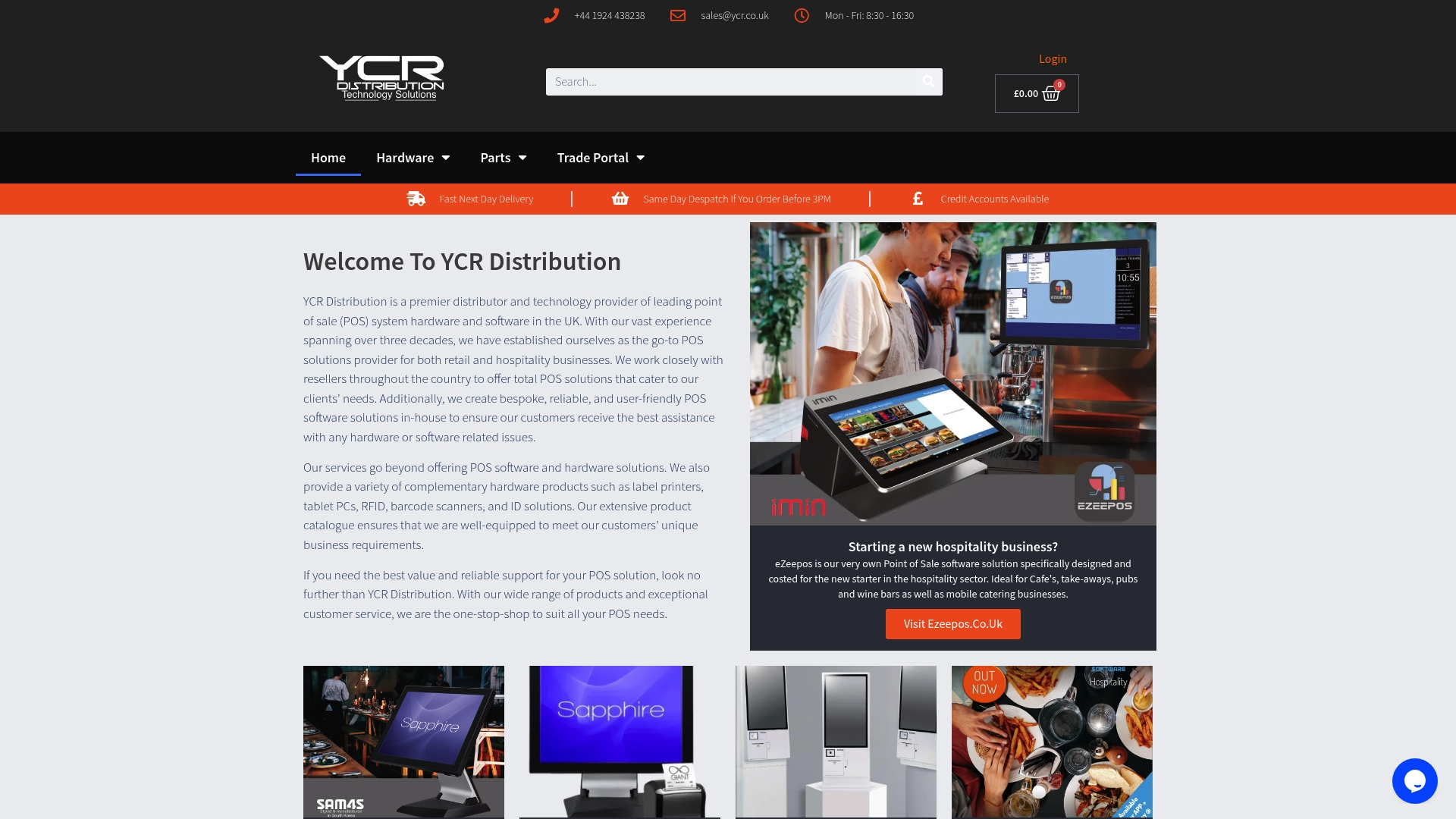
Our comprehensive product range includes POS terminals, tablets, payment processors, and kitchen display systems from trusted brands like SAM4S and iMin. We combine these with specialised POS software including SAMTOUCH and EZEEPOS, configured for catering-specific workflows.
Expert support accompanies every installation, ensuring your team confidently operates the system from day one. Access our detailed POS hardware terminology guide and review our 2026 hardware checklist to optimise your setup. Our scalable options grow with your business, supported by credit accounts, next-day delivery, and same-day dispatch when you need urgent equipment.
What are the key features of a POS system for catering?
Essential POS features for catering include order management handling complex split bills and course timing, stock control tracking ingredients to reduce waste, and automated VAT calculation preventing costly compliance errors. Integration with kitchen display systems eliminates paper tickets whilst customer relationship tools build repeat business. Cloud-based reporting provides real-time visibility into sales patterns, staff performance, and inventory levels from any location.
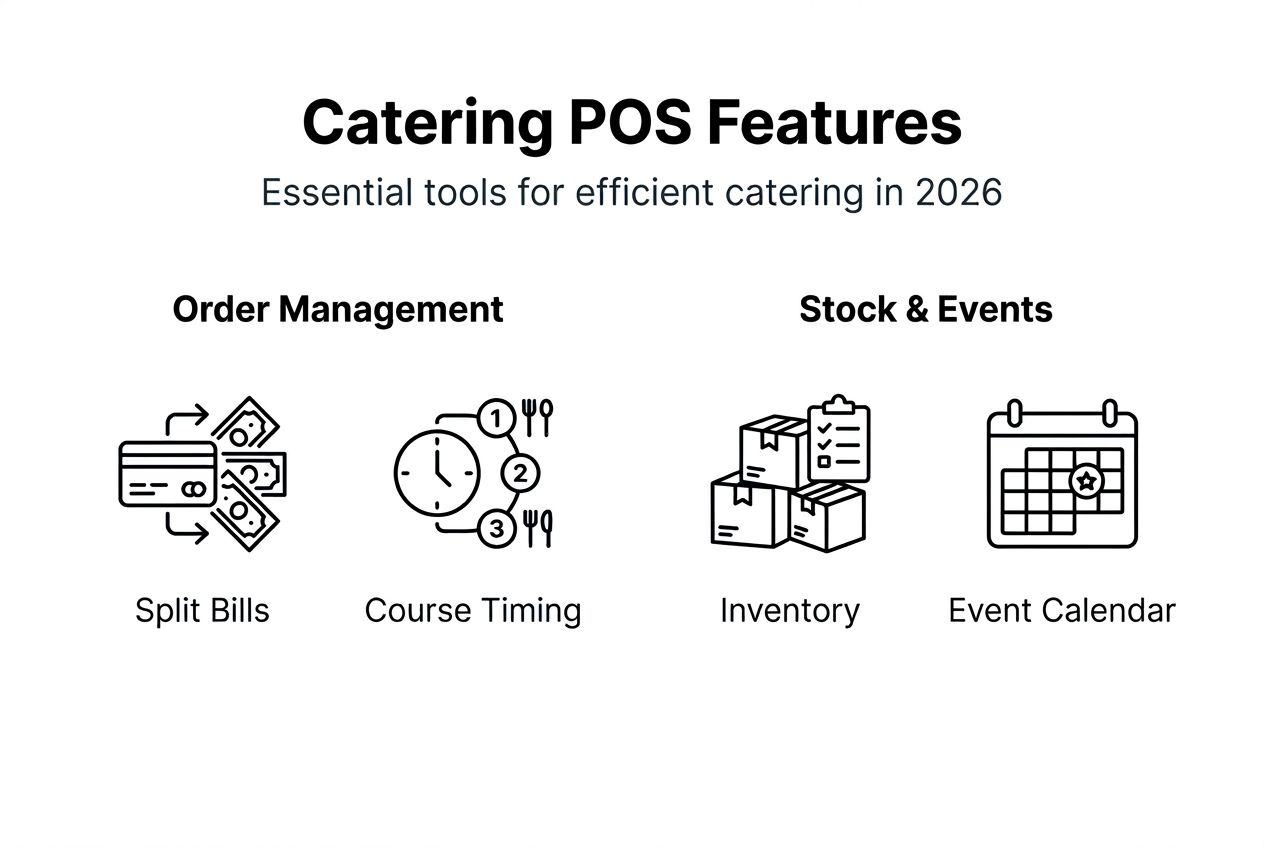
Look for systems offering event management capabilities that track deposits, manage booking calendars, and handle prepayment requirements specific to catering operations. Mobile payment processing extends your service to outdoor events and remote locations. Review our guide on how to choose POS systems for detailed selection criteria.
How does POS software help with UK VAT compliance?
POS software automates VAT rates for takeaway versus dine-in items, eliminating manual calculation errors that cost hospitality businesses millions annually. The system applies zero-rating to qualifying takeaway food whilst charging standard 20% rate for on-premises consumption, adjusting instantly when customers change their minds.
Automated calculations ensure financial accuracy and simplify tax reporting by generating detailed VAT summaries that separate standard, reduced, and zero-rated sales. This removes guesswork during HMRC submissions and provides clear audit trails. Discover how POS supports hospitality operations including regulatory compliance.
What security measures should a catering business look for in a POS system?
PCI-compliant systems with encryption protect customer payment data by converting card details into unreadable code during transmission, preventing theft even during network breaches. End-to-end encryption maintains security throughout the entire payment journey from card entry to bank authorisation.
Staff training on security protocols reduces risks from phishing attempts and social engineering attacks targeting your team. Regular security updates and password policies provide additional protection layers. Review our POS hardware checklist for security considerations when selecting equipment.
How can POS systems adapt as my catering business grows?
Modular POS systems allow you to add features like delivery management, loyalty programmes, and advanced reporting as your needs evolve, paying only for capabilities you actually use. Cloud-based architecture supports multiple locations without purchasing separate servers whilst maintaining centralised data access.
Transparent pricing contracts avoid unexpected costs that restrict business flexibility during growth phases. You can scale terminal numbers, add user licences, and integrate new service channels without system replacement. Explore POS software options offering this scalability for UK hospitality businesses.